

MONROVIA, LIBERIA – Criminal Court ‘A’ of Montserrado County has disbanded the entire trial jury and declared a mistrial in the high-profile case involving multiple defendants accused of the 2024 arson attack on Liberia’s Capitol Building. Resident Circuit Judge Roosevelt Z. Willie issued the decision on Friday, January 2, 2026, following a contentious motion by state prosecutors to dissolve the jury panel.
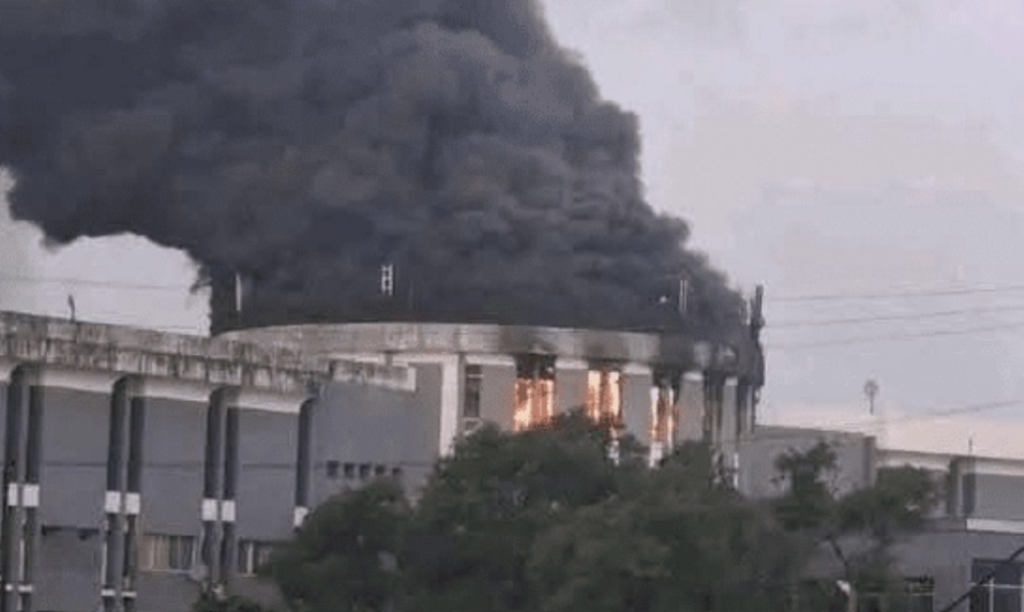
The case, which has drawn significant public and political attention, involves prominent figures including Fonati Koffa, Dixon Seeboe, and others facing charges of arson, criminal conspiracy, attempted murder, and firearms possession, stemming from the alleged desecration and burning of the National Legislature’s joint chambers on November 10, 2024.
Prosecutors had moved for the jury’s dismissal, alleging incompetence, bias, and misconduct among the jurors. They specifically cited juror J30-9863, who during cross-examination stated that a defendant shown in a key video “looks like a Chinese man” and not the accused, Thomas Isaac Etheridge. Prosecutors argued this demonstrated prejudgment and violated juror impartiality.
The defense team vigorously opposed the motion, accusing the state of launching an unsubstantiated attack on the jury to conceal weaknesses in its case. They argued that juror questions were part of legitimate fact-finding and that no formal proof of misconduct had been provided.
In a detailed ruling, Judge Willie agreed that juror J30-9863 had formed a “strong opinion” before all evidence was presented, exhibiting bias that compromised his impartiality. The juror was subsequently ejected from the panel. However, the judge found insufficient evidence to remove two other jurors accused of exchanging notes.
A critical factor in the mistrial declaration was the “inflammatory statements” made by lawyers from both sides during arguments on the motion, which were heard by the still-seated jury. The judge noted that accusations describing jurors as “worthless,” “incompetent,” and “contaminated” violated professional ethics and prejudiced the panel.
Judge Willie ruled that the combined effect of juror J30-9863’s bias and the lawyers’ improper remarks had contaminated the jury, creating a “manifest necessity” to terminate the trial. He cited legal precedent that such circumstances justify a mistrial without barring a retrial on double jeopardy grounds.
The disbandment order means the months-long trial, which began in November 2025, is void. All proceedings must restart with a new jury panel at a future date, likely during the February 2026 term of court.
Following the mistrial ruling, defense counsel immediately applied for bail for the incarcerated defendants, noting that a prior bail order had been approved but never executed. They argued their clients were not flight risks, especially since the state’s evidence had been publicly presented.
Prosecutors objected to the bail request**, calling it irregular and outside procedural norms following a final ruling. They urged the court to limit the defense to noting an exception and seeking appellate review if desired.
Judge Willie granted the defense exception to his ruling, preserving their right to appeal. On bail, he deferred an immediate decision, stating the court would review the earlier bail order and relevant circumstances before ruling separately.
The trial had been fraught with tension from the outset. In December, the court previously removed a juror who it said had connection with the former ruling Congress for Democratic Change (CDC), citing potential bias because several defendants are senior CDC members.
Proceedings centered heavily on digital evidence, including photos and videos recovered from defendants’ phones, showing the Capitol breach and fire. The credibility of this evidence became a focal point during jury questioning, leading to the controversial exchange that ultimately unraveled the trial.
Defense counsel condemned the ruling as a delay tactic that unfairly prejudices their clients and wastes judicial resources. They have challenged the decision at the Supreme Court. Prosecutors maintained that the jury’s dismissal was necessary to preserve the integrity of the trial and ensure a fair verdict, free from premature judgments and external influence.
The case will now return to square one, with a new jury to be empaneled.