


By Sampat JMB Kpakimah
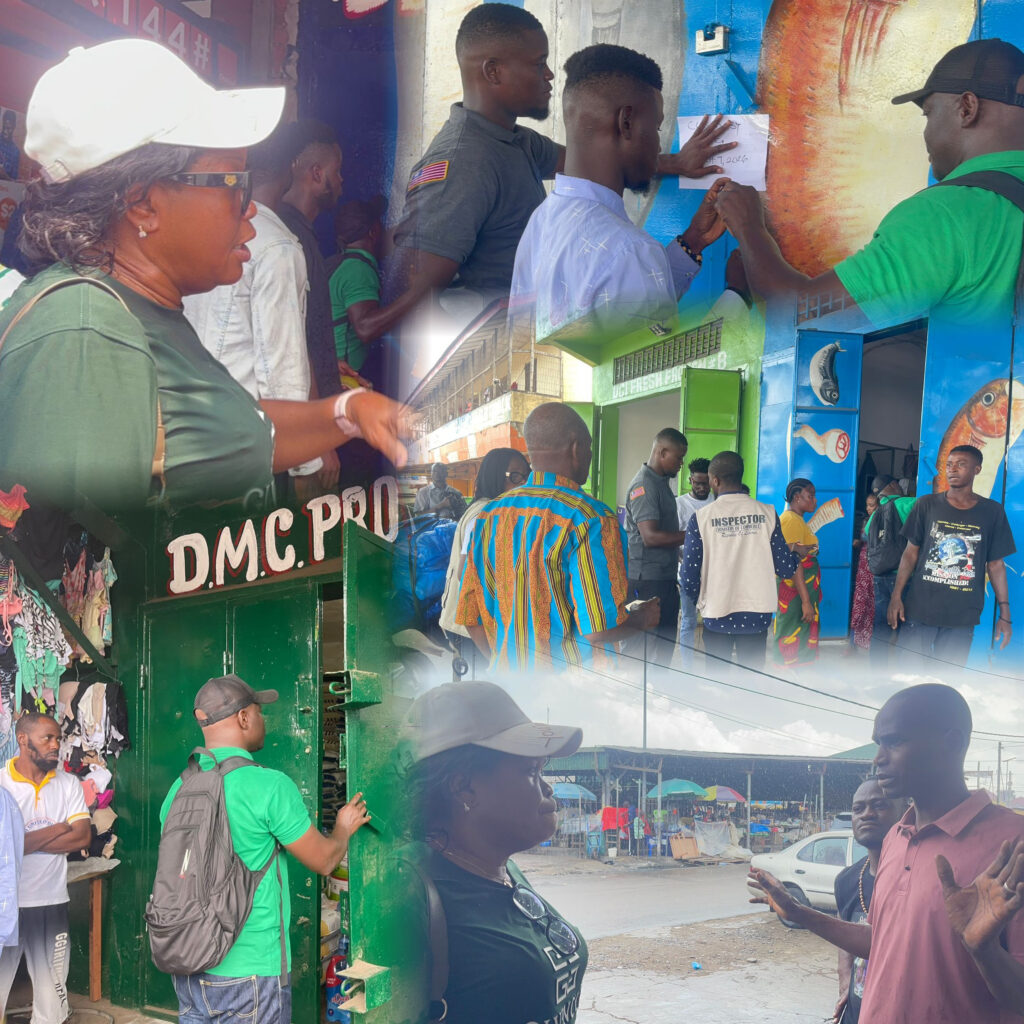
Monrovia: The Ministry of Commerce and Industry (MoCI) on Monday, March 9, 2026, conducted a robust inspection of several businesses across Montserrado, aimed at ensuring an affordable cost for rice, Liberia’s staple food. The inspection also examined the quantity of other commodities on the Liberian market.
The exercise was triggered by the Ministry’s discovery of a hike in the price of a 25kg bag of rice by retailers. This followed a meeting previously held with all rice importers in the country, where they were urged to abstain from an unreasonable increment in the price of the commodity (rice).
During the inspection, Commerce Minister Magdalene Ellen Dagoseh disclosed that the arbitrary hike came after the Government of Liberia subsidized the cost of rice for importers at about US$13–US$14 per bag. She explained that importers are expected to sell the commodity to wholesalers or shop owners for US$14.50, ensuring that the price remains affordable for consumers.
However, Minister Dagoseh noted that the Ministry’s prior investigation revealed that some businesses were selling rice to consumers for US$15 to US$15.75 per bag, with no fixed pricing structure. “This is wrong and against the mandate of President Joseph Nyuma Boakai,” Minister Dagoseh said. She added that the Ministry will take action against violators.
The Minister also raised concerns about the handling of frozen foods by some shop owners. She observed that several businesses were displaying frozen products on the ground in front of their stores, a practice she said violates food safety regulations.
She warned that violators will face penalties, including fines to be paid to the Liberia Revenue Authority (LRA).
“Anyone caught in the act will have their store locked, and depending on the violation, a citation will be issued or a fine imposed through the LRA,” Dagoseh stated.
Additionally, the Commerce Minister disclosed an attempt to resist the inspection process by a retailer, but was eventually brought under control by inspectors. She cautioned that any acts of violence during such operations would attract additional penalties.
The Government of Liberia, through the Ministry of Commerce and Industry, is responsible for ensuring that food products sold on the market are safe for public consumption. Meanwhile, some businesswomen expressed concerns about the rising cost of goods, attributing the increase in rice prices to high purchase rates from suppliers.
However, one market woman, who asked not to be named, alleged that some inspectors have previously compromised enforcement efforts. “Sometimes the inspectors say ‘leave this one for today,’ and after talking, people give them money and the store is opened again,” she claimed.
Another woman complained about the quality of frozen foods being sold on the market. “Some of the fish they sell to us are already rotten, but we don’t have any option except to buy,” she said. The Ministry of Commerce’s Monday inspection covered shops along UN Drive, VP Road, and the Red Light commercial area.
Rice is the undisputed staple food and the most important dietary staple in Liberia. However, Liberia imports upwards of 80% of its rice, primarily from Asia (like Thailand and India) and the United States. This heavy reliance on imports makes Liberia incredibly vulnerable to global market fluctuations. If the global price of rice goes up, or if there are shipping disruptions, the price of rice in Liberia skyrockets almost overnight.