

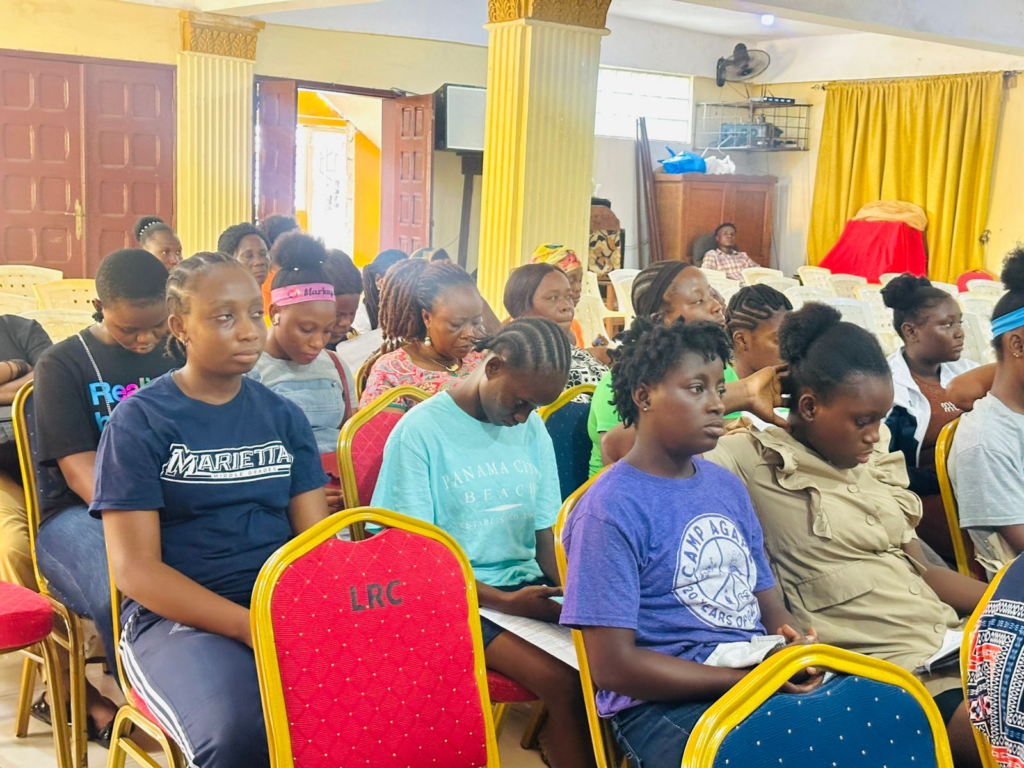
Monrovia: The Faith and Justice Network, in partnership with the Ecumenical Women Organization of the Liberia Council of Churches, on Monday joined the global commemoration of International Human Rights Day with a special gathering of women from churches across Monrovia. The event also marked the close of the annual 16 Days of Activism Against Gender-Based Violence, which runs from November 25 to December 10.
The event occurred at the African Methodist Episcopal Zion Church on Benson Street, Monrovia.
Speaking at the program, Gbolu Beatrice Beyan, Gender Justice Awareness Campaign Coordinator at the Faith and Justice Network, said the initiative aims to mobilize women of faith to confront persistent injustices affecting women and girls, especially rape and female genital mutilation (FGM).
“This day reminds us of December 10, 1948, when the United Nations adopted the Universal Declaration of Human Rights,” she said. “Today, we are here with women in the churches to reflect, learn and inspire action against the injustices happening across Liberia.”
Madam Beyan emphasized that the church remains one of the most influential institutions in Liberian society, and that its voice is crucial in the fight against gender-based violence.
“We chose the church because it has so much power—power that can influence government, communities and even the international community,” she explained. “If the church speaks up with one voice, people will listen. We are here to leverage that power for social justice.”
She expressed hope that women participating in the event—many of whom are leaders in their congregations—will return to their churches ready to take concrete action.
“At the end of this program, we expect them to take decisive steps. We are here to inspire action, and we believe that after today, they will stand up against the issues affecting women and girls in their communities,” she said.
Church Leaders Address Rape, FGM and Social Responsibility
Serving as one of the main facilitators, Rev. Christopher Wleh Toe spoke extensively on the role of the church in confronting rape, sexual assault and FGM. He described both issues as crises that continue to damage lives, families and the moral fabric of society.
“Rape is never the victim’s fault,” Rev. Toe stressed. “Consent is mandatory for any sexual activity, and consent that is manipulated or influenced—whether socially or economically—is not consent.”
He highlighted cultural misconceptions that often lead to rape being minimized or ignored, particularly in rural communities where forced sexual encounters within marriages are sometimes normalized.
Rev. Toe also addressed the harmful physical and psychological effects of FGM, noting that it brings lifelong consequences including infections, trauma, infertility and complications during childbirth.
“FGM has no health benefits and causes significant harm to our women and girls,” he said. “We must speak against it with the same conviction that we speak against rape.”
The clergyman also encouraged churches to maintain balance in their advocacy efforts, urging them to condemn all forms of abuse and manipulation, including sexual exploitation within religious settings.
Other Experts Add Perspective
Additional presentations came from key stakeholders working in gender justice and survivor support, including:
• Madam Susie Telleh Bility, Women and Children Protection Section, Liberia National Police
• Jonetta Oluking, Administrator, JFK One-Stop Center
• Frances Greaves, Gender Coordinator, Bible Society of Liberia.
These experts shared insights on reporting mechanisms, survivor care, community intervention and the role of faith institutions in prevention and accountability.
A Call to Rise Up
As Liberia continues to battle rising cases of rape and ongoing debates around FGM, organizers say the involvement of the church is essential to changing attitudes and protecting victims.
“The goal is not just awareness,” Beyan concluded. “The goal is action—action from women, from churches, from communities. We cannot remain silent while our daughters, sisters and mothers suffer.”
The event ended with participants pledging to take the message of justice, healing and advocacy back to their congregations and communities.