

By Vaye Abel Lepolu
Monrovia, Liberia – The Ministry of Foreign Affairs has unveiled a series of strategic diplomatic and economic initiatives aimed at repositioning Liberia on the global stage, strengthening international partnerships, and advancing national development.
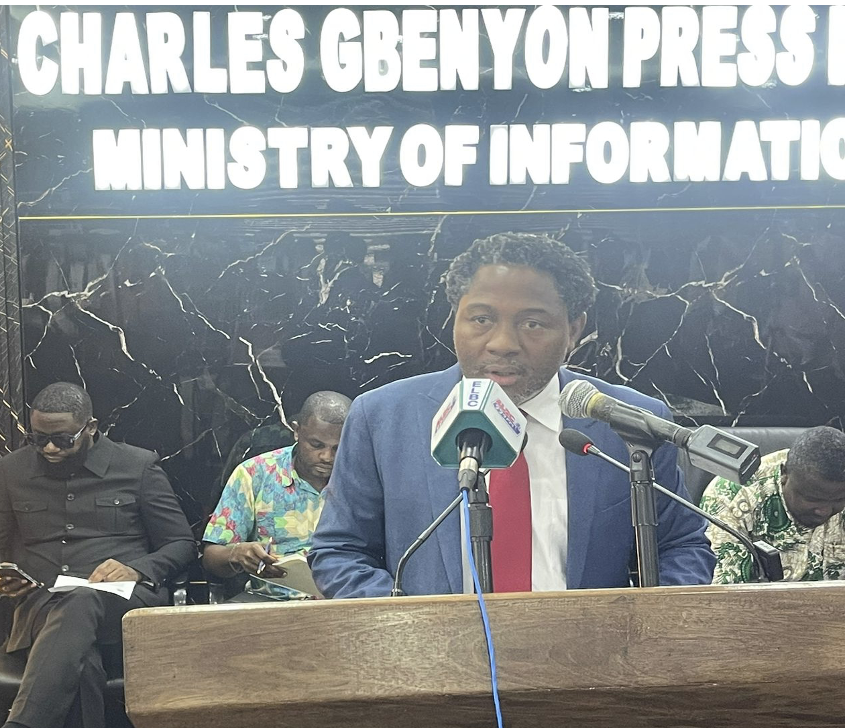
Speaking at a press briefing, the Deputy Minister for International Cooperation and Economic Integration said the Ministry is implementing a comprehensive reintegration and reform agenda focused on rebranding Liberia’s global image and restoring the country’s leadership role in international affairs. He noted that the government’s diplomatic vision is anchored in President Joseph Nyumah Boakai’s Agenda for Inclusive Development, which links diplomacy directly to economic growth, investment, and job creation.
A major highlight of the briefing was Liberia’s candidacy for election to the African Union Peace and Security Council (AU PSC). The Deputy Minister Abraham Nyei confirmed that Liberia’s bid has been formally accepted by the African Union, with elections scheduled for February 11 in Addis Ababa, Ethiopia, during the AU Executive Council session. Liberia is contesting for one of the six seats allocated to West Africa. The AU Peace and Security Council is the continent’s highest body responsible for conflict prevention, management, and resolution, similar in function to the United Nations Security Council. Government officials believe Liberia’s election would strengthen Africa’s collective voice on peace and security issues and complement Liberia’s role on the UN Security Council.
The Minister Abraham Nyei also announced that Liberia has assumed the chairmanship of the African Group at the United Nations in New York for the month, giving the country a leading role in coordinating African positions on global policy issues. As chair, Liberia presides over meetings, shapes agenda items, and helps guide common African positions on international matters within the UN system.
On the economic front, the Deputy Minister disclosed that Liberia, in collaboration with the National Investment Commission (NIC) and the European Union, will host the Liberia–EU Business Forum in Brussels on February 26. The forum is part of the government’s foreign economic diplomacy strategy, designed to attract investment and build partnerships between Liberian and European businesses. About 60 Liberian enterprises, including small and medium-sized businesses, are expected to participate in business-to-business meetings, investment presentations, and partnership discussions with European investors.
He explained that the goal is to use diplomatic platforms not only for political engagement but also to promote trade, investment, entrepreneurship, and job creation. By linking local businesses to international partners, the government hopes to scale up production, strengthen value chains, and expand employment opportunities for Liberians.
The Minister further provided an update on Liberia’s role at the United Nations Security Council, confirming that the country assumed its responsibilities in January. As part of strengthening Liberia’s mission in New York, a competitive recruitment process was conducted with the support of the United Nations Development Programme (UNDP). The process, officials said, was based strictly on professional standards, transparency, and merit, with candidates selected through open competition regardless of background, ethnicity, religion, or political affiliation.
In response to questions, Minister Abraham Nyei emphasized that economic diplomacy remains a core pillar of Liberia’s foreign policy, alongside political diplomacy. Officials highlighted Liberia’s participation in regional and continental integration frameworks such as ECOWAS and the African Continental Free Trade Area (AfCFTA), which are designed to expand market access for Liberian businesses, reduce trade barriers, and promote cross-border investment.
Addressing concerns about deportations of Liberians abroad, particularly from the United States, the Ministry clarified that immigration and deportation policies are determined by host countries. The government urged Liberians traveling abroad to follow legal migration processes, comply with host country laws, and ensure proper documentation to avoid immigration violations.
The Ministry ended that Liberia’s current diplomatic strategy is focused on rebranding the country internationally, strengthening multilateral influence, promoting peace and security, attracting investment, expanding trade, and creating economic opportunities for citizens, in line with the government’s broader national development agenda.