


-From RPAL, RDFI
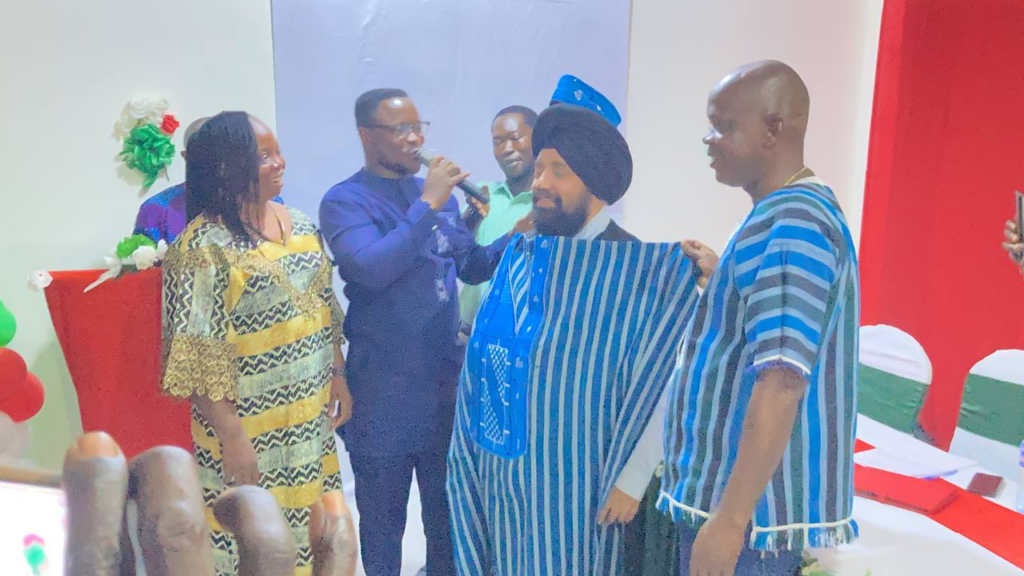
Businessman Upjit Singh Sachdeva (alias Jeety) has been honored by the Rubber Planters Association of Liberia (RPAL) and the Rubber Development Fund Incorporated (RDFI), which robed him in traditional attire, conferred upon him the Liberian name “Kolleh”—meaning “a bright and good man”—and presented a formal citation lauding Jeety Rubber as a true partner of the sector.
In bestowing the honor, the associations described Jeety Rubber as a true partner of the rubber industry, hailing the company for its steadfast support to smallholder farmers when other buyers suspended purchases of rubber in protest of a government decision to introduce a regulated farm-gate price.
“This Certificate of Honor is in recognition of your exceptional contributions to Liberia’s rubber sector and your unwavering support for rubber farmers, particularly during critical periods of limited market access,” RPAL President Wilhelmina Mulbah Siaway and RDFI Chairman J. Tokpah Mulbah stated in the certificate presented to Jeety Rubber CEO, Mr. Sachdeva (alias Jeety).
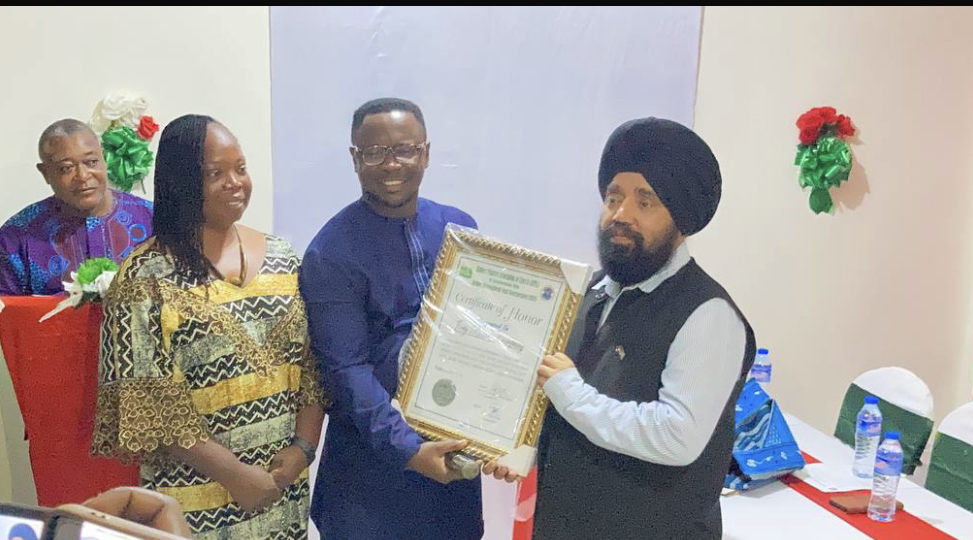
They added: “Your [company] commitment to sustaining farmer livelihoods and promoting community welfare is highly commendable.”
The associations’ honor comes as Jeety Rubber has remained supportive of the Ministry of Agriculture’s regulated pricing system introduced in June 2025. The reform came as a result of complaints from farmers over pricing practices, under which buyers had previously set prices.
As of March, the government-set price for a ton of rubber is $690; however, farmers receive about $657 after deductions of US$27 in government tax, US$4 for RDFI, and US$2 for RPAL. When the pricing system was announced in 2025, Firestone Liberia immediately suspended its purchase of rubber, citing the government’s decision to implement a new mandatory, higher, and regulated rubber pricing structure.
In a statement at the time, Firestone, the largest buyer of smallholder rubber, argued that the government-set price was unsustainable and did not reflect its operational costs and social obligations. It remains unclear whether Firestone has since resumed rubber purchases. Jeety Rubber, which operates a more than US$75 million rubber processing facility in Weala, Margibi County, requires between 200 and 250 tons of raw rubber daily for production.
The company’s annual rubber demand ranges from 25,000 to 40,000 tons, with smallholder farmers being the main suppliers. At the honoring ceremony, RPAL and RDFI also robed Mr. Jeety in traditional attire and conferred upon him the Liberian name “Kolleh,” meaning “a bright and good man,” a rare cultural distinction that underscored the depth of community esteem he has earned.
Others honored at the ceremony included Agriculture Minister Dr. Alexander Nuetah and the Liberia Agriculture Company. In his remarks, Minister Nuetah reminded smallholder farmers of the urgent need to increase production, noting that the industry was performing well below the combined intake capacity of its four processors.
He noted that while the industry now has both the infrastructure and the market to absorb greater volumes, it continues to struggle with production shortfalls, with last year’s total output recorded at approximately 180,000 tons, far below the government’s production targets. “The factories are ready. The price regime is fair and transparent. What we now need is production, more tapping, more output, more commitment from every farmer with rubber on their land,” Min. Nuetah said.
The Minister also reaffirmed the government’s firm policy stance against the export of unprocessed rubber, reminding farmers and their cooperatives of the need to sell exclusively to processors and not to roadside or informal buyers operating outside the regulatory framework. While reiterating that the government’s policy has not changed, Minister Nuetah stressed that farmers themselves have a critical role to play, warning that selling to outside buyers undermines the sector and weakens enforcement of the policy.
The Minister’s position comes as the Government of Liberia, in August 2025, issued Executive Order No. 151, banning exports of raw rubber to promote local processing, job creation, and revenue generation. The order requires all rubber to be processed domestically, with penalties for violations. Meanwhile, to help address the industry’s low production capacity, Jeety Rubber has since 2025 extended interest-free loans to over 100 farmers to finance farm replanting and expansion. The loans are repaid gradually through agreed deductions from the farmers’ future rubber sales.

