


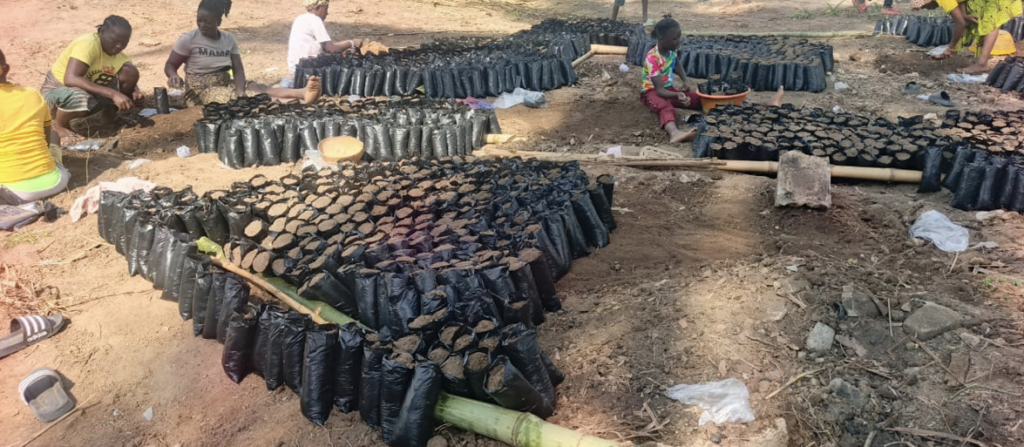
The Liberia Agriculture Commodity Regulatory Authority (LACRA) has rolled out a nationwide nursery program for Coffea Liberica as part of efforts to promote and establish Liberia’s native coffee as a recognized brand on both local and global markets.
The program, which falls under LACRA’s wider agricultural development agenda, is currently underway in Bong, Lofa, and Nimba counties. Speaking during an interview in Lofa County over the weekend, LACRA’s Deputy Director General for Operations and Technical Services, Alpha Gongolee, revealed that the initiative will soon extend to Bomi County and later to counties in southeastern Liberia.
Gongolee disclosed that about 200,000 Liberica coffee seeds will be raised in nurseries across the participating counties. After reaching maturity, the seedlings will be distributed at no cost to farmers throughout the country.
He explained that the seedlings will remain in the nurseries for roughly seven months before distribution, noting that the goal is to increase coffee output while improving the living standards of farmers nationwide.
Beyond seedling distribution, Gongolee stressed that LACRA will also provide training and technical support to farmers to enhance their knowledge of coffee farming, farm management, and sustainable production practices.
“The focus is not just on higher yields, but on equipping farmers with the skills required to sustain quality production,” he emphasized.
The Coffea Liberica nursery program is expected to significantly revive Liberia’s coffee industry, reinforce the agricultural value chain, and position the country as a competitive coffee producer within the region.
The initiative is already delivering short-term benefits to local communities. Nursery-related activities have created temporary jobs for residents who are supporting LACRA technicians with tasks such as clearing sites, cutting sticks, and building shelter structures. Additionally, more than forty-five women have been employed to fill soil into polythene bags used for planting the seeds.
All workers engaged in the project receive daily wages, and many beneficiaries have expressed gratitude to LACRA, noting that the temporary employment has helped them generate income to support their families.
Gongolee noted that the project is being implemented through a partnership involving the European Union, the International Institute of Tropical Agriculture (IITA), and LACRA. The collaboration brings together international funding, technical expertise, and national coordination to strengthen Liberia’s coffee sector and promote the sustainable production of Liberica coffee.
LACRA believes the initiative will not only improve farmers’ economic prospects but also restore Liberica coffee as a symbol of national pride and a product capable of competing on the international stage.