

By Vaye Abel Lepolu
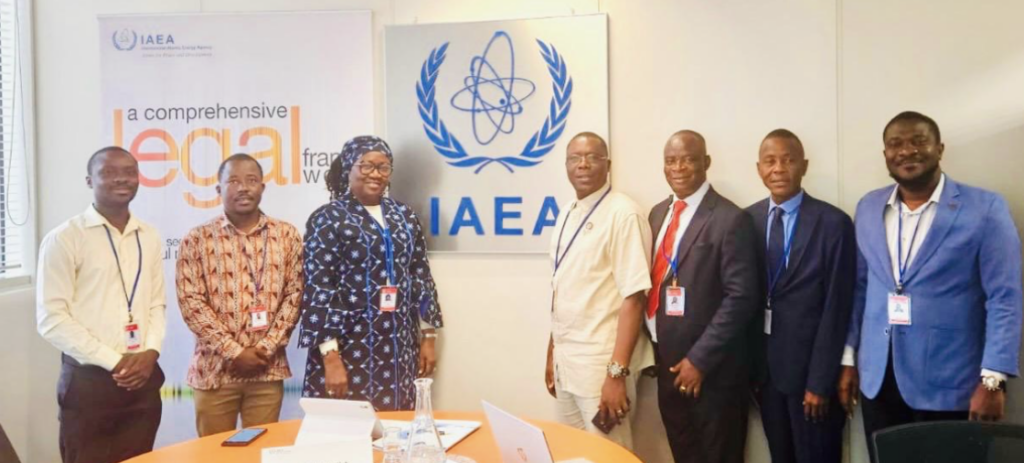
VIENNA, AUSTRIA — A high-level Liberian delegation has embarked on a one-week working visit to Vienna to engage the International Atomic Energy Agency (IAEA) in finalizing Liberia’s draft National Nuclear Law, a move widely described as a milestone in the country’s development and regulatory history.
The visit, fully supported by the IAEA, focuses on intensive legislative assistance aimed at establishing a comprehensive legal and regulatory framework to govern the safe, secure, and peaceful use of nuclear science and technology in Liberia. Once enacted, the law will provide the foundation for expanded technical cooperation between Liberia and the IAEA.
The seven-member delegation underscores Liberia’s whole-of-government approach to the process. It comprises Senator Dabah M. Varpilah of Grand Cape Mount County and Representative Johnson Samuel Nagbe Williams, Sr. of District #3, River Gee County, alongside three legal practitioners representing the Ministry of Justice, the Environmental Protection Agency (EPA), and the Ministry of Mines and Energy.
The team also includes two scientists from the Environmental Research and Radiation Safety Department of the EPA, which currently serves as Liberia’s national designated authority for radiation protection and safety.
Coordination of Liberia’s engagement with the IAEA is being led by the Ministry of Foreign Affairs, which serves as the National Liaison Office for all IAEA technical cooperation activities, ensuring a unified and strategic interface with the global nuclear body.
Officials say the proposed Nuclear Law is critical, as it provides the legal framework required for the IAEA to deliver targeted technical assistance to Liberia. The initiative directly supports President Joseph Nyuma Boakai’s national development plan, the ARREST Agenda for Inclusive Development (AAID) 2025–2029.
Under the new law and the recently signed IAEA–Liberia Country Programme Framework (CPF) for 2026–2030, the peaceful application of nuclear science is expected to yield significant benefits across key sectors. In agriculture, nuclear techniques will help improve crop and livestock productivity, enhance food safety, and promote efficient soil and water management.
In water resources and environmental protection, isotopic technologies are expected to strengthen Liberia’s capacity for sustainable water management and marine pollution monitoring. The health sector is also set to benefit through improved diagnostics, nutrition assessment, and the potential establishment of the country’s first radiotherapy facility.
The draft law further provides for the safe management of radioactive waste, ensuring public safety and environmental protection as Liberia expands its use of nuclear applications in medicine, research, and industry.
The Vienna engagement signals Liberia’s growing commitment to science-driven development and responsible innovation, positioning nuclear technology as a tool for inclusive growth and national transformation in line with the ARREST Agenda.