

-Bishop Kortu K. Brown Says
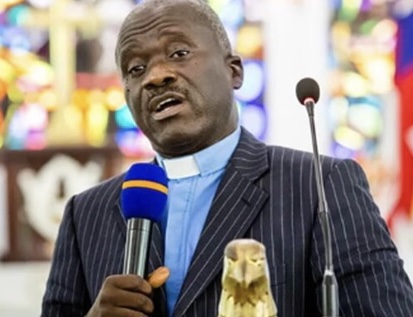
Brewerville, Liberia – In a powerful sermon that blended spiritual reflection with sharp political critique, prominent Liberian cleric Bishop Kortu K. Brown declared that the nation “must be charmed” to explain the current state of national affairs. His remarks, delivered during a prayer meeting in Brewerville, come in the wake of President Joseph Boakai’s recent State of the Nation Address, which has been mired in controversy over alleged factual inaccuracies.
Speaking to pastors of the Apostolic Pentecostal Church International at the New Water in the Desert Assembly, Bishop Brown expressed deep concern over the governance trajectory of Liberia. He pointed specifically to the disputed claim from the presidential address that over 1,100 kilometers of road had been paved in just two years.
“It is really concerning,” stated Brown, the immediate past president of the influential Liberia Council of Churches. “Somebody writes it, a speechwriter places it in the President’s address, and the President stands before the people’s representatives and reads it as if it is true. And then we argue over it. Liberia must be charmed.”
The Bishop framed the nation’s challenges in spiritual terms, warning that “nations are ruled by spirits—either the Good Spirit or the Evil Spirit.” He cited Biblical texts, including Galatians and Deuteronomy, which condemn practices like witchcraft, idolatry, and deception. In this context, he suggested that “charming” falls under the work of an evil spirit, manifesting as a national acceptance of falsehoods.
Shifting from the metaphysical to the material, Bishop Brown challenged the government’s focus. He argued that even genuine infrastructural progress is meaningless if it ignores the acute economic suffering of ordinary Liberians.
“‘Liberia must be charmed’ for people to want to deny that other people are facing hard times,” he asserted. Using the United States and Nigeria as examples, he noted that citizens ultimately vote based on their economic well-being, not just physical development. “We have to create jobs, help put food on people’s table, and send their children to school and hospital,” Brown emphasized, recalling that his persistent advice to the Boakai administration has been to prioritize this “bread-and-butter issue.”
The Bishop issued two further pointed appeals to the government. First, he called for an immediate halt to the demolition of homes in communities, urging authorities to “temper justice with mercy.”
“Where is our compassion?” he asked. “To just get up and break [homes] down without recourse is unacceptable and lacking a full understanding of the times we are living in.”
Second, he demanded transparency on job creation, criticizing the current debate over employment figures as evidence that “some agencies of government are not doing their work.” He insisted officials must “get on the ground” to gather credible data.
Bishop Brown’s sermon underscores a growing clerical voice in Liberia’s national discourse, one that holds political leadership to account not only on policy grounds but also on moral and spiritual ones. As the nation observes a three-day fast for sanctification, his message frames Liberia’s challenges as a crisis of truth, compassion, and foundational governance.