

By Vaye Abel Lepolu
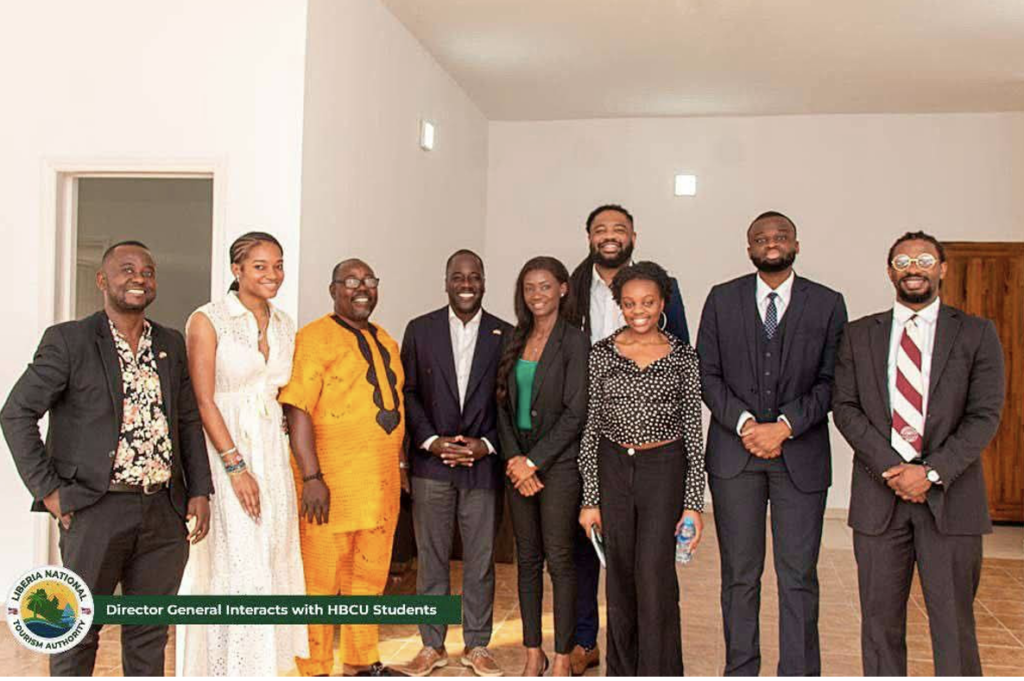
Monrovia, Liberia — The Liberia National Tourism Authority (LNTA) has hosted a delegation of students from Historically Black Colleges and Universities (HBCUs) in the United States under the Liberia Experience initiative, reaffirming tourism’s growing importance to Liberia’s economic development, cultural preservation, and global image.
The students were received at the LNTA’s 18th Street Office by Director General Princess Eva Cooper, a Morgan State University alumna, who described their visit as both symbolic and strategic for Liberia’s tourism and heritage sectors. The visit was organized by Matthew Worloka Jr., Program Director for a nonprofit organization at Morgan State University, a key partner institution in implementing the Liberia Experience program.
Established in 2017, the Liberia Experience allows students to travel to Liberia to serve in various capacities across communities and institutions, while deepening their understanding of the country’s history, culture, and development priorities.
During an interactive session, DG Cooper reflected on Liberia’s rich historical legacy and its deep ties to Black history and culture in the United States. She emphasized Liberia’s identity as the “Land of the Return,” noting that visits by Black students and members of the African diaspora help strengthen cultural connections and position Liberia as a leading destination for heritage and diaspora tourism.
DG Cooper stressed that tourism remains a vital pillar for Liberia’s economic diversification, with the potential to create jobs, attract investment, promote small businesses, and support community development. She noted that increased tourism can also help preserve cultural heritage, protect natural ecosystems, and enhance Liberia’s international image beyond outdated narratives of war and political instability.
The LNTA Director General further expressed the Authority’s willingness to collaborate with academic institutions and development partners to expand structured student visits and educational tourism programs, describing them as practical tools for promoting people-to-people exchange and sustainable tourism growth.
The visiting students shared their experiences serving in different sectors during their stay and praised Liberia’s cuisine, cultural vibrancy, and scenic landscapes. They encouraged Liberians to actively promote positive stories about the country online, emphasizing that digital storytelling and citizen advocacy are critical to reshaping global perceptions and boosting tourism.
The engagement underscores LNTA’s broader strategy to leverage heritage tourism, educational exchange, and diaspora engagement as engines for national growth, while positioning Liberia as an attractive, welcoming destination on the African continent.