

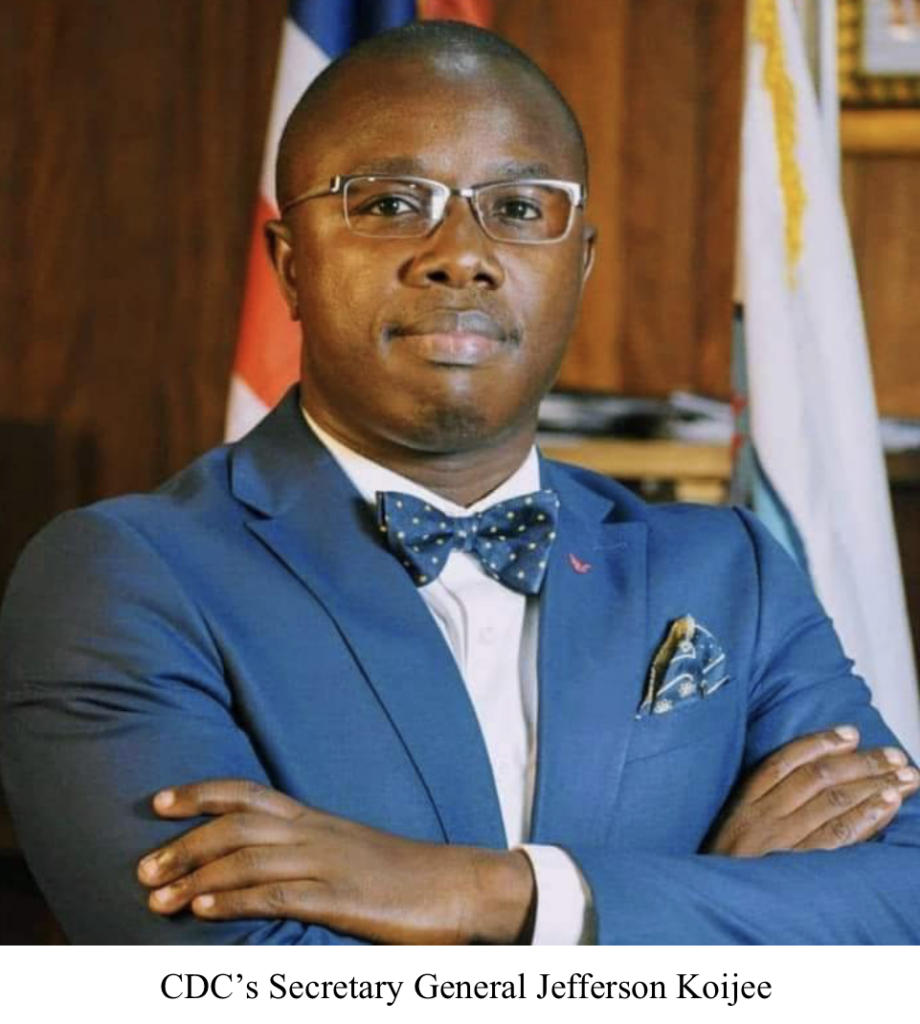
MONROVIA, LIBERIA — A series of public reversals, police clarifications, and journalistic corrections have cast significant doubt on years of serious allegations against former Monrovia Mayor Jefferson Tamba Koijee, prompting claims of a belated vindication from his supporters and raising questions about the role of media and rumor in Liberia’s political discourse.
For years, Koijee—a prominent figure in the ruling Coalition for Democratic Change—has been a magnet for accusations ranging from murder and electoral violence to arms trafficking. While he remains under U.S. sanctions for alleged human rights abuses and corruption, recent developments within Liberia have challenged the factual basis of several high-profile claims that have long circulated in the public sphere.
In April 2021, popular talk-show host Henry P. Costa claimed on air that Koijee was responsible for a killing in Caldwell following a land dispute. During the same broadcast, however, a woman identified as a relative of the victim stated her brother had never mentioned Koijee, nor was there evidence they had ever met. Despite this immediate on-air contradiction, the allegation spread widely. To date, Koijee has never been arrested, charged, or formally investigated in the case.
Koijee was also accused of involvement in violence during the 2019 Montserrado County District #13 by-elections, including claims of three fatalities. Official legislative reviews and findings at the time did not establish his criminal liability or link him to the deaths.
On December 13, 2025, journalist Lennart Dodoo, Managing Editor of The Liberian Investigator, publicly rejected a report by DTV Liberia that claimed Koijee assaulted him and confiscated his equipment in March 2021. Dodoo called the report false and urged a correction, stating, “As a media professional, truth and accuracy must always come first.”
On July 23, 2024, the Liberia National Police concluded its review of a January 2023 arms-importation investigation that had fueled widespread speculation online. Inspector General Col. Gregory O. W. Coleman confirmed the original probe was “authentic and free from political influence” and identified Boyd Benjamin Baker as the sole suspect. The LNP explicitly stated Koijee was not connected to the weapons.
Adding to the shift, activist Matina Konateh issued a live Facebook apology to Koijee, admitting she falsely accused him of involvement in the high-profile murder case connected to former Chief Justice Gloria Musu Scott. “I lied on Jefferson Koijee,” Konateh said.
Supporters of Koijee argue these instances—along with other rumors about travel bans, associations with former rebel figure Charles “Chuckie” Taylor, and claims he was a child soldier—reveal a sustained pattern of unverified allegations amplified through media and social networks, many later rebutted by evidence or recanted.
Despite these domestic developments, Koijee’s international standing remains constrained. Between December 8–9, 2023, the U.S. Department of the Treasury sanctioned him under the Global Magnitsky Act for alleged involvement in “serious human rights abuses and corruption,” resulting in asset freezes and travel restrictions. Koijee has consistently denied the accusations and rejected the sanctions as unfounded.
Broader Implications
The unfolding picture presents a complex dichotomy: while several longstanding local allegations have eroded under scrutiny, Koijee continues to bear the weight of formal U.S. government sanctions. The situation underscores the volatile interplay between political reputation, social media speculation, and judicial process in Liberia—and leaves the public navigating contested versions of truth amid a polarized climate.
Let me know if you’d like a version tailored for a specific outlet or audience.