


-Liberians Urge Gov’t, As Boakai Administration Approaches Mid-Term Mark
By Vaye Abel Lepolu & Shallon S. Gonlor
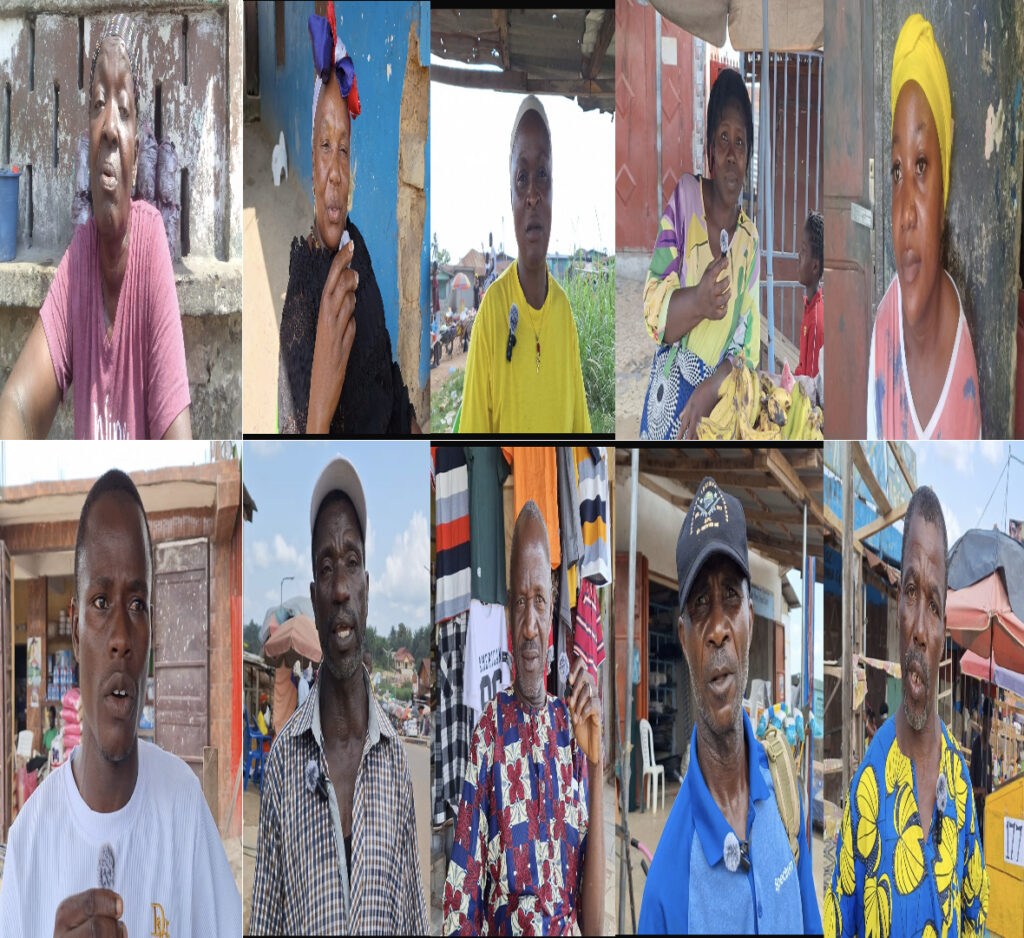
MONROVIA, LIBERIA – As President Joseph Nyuma Boakai, Sr. prepares to enter the third year of his administration on January 22, 2026, many Liberians, including ordinary citizens, from market stalls to schoolyards, are articulating their hopes and urgent recommendations for the government’s focus in the new year.
The President, who won the November 2023 runoff election with 50.64% of the vote, was inaugurated in January 2024 following a peaceful transition. With the next presidential election set for 2029, many Liberians feel the approaching mid-term is a critical juncture to solidify progress and address persistent challenges.
For Rita Sonkali, a single mother of four operating a small business, the past two years have been defined by economic strain. She describes a commercial environment that feels unstable and confusing for local sellers like herself. The collapse of her business, she explains, was due to a crippling lack of access to cash and affordable credit.
“With low cash flow, I could not maintain my business,” Sonkali stated. This hardship has had a direct impact on her family, forcing difficult choices about her children’s education. She sees this story reflected in countless households, where financial pressure is fracturing family stability.
Sonkali’s primary plea to the government is for the creation of clear, accessible credit avenues for small businesses in 2026. She argues that these traders are the engine of Liberia’s informal economy and need direct support. Furthermore, she ties the lack of meaningful job creation directly to social issues, noting, “Because there are no jobs, many fathers are abandoning their responsibilities.”
On broader economic policy, she recommends the government intensify efforts to stabilize the exchange rate and ensure prices of basic goods are aligned with market realities. While concerned about the economy, she offered strong praise for improvements in the energy sector, rating the government’s performance at 98% and urging a nationwide expansion of electricity access.
Investing in food sovereignty is another priority for Sonkali. She called for a significant increase in the Ministry of Agriculture’s budget, believing domestic food production is key to reducing costly imports. On urban living conditions, she criticized the Monrovia City Corporation for a narrow focus, arguing that a lack of community-level sanitation services leads to garbage being dumped in streets by at-risk youth.
The plight of young people is a recurring theme. Madam Eitta Dillon, a 65-year-old cold-water seller, highlighted the precarious gap between high school graduation and further opportunity. She sees many graduates idle, with limited pathways forward.
Dillon called on the government to expand scholarship programs for secondary school graduates and create structured vacation job opportunities. “More children are on the street because there are no opportunities from the government,” she observed, believing many would eagerly return to school if given financial and institutional support.
A powerful perspective came from nine-year-old Nathan, who put his concerns in a letter to President Boakai. He reminded the leader that education is a constitutional right and called for the Ministry of Education to be more visible and engaged with students directly.
Nathan also raised an alarm about children’s safety, particularly for girls, urging the government and police to ensure justice and protection. “We are the future leaders of this nation,” he wrote. “If we are not safe today, the future of Liberia is at risk.”
In central Monrovia, community leaders from Mechlin and Randall Streets voiced concerns over infrastructure and disaster preparedness. Mr. Eric Z. Teah, a community co-chair, described annual flooding exacerbated by poor sanitation and weak government response.
“Every rainy season, our communities are flooded. There is no effective sanitation or disaster response,” Teah said. He appealed for a stronger, coordinated effort between city authorities, the EPA, and the National Disaster Management Agency, with support for community-led initiatives.
Another resident, Mr. Emmanuel Barley, acknowledged some administration efforts but stressed that youth unemployment and child street vending remain severe. “The government is trying, but now is the time to move faster and invest in young people,” he stated, while praising recent actions against drug abuse.
Beyond the capital, in Nimba County, citizens emphasized foundational economic drivers. Alex D. Boog, a 31-year-old forex and mobile money businessman, called for stricter enforcement of government price stabilization policies. He cited a disconnect between official rates and market reality.
“The government will announce a rate, but people do what they want to do,” Boog explained, noting that consistent enforcement without favoritism is crucial for stability. He recommended the Liberia Revenue Authority actively monitor shops to ensure price compliance, arguing that disciplined economic governance is the path to growth.
For Yah D. Gbarlone, a 40-year-old petty trader, the struggle is daily and personal. Skyrocketing prices make covering her children’s school fees a constant battle. Her central appeal is for the government to make public primary and secondary education truly free, providing a lifeline to struggling families.
She also wishes for peace, and for expanded empowerment initiatives targeting vulnerable women and youth in rural communities, coupled with tangible job opportunities in the new year.
Sam Carwood, Chairperson of the Liberia Natural Resource Civil Society Platform, offered a measured critique. He credited the administration with maintaining peace and completing projects inherited from prior governments but noted a lack of new, signature initiatives.
“They’re finishing roads and stuff that were left hanging, but where’s the new stuff?” Carwood questioned. Looking ahead, he urged a focus on transparent natural resource management, human capital development, and attracting ethical investment, framing these as interconnected drivers of sustainable growth.
The call for price control was echoed forcefully by Eva Tokpah, a small-scale oil trader. She described a market where prices for essentials like food and fuel rise with inflation but never retreat, squeezing households relentlessly.
“Price control is key,” Tokpah insisted. She also urged a more serious, equitable fight against drug abuse, criticizing security forces for targeting minor offenders while overlooking influential figures. “They focus on petty vehicles at checkpoints, but officials’ cars get a free pass; that’s not fair. No pick and choose.”
Some citizens acknowledged areas of progress. Ruben Gbei, a commercial motorcyclist from Zolowee, expressed gratitude for relative gasoline price stability. “It’s been a game-changer for us commercial riders,” he said, looking ahead to 2026 with hopes for better roads, healthcare, and skills training for youth.
Agriculture was championed by 53-year-old farmer Alison Lama. “We Liberians live off our farms,” he said, urging President Boakai, an agriculturist himself, to prioritize massive investment in local farming. He envisioned a Liberia fed by its own rich soil, supported by roads to get produce to market and programs to empower growers.
The perspective from the public sector came from Peter Kamiyanyi Gbah, a teacher with four decades of service. His primary demand is for a realistic and substantial increase in civil servants’ salaries, paid reliably and in full. He criticized the current practice of partial US dollar payments as a deceptive and unsustainable solution.
Mr. Gbah also challenged the narrative that Liberia lacks systems. “We actually have a system, but people aren’t working within it. The system breaks down because promises made aren’t fulfilled,” he argued. He joined others in calling for an agricultural revolution to achieve food self-sufficiency and create jobs.
Finally, T. Joseph Sayee, a seasoned tailor and entrepreneur, highlighted the symbiotic relationship between governance and the private sector. “Many people want to work in government, but it’s the private sector that is helping the government succeed,” he explained.
Sayee called for a governance system built on the rule of law that would stimulate both public and private sectors. He identified agriculture and national security as critical foundations, stating, “A country without security is not really a country.” His hope for 2026 is a climate that attracts ethical foreign investment, ensuring citizens are participants, not spectators, in their economy.
The expectations are high and wide-ranging, covering economic stability, educational access, agricultural investment, job creation, and unwavering governance. As President Boakai’s administration moves into its third year, the citizenry has provided a clear, multifaceted agenda for the work ahead.