


-Costa Alleges, As Senate Re-passes Port Bill Linking French Billionaire
By Jerromie S. Walters
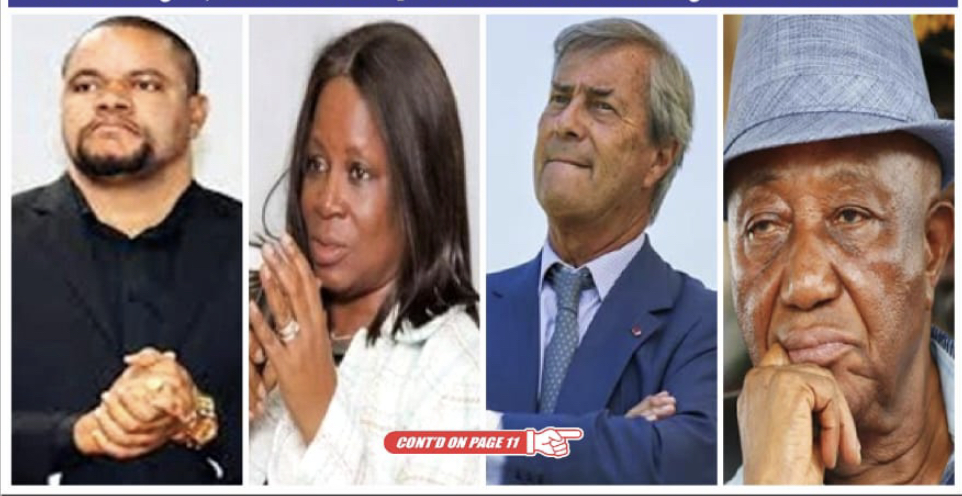
Monrovia — Prominent Liberian political commentator Henry P. Costa on Tuesday accused Senate Pro-Tempore Nyonblee Karnga-Lawrence of orchestrating a “plot” to push a Port Decentralization Bill that, he warned, would dismantle the National Port Authority and replace it with a new regulatory entity controlled by foreign interests.
Speaking to an audience via a Facebook live, Costa said the proposed law is not a genuine decentralization effort but a vehicle for privatizing key port assets and handing control to an entity tied to French business interests. He specifically named Vincent Bolloré (born April 1, 1952), describing him as a French billionaire businessman whom Costa alleged has been sponsoring Senator Karnga-Lawrence and others to advance the measure.
The bill was introduced by Senator Lawrence. Its review was handled by a Senate Joint Committee led by Montserrado County Senator H. Saah Joseph and Sinoe County Senator Augustine Chea. Costa’s accusations also center on the Port of Buchanan in Grand Bassa County, Senator Lawrence’s political stronghold. He claims the senator’s true motive is fragmentation, not decentralization. “Nyonblee has already been engaging the company that they are trying to give the port out to. Nyonblee only wants the Buchanan Port. They want sell it to these people-” he alleged.
According to him, the push has already moved beyond parliamentary debate into what he framed as preemptive deal-making. He claimed: “Nyonblee is not interested in decentralization. Nyonblee’s agenda is fragmentation and chaos so they can sell the Buchanan Port” Costa asserted lawmakers and associates of the senator have met with representatives of Africa Global Logistics (AGL) — a firm he linked to the French investor, as hebdisolayed photographs and other materials documenting these meetings. According to Costa, those interactions show parties negotiating concessions and terms well before any bill has become law.
“The executive branch, not the legislature, initiates the concessioning of national assets,” Costa argued, framing the meetings and negotiations as a usurpation of executive authority and a violation of the separation of powers. He warned that the fast-tracked legislative process and outside financing suggest the law’s rapid passage could be driven by moneyed interests rather than public interest.
Costa also referenced past controversies involving foreign influence in African infrastructure concessions and urged Liberians to scrutinize the bill and the actors behind it. Senate Pro-Tempore Nyonblee Karnga-Lawrence, and the entities Costa named were not available to respond to requests for comment.
Acting on the Bill:
President Joseph Boakai returned the bills to the Legislature, exercising his authority under Article 35 of the Constitution. He urged lawmakers to reconsider the measures in the interest of national stability and effective governance. In his veto message, the President warned that the two Acts are legally inseparable. He argued that autonomous ports cannot function without a clear and constitutionally sound regulatory framework
As such, he said passing one law without fixing the other would fragment the maritime sector and create institutional instability. Despite these warnings, the Senate re-passed the legislation without materially addressing the President’s concerns. Critics now accuse lawmakers of undermining the Executive’s constitutional role by disregarding the substance of the veto. A key legal opinion from Justice Minister and Attorney General Oswald Tweh, issued on July 14, 2025, lies at the heart of the dispute.
While acknowledging the Legislature’s authority to enact laws, Tweh cautioned that restructuring Liberia’s maritime sector represents one of the most far-reaching institutional changes since independence. He stressed that such reform requires careful constitutional scrutiny, practical assessment, and close coordination with the Executive. The Attorney General specifically warned that the proposed Liberia Sea and Inland Ports Regulatory Authority Act creates a flawed regulatory framework
He noted that the Act grants the new Authority overly broad powers—to approve tariffs, regulate operations, oversee safety, implement international conventions, and even develop port facilities. Concentrating regulatory, oversight, and operational functions within a single institution, he argued, creates inherent conflicts of interest and undermines regulatory independence. Tweh also criticized the Legislature for excluding the Executive from the legislative process.
While such consultation is not constitutionally required, he warned that proceeding unilaterally on reforms of this magnitude ignores vital executive expertise and institutional knowledge. Nevertheless, the Liberian Senate has pressed ahead, re-passing the sweeping port reform legislation in defiance of the presidential veto. The Senate’s action confirms its resolve to dismantle the National Port Authority and replace it with a new decentralized regime, despite strong objections from the President and the Ministry of Justice.
The re-passed package consists of two linked Acts: The Liberia Sea and Inland Ports Regulatory Authority Act of 2024 and The Liberia Sea and Inland Ports Decentralization and Modernization Act of 2024.
Together, these Acts repeal the National Port Authority Act, dissolve the NPA, establish four autonomous seaports (Monrovia, Buchanan, Greenville, and Harper), and create a new Regulatory Authority with expansive oversight over the country’s ports and maritime activities.
A prominent Liberia, who preferred to be named, says allegations of foreign influence and rapid privatization efforts can inflame public concern; independent verification of Costa’s claims will be necessary to determine the extent and nature of any external involvement.
The hidden hand?
Vincent Bolloré (born April 1, 1952) is a French billionaire businessman and media mogul. As of January 2026, he remains one of France’s most influential and controversial figures, known for his vast industrial empire and significant control over French media. In November 2025, a Paris court rejected Bolloré’s request to dismiss a long-running corruption case, clearing the path for him to stand trial.
The charges involve allegations that his group provided discounted communication services to leaders in Togo and Guinea in exchange for lucrative port concessions between 2009 and 2011.bIn December 2024, Bolloré’s conglomerate Vivendi completed a major spin-off of its key assets. Canal+ Group (listed in London), Havas, and Louis Hachette Group became independent entities to maximize shareholder value, though the Bolloré family remains the dominant shareholder.
As of January 6, 2026, Bloomberg estimates his net worth at approximately $10 billion, ranking him among the 250 wealthiest people globally. The family-owned conglomerate (founded in 1822) originally specialized in paper but transitioned into transport, logistics, and energy storage. Often called the “French Rupert Murdoch,” Bolloré has significantly reshaped the French media landscape by acquiring and steering outlets toward a conservative editorial line.