


By Vaye Abel Lepolu
Monrovia: Orange GSM Liberia has launched a new renewable energy initiative aimed at supporting poultry farming and strengthening agricultural productivity across the country through solar-powered solutions.
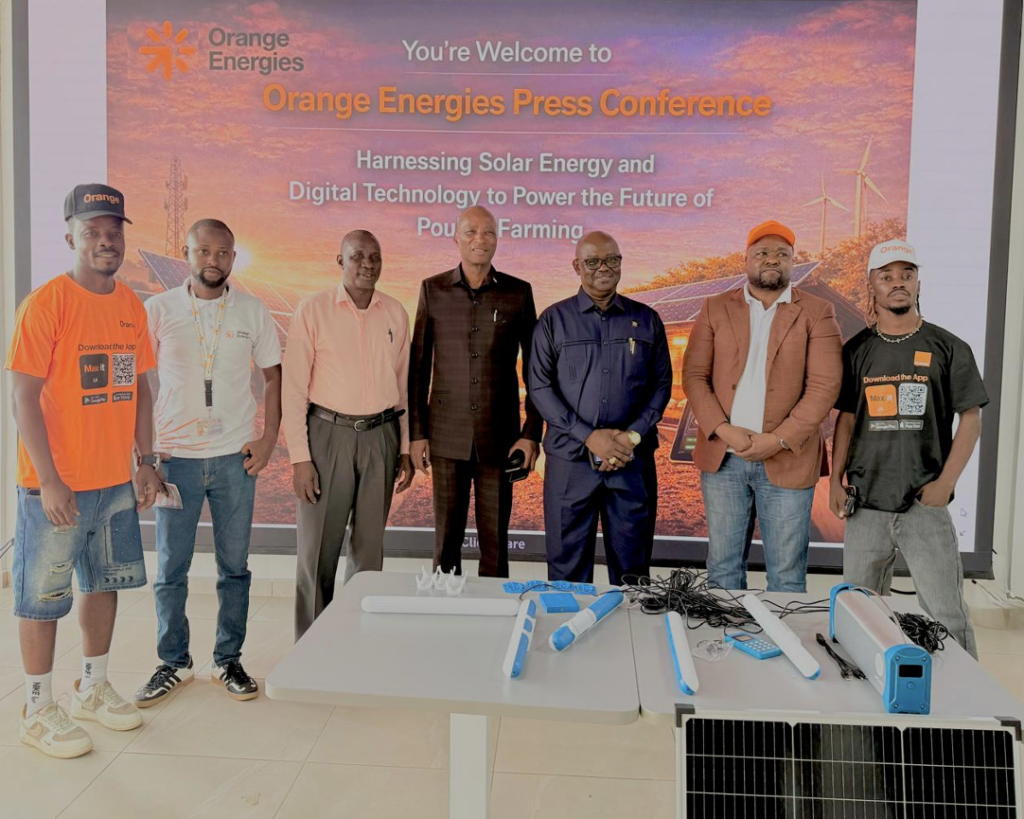
The initiative, known as Orange Energies, was formally launched on March 12, 2026, at Orange Liberia’s head office on 16 Street, Sinkor.
Officials say it is part of the Orange Group’s broader strategy to expand access to clean, reliable, and affordable energy in communities where electricity access remains limited. The program is designed to support sustainable development, economic empowerment, and digital inclusion by providing solar-powered solutions for homes, businesses, and agricultural activities.
In Liberia, Orange Energies is introducing a range of solar products and appliances to help households and entrepreneurs improve their operations. These include solar home systems, lighting equipment, and solar-powered appliances such as refrigerators and freezers, which are expected to help farmers and business owners preserve goods, reduce losses, and increase productivity.
One of the key features of the initiative is the integration of digital technology with solar energy systems, allowing users to monitor their energy consumption and make payments through flexible pay-as-you-go options. This approach is intended to make clean energy solutions more accessible to low-income families and small-scale business owners.
The initiative is expected to significantly impact the agriculture sector, particularly poultry farming and food preservation, where reliable electricity remains a major challenge. Stakeholders in Liberia’s agriculture and energy sectors have welcomed the move, describing it as a positive step toward improving agricultural production and supporting farmers across the country.
Speaking during the program, Mr. Joseph N. Kodah Sr. of the Liberia Poultry Federation emphasized the importance of adopting solar energy and other renewable power solutions in agriculture. According to him, solar-powered systems can help poultry farmers maintain proper lighting for chicks and chickens, which is essential for their growth and egg production. He noted that many farmers currently depend on unstable electricity from the Liberia Electricity Corporation (LEC) or costly fuel-powered generators, making poultry production more expensive.
Kodah also highlighted the potential benefits of solar energy for other productive sectors, including fisheries and food storage. He said solar-powered refrigeration systems could enable fishermen and farmers to preserve fish, vegetables, and other perishable goods, thereby preventing spoilage and financial losses.
“Solar energy provides a reliable and affordable source of power that farmers can use for productive purposes such as poultry farming, irrigation, and food preservation,” he said.
He further noted that Liberia has significant potential for solar energy due to the country’s strong sunlight throughout the year, although limited financing opportunities remain a challenge for expanding renewable energy investments. Meanwhile, Samuel Nagbe, Executive Director of the Rural and Renewable Energy Agency (RREA), described the initiative as an important step toward transforming Liberia’s agricultural sector.
Nagbe stressed that reliable electricity is essential for agricultural development, particularly for poultry farms, rice processing, and the preservation of vegetables and other farm products. He added that many rural communities still lack stable electricity, which continues to affect productivity.
He disclosed that the government is working to expand renewable energy access across Liberia’s fifteen counties to ensure that farmers and rural communities benefit from sustainable energy solutions.
Nagbe also praised private sector partners for supporting innovation and youth empowerment programs aimed at improving livelihoods across the country.
Also speaking at the event, Hon. David K. Akoi, Deputy Minister at the Ministry of Agriculture, encouraged Liberians to support local poultry production to strengthen the country’s food security. He expressed concern over the large quantity of frozen chicken imported into Liberia, noting that many of the products spend months in storage before reaching the market.
According to him, increasing local poultry production will create employment opportunities, improve nutrition, and reduce Liberia’s reliance on imported poultry products. “Liberia has the potential to develop its own poultry industry and support farmers who can supply fresh chicken and eggs to the market,” he said.
Officials believe that the introduction of renewable energy technologies in agriculture will help reduce production costs, improve efficiency, and strengthen food security across Liberia.