

By Jerromie S. Walters
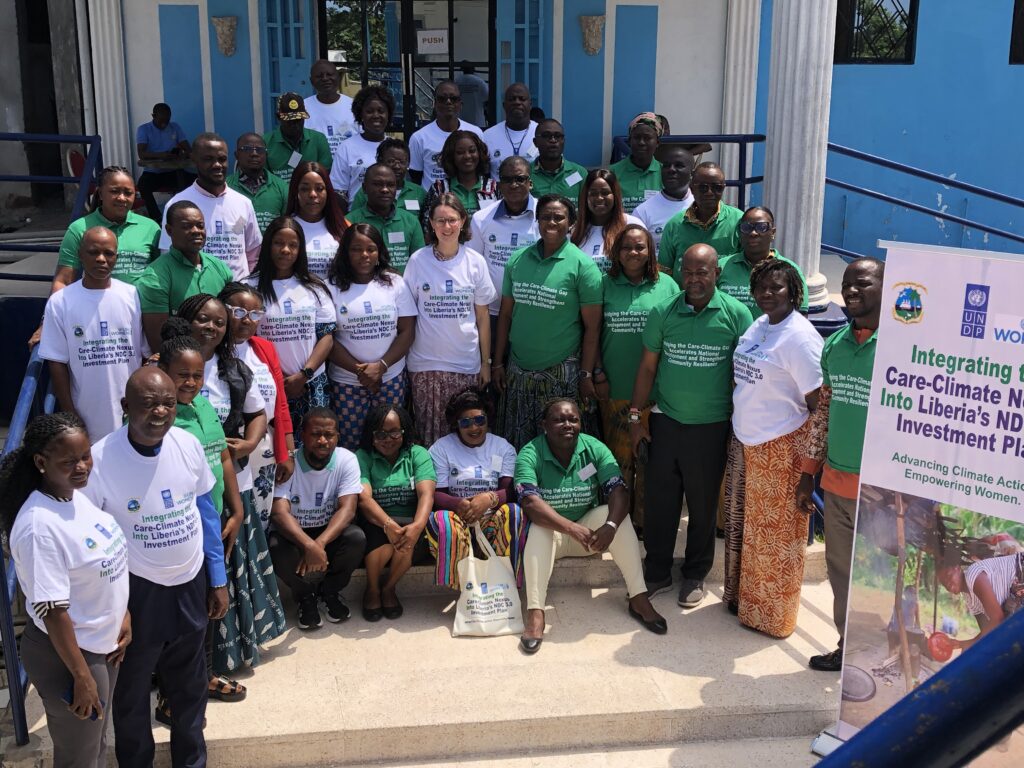
Buchanan, Grand Bassa County – Stakeholders from government, international development partners, and civil society converged in Buchanan this week for a dialogue on integrating care systems into Liberia’s green transformation agenda. The two-day event, titled “Nurturing the Future: Integrating Care Systems into Liberia’s Green Transformation, setting gender priorities in the NDC 3.0 Investment Plan,” commenced on March 3, 2026, with a focus on understanding the critical intersection between unpaid care work and climate action.
The forum, organized by UN Women in collaboration with the Environmental Protection Agency (EPA) and other key line ministries, aims to ensure that Liberia’s updated Nationally Determined Contributions (NDC 3.0) Investment Plan is not only environmentally sustainable but also socially inclusive.
Yemi Falayajo, Deputy Country Representative for UN Women, urged urgent action to ensure women and girls benefit from Liberia’s emerging carbon trade market during the opening of the engagement on Wednesday in Grand Bassa County. Falayajo hailed Liberia’s stewardship of its environment and called on policymakers and stakeholders to translate that advantage into equitable economic gains. “This is a big, big, big achievement for Liberia,” she said, noting that while conflict and instability plague parts of the region, “Liberia is still green.”
She pressed for deliberate measures to channel benefits from carbon credits to those who sustain the land: “How do we ensure that the women and girls and men and boys that are contributing to this carbon currency also benefit from the trade?” Falayajo applauded the government’s commitment to allocate at least 20% of national carbon credit revenues to women and girls, framing it as a recognition of women’s central role in sustainable agriculture. “Because of the way women do agriculture…we don’t abuse the land,” she said, arguing that women’s agricultural practices contribute substantially to the credits the country will trade.
The Deputy Country Representative emphasized the care-climate nexus, outlining how unpaid care responsibilities and labor-intensive domestic routines limit women’s capacity to engage fully in climate-resilient agriculture and benefit from climate finance. Drawing on a vignette of a rural woman—referred to in the discussion as “Madam Kema”—Falayajo detailed a typical day that begins before dawn with fetching water, preparing meals, and tending to children, followed by arduous farm work with limited mechanization or inputs.
Falayajo contrasted this with the daily patterns of men in the same households, illustrating how unequal care burdens leave women with diminished time and energy for productive agricultural activities and participation in training, distribution, or administrative processes linked to climate finance. She warned that without addressing these care responsibilities, programs intended to boost climate-smart agriculture and carbon revenue participation risk excluding the women who are already doing much of the conservation work.
Falayajo stressed the need for targeted measures that increase women’s awareness of national climate contributions and carbon markets, reduce the burden of care, expand access to inputs and equipment, and ensure transparent, gender-responsive benefit-sharing mechanisms. She called for integrated policies that link care systems (such as child care, water, and energy infrastructure) with climate investment plans to make women’s contributions visible, remunerable, and sustainable. She urged that gender priorities be central to design and implementation so that carbon finance not only supports national climate goals but also empowers the women and communities who safeguard Liberia’s green assets.
In a special statement, Joanna Markbreiter of the British Embassy in Liberia, framed the conversation as both practical and deeply personal. Markbreiter urged participants to embrace open, sometimes difficult discussions about how changing social norms and policy can share care responsibilities more equitably and strengthen climate resilience. Drawing on examples from the United Kingdom, she highlighted small cultural shifts — including men taking on caregiving roles and paternity supports — as evidence that structural incentives and language can change behavior without harming either gender. Markbreiter emphasized the importance of locally owned solutions, saying global commitments matter only if they resonate with and are delivered by communities on the ground.
Conspicuously, Salimatu Gilayeneh of UNDP emphasized UNDP’s partnership with UN Women and the Government of Liberia to ensure gender is central to climate investment planning. Gilayeneh praised Liberia’s progress in elevating gender within the country’s third Nationally Determined Contribution (NDC 3.0) — including an unprecedented commitment to allocate 20% of climate investments to gender-related actions — and urged the dialogue’s participants to produce a clear roadmap for integrating the care–climate nexus into the forthcoming NDC investment plan.
She stressed the need for transparent discussion about lived experience and practical priorities so that the investment plan results in measurable, inclusive climate finance and implementation. Like other speakers, Curtis Dorley, Deputy Minister for Planning and Research at the Ministry of Gender, Children and Social Protection, highlighted the disproportionate impacts of climate change on women, girls, and people with disabilities.
Dorley called for concrete policy measures: climate education across curricula, targeted scholarships and mentorships for women, specialized training and accessibility for persons with disabilities, and gender-responsive social protection. He insisted that climate policy that ignores gender is both unjust and ineffective, noting women’s central role in securing food, water, and energy at the household level and their critical contributions to adaptation and mitigation solutions.
Representing the Environmental Protection Agency — attending on behalf of EPA Executive Director Dr. Emmanuel K. Urey Yarkpawolo, Mr. Benjamin Karmohn, Chief Technical Advisor to the Executive Director— reaffirmed the agency’s commitment to mainstreaming the care–climate nexus into Liberia’s NDC 3.0 investment and financial plan. He outlined the practical stakes for Liberian women, particularly in agriculture, who face worsening erratic rainfall, higher temperatures, and other climate stressors that intensify unpaid care burdens and undermine livelihoods. Karmohn said the EPA is already engaging UNDP, UNEP, and other partners to ensure the nexus is reflected in investment planning and called on civil society, development partners, and local authorities to join coordinated efforts that will boost women’s resilience and economic participation.
The technical sessions of the exercise delved into the practicalities of the nexus. After a session on expectations, Emmanuel M. Peters, the EPA’s Director of Gender and Social Inclusion at the EPA, elaborated on “Liberia’s NDC 3.0 and Inclusive Green Transformation,”. Elena Ruiz Abril, WEE Regional Advisor for UN Women, framed the “care-climate nexus” within the context of the NDC. She also shared best practices from other countries on how climate policies can either exacerbate or alleviate gender inequalities.
A high-level panel discussion explored “Why Care Infrastructure Matters for Green Transformation.” Panelists, including Jauhan Vincentta Nimene (Ministry of Labor), Rosetta Fardolo (FLY), and Ezekiel Nyanfor (Action Aid Liberia), elaborated on how investments in renewable energy, reforestation, and sustainable agriculture must be paired with investments in social infrastructure like childcare and healthcare. They stressed that:without addressing the unequal burden of care that falls on women, their full participation in the new green economy will remain limited.
The afternoon sessions provided the technical toolkit for participants. Dr. John Solunta Smith, Jr. of UN Women delivered a comprehensive introduction to the Care Economy, breaking down its components, significance, and unmeasured contribution to national well-being. This was followed by a presentation from Salimatu Gilayeneh of UNDP on “Identifying Entry Points for Care in the NDC 3.0 Investment Plan”.
The day was concluded with participants’ engagement in a reflective session to identify emerging themes, gaps, and opportunities. According to the stakeholders, the insights gathered by the rapporteurs will feed directly into the development of the NDC 3.0 Investment Plan, ensuring that the vision of a green Liberia is also a just and caring one.
Meanwhile, the engagement climaxed on Thursday, March 5, 2026, with the presentation segment with a comprehensive overview titled “Understanding the Care Snapshot Report & Budget Implications,” providing attendees with the foundational data needed to link unpaid care work to fiscal planning. This was followed by a joint presentation on “Mapping Care Burdens & Climate Vulnerabilities”. The session highlighted the disproportionate impact of climate change on those responsible for unpaid care.
The morning sessions resumed with a presentation on “Designing Triple-Win Solutions: Climate, Gender & Care Interventions.” Practical initiatives such as solar water systems, clean cooking technologies, community care centers, and the promotion of green jobs, were outlined, illustrating how one investment could yield benefits across three critical sectors. Following this, participants moved into structured group work. Four working groups were tasked with the same objective: to identify five concrete policy recommendations, five actionable steps, define stakeholder roles, and outline budget considerations.
Group 1 was led by the EPA, Group 2 by the Ministry of Gender, Children and Social Protection (MGCSP), Group 3 by the Ministry of Labour, and Group 4 by the Youth and GYC Technical Working Groups. The groups worked and later reconvened to finalize their proposals. A formal Call to Action was adopted through a document synthesizing the recommendations from the dialogue into a unified commitment to integrate care priorities into Liberia’s national investment plan.