

–𝗛𝗼𝘂𝘀𝗲 𝗣𝗮𝘀𝘀𝗲𝘀 𝗔𝗿𝗰𝗲𝗹𝗼𝗿𝗠𝗶𝘁𝘁𝗮𝗹 𝗧𝗵𝗶𝗿𝗱 𝗔𝗺𝗲𝗻𝗱𝗺𝗲𝗻𝘁
By Jerromie S. Walters
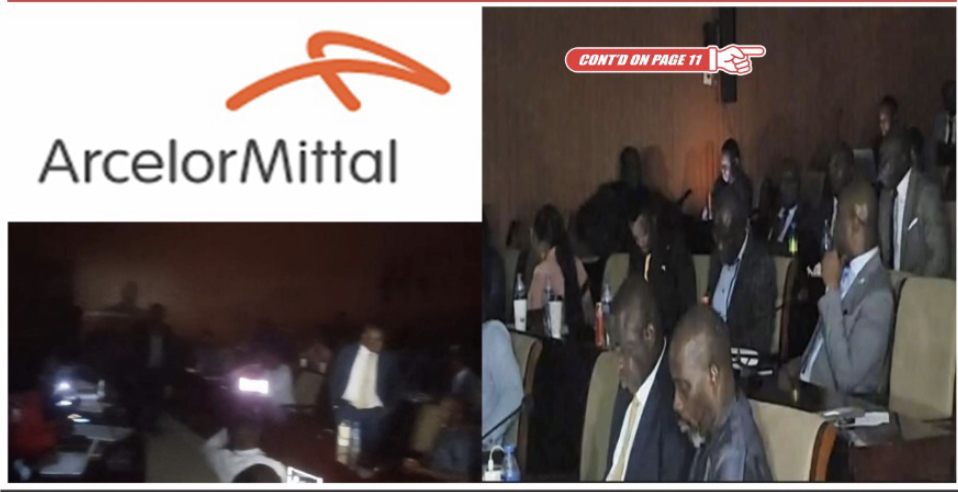
MONROVIA – In a late-night session on Tuesday, January 20, 2026, the Plenary of the House of Representatives voted to approve the Third Amendment to the ArcelorMittal Liberia (AML) Mineral Development Agreement (MDA). Lawmakers described the passage, which occurred after 8:00 PM, as a critical move made firmly in the best interest of the Liberian people.
The vote capped a marathon day that tested the chamber’s procedural norms. The session, legally mandated to begin at 10:00 AM, was repeatedly delayed. An official announcement from the Speaker’s office initially pushed the start time to 2:00 PM, but the gavel finally fell to commence public proceedings after 4:00 PM, only for the agenda to be swiftly interrupted.
Shortly after opening, a motion from the Speaker called for an immediate executive session, prompting lawmakers to retreat into closed-door deliberations. This secret session lasted for several hours, shrouding the final stages of debate in confidentiality. The Plenary reconvened in public after nightfall, moving swiftly to a vote that secured the agreement’s passage.
This pattern of protracted delay heeded by accelerated midnight action mirrors the legislative process often employed for the national budget, where extended negotiations frequently culminate in late-night approvals.
The passage followed the presentation of a comprehensive report by the Joint Committee on Investment and Concessions; Lands, Mines, Energy, Natural Resources and Environment; and Judiciary, delivered by the Joint Chairman, Hon. Foday E. Fahnbulleh
Pursuant to Plenary’s mandate, the Joint Committee conducted a public hearing on the Third Amendment on Monday, January 19, 2026, at the Capitol Building in Monrovia. The hearing examined the substance of the proposed amendment, its national value, and its alignment with Liberia’s economic, social, and strategic interests.
The document delivers a robust affirmation of the Third Amendment to the AML Mineral Development Agreement (MDA), characterizing it as a “strong, balanced, and forward-looking instrument” that markedly advances Liberia’s national interests.
Key figures from the Ministries of Mines and Energy, Justice, Finance and Development Planning, Labor, and the National Investment Commission provided detailed testimony. They outlined their respective roles in the protracted negotiation process, which began in 2020, faced a decisive legislative rejection in March 2022, and underwent several additional years of renegotiation to address earlier deficiencies identified by lawmakers.
After over four hours of rigorous inquiry, testimony review, and closed-door deliberations, the Committee established that the revised pact represents a definitive improvement over the existing MDA. The report highlights transformative gains in five critical areas: government revenue, infrastructure ownership, employment, domestic participation, and regulatory enforcement, which had been persistent public concerns.
A cornerstone of the Committee’s findings is the amendment’s resolution of the long-debated status of the nation’s strategic rail and port infrastructure. The agreement explicitly affirms Government of Liberia ownership and introduces the first-ever Rail System Operating Principles (RSOP), transitioning the corridor from an exclusive-use system to a regulated multi-user framework, a move heralded as a victory for national sovereignty and regional economic integration.
On the paramount issue of economic benefit, the Committee detailed substantial and immediate fiscal advantages. These include a massive US$200 million signature bonus payable within 30 days of the agreement’s enactment, a significant increase in royalty payments to 4.5%, and a fixed annual mining license fee of US$500,000 from 2031, replacing a nominal historic fee.
The agreement also embeds enforceable commitments to Liberian workforce advancement, a process termed “Liberianization.” It mandates that 50% of management positions be held by Liberians within one year, escalating to 90% within a decade, and requires at least one Liberian among the top four executive roles. The pact further institutes an absolute hiring preference for qualified nationals at all levels.
Complementing the employment mandates are structured investments in national human capital. AML is obligated to fund a US$500,000 annual training budget, provide scholarships for mining-related fields prioritizing students from affected counties, establish a new vocational training campus in Grand Bassa County, and make annual contributions to the University of Liberia’s Mining and Geology Institute.
Infrastructure modernization forms another pillar of the amended deal. Commitments include the repair of critical bridges, the paving of key roads including the Sanniquellie-Yekepa corridor, and an immediate upgrade of rail capacity to 30 million tons per annum. Crucially, the government is guaranteed at least 8 million tons of annual rail capacity for third-party users and will receive 30% of net profits from AML’s leasing of unused capacity.
The Committee also noted strengthened environmental safeguards, notably a requirement for AML to use primarily harvested rainwater for its mining operations to protect community water sources. This is coupled with an annual US$100,000 payment to the Liberia Water and Sewer Corporation.
In its conclusion, the report acknowledges that while no concession agreement is perfect, the Third Amendment successfully balances investor returns with a compelling national interest. It positions Liberia as a destination for responsible investment, strengthens fiscal predictability, and promotes regional trade through the open-access rail protocol.
Following hours of heated debate, Plenary endorsed the report in its entirety and voted to pass the Third Amendment without reservation.
The approved agreement has now been forwarded to the Liberian Senate for concurrence.