

-MOE To Probe Christoph-Convent Explicit Performance, Amid Public Backlash
By Jerromie S. Walters
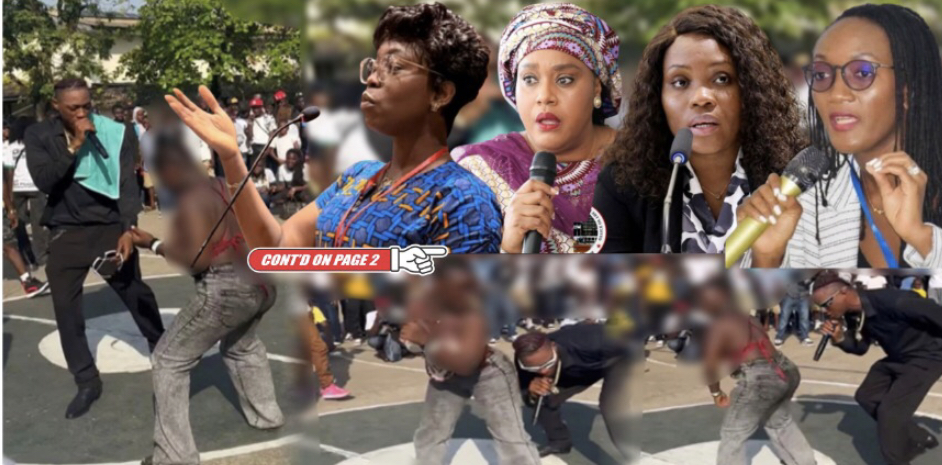
Monrovia: A performance by popular Liberian artist Christoph the Change at St. Theresa Convent Catholic School has triggered an immediate investigation by the Ministry of Education, following national controversy and widespread outrage among parents. The event has left many questioning who is responsible for safeguarding the nation’s youth.
In a statement issued Sunday, February 8, 202, the Ministry of Education described the content of the performance as “inappropriate for minors” and raises serious safeguarding concerns. “The Ministry is currently verifying the circumstances under which the event occurred, including whether it was authorized, the parties responsible, and the level of supervision present,” the statement reads.
The statement further noted, “Pending the outcome of this process, the Ministry is engaging the relevant school authorities and will take appropriate action in line with national education policies. Further communication will be issued in due course.”
During the school’s event on Friday, February 7, 2026, Christoph performed his song “XXX,” a track containing explicit and suggestive adult lyrics. Viral videos from the event show students, including minors, enthusiastically singing and dancing along to the song’s graphic content. The footage has ignited a firestorm of public outrage, particularly among parents who entrusted the Catholic institution with their children’s welfare.
The sight of schoolgirls at a disciplined convent school chanting clumsy adult lyrics has struck a nerve far beyond the school’s walls. For many Liberians, the incident represents a stark breach of trust and a failure of the protective barriers that schools, especially religious ones, are expected to maintain.
Prominent legal practitioner and alumna of the school, Morial Yekulah, expressed her dismay after confirming the campus in the video was indeed her alma mater. “I kept thinking is this Convent?” Yekulah stated, pinpointing the collective shock felt by many who hold the institution in high esteem.
Yekulah offered a nuanced perspective on the students’ behavior, urging public understanding. She acknowledged that while the lyrics were inappropriate for minors, teenagers have long engaged with provocative music, albeit without the permanence of social media. “We sang similar songs too, just without the cameras,” she reflected, calling for grace for the students and constructive dialogue rather than harsh condemnation.
However, Yekulah was unequivocal in assigning blame to the adults involved. She asserted that the artist bears a “huge responsibility” and that his decision to dance with a minor in a suggestive manner was “completely unacceptable.” She called for Christoph to be banned from performing at any school or child-centric event.
“The adults in the room failed the students,” Yekulah concluded, arguing that ultimate accountability lies with the school administration and teaching staff who permitted the performance. She suggested that consequences for this failure should be severe, stating, “one or two heads should roll.”
Women’s rights defender Naomi Tulay-Sulunke echoed the sentiment that the primary fault lies with the institution’s oversight. “The school should not have allowed the artist!” she declared, noting the inevitability of students following popular trends.
The controversy has drawn condemnation from high-ranking officials. Youth and Sports Minister-Designate Cornelia W. Kruah called the video “just too painful to watch,” questioning how the performance was ever permitted on school grounds.
Mohammed Ali, Managing Director of the Liberia Water and Sewer Corporation, also weighed in, directly criticizing the artist’s judgment. “The man was simply very irresponsible,” Ali stated, arguing that Christoph should have understood the inappropriateness of his material for a high school audience.
In response to the mounting criticism, Christoph’s public relations team has issued an informal statement seeking to shift the narrative. Led by Joseph J. Ghanyan, the team claims the artist submitted five songs for prior approval by the school and that the controversial track was played repeatedly by DJs due to fervent student demand.
This defense has done little to quell public anger and has, instead, intensified scrutiny on St. Theresa Convent’s administration. A significant portion of the national conversation now questions the school’s internal controls and decision-making process for the Gala Day.
Many critics argue that regardless of student requests or submitted setlists, the school’s staff had a fundamental duty to intervene and stop any performance that blatantly contradicted the institution’s values. The failure to do so, they say, represents a profound administrative lapse.
At the heart of the national discourse is a fraught question of artistic responsibility. The incident forces a confrontation about where an entertainer’s creative expression ends and their duty to a vulnerable audience begins, particularly within the sacred space of a school.
For countless Liberian families, the episode transcends a single viral video. It has ignited urgent concerns about the cultural influences permeating their children’s lives and the vigilance of the institutions tasked with their upbringing during school hours.
The management of St. Theresa Convent Catholic School now faces intense pressure to provide a comprehensive account of the events leading to the performance and to outline concrete steps to prevent any future recurrence. Parents and alumni are demanding answers and assurances.