

-Rep. Briggs-Mensah Blasts House’s Voting Procedure on Tax Bill
By Jerromie S. Walters
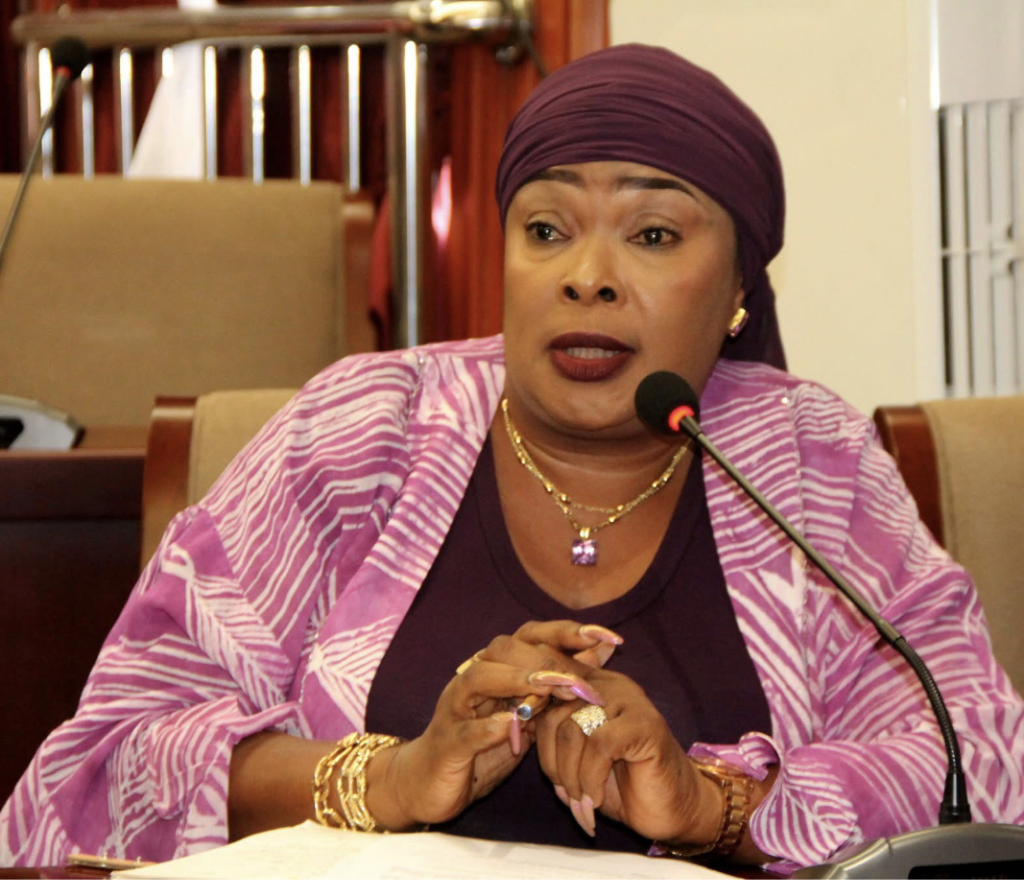
MONROVIA, Liberia – Tensions erupted on the floor of the House of Representatives on Tuesday, January 13, 2026, as a dispute over parliamentary procedure escalated, leading to Bong County District #6 Representative, Moima Briggs-Mensah being ordered out of the chamber by Speaker Richard Nagbe Koon, during a crucial debate on tax legislation.
The incident occurred during the first day sitting of the 3rd Session of the 55th Legislature as the body considered an amendment to the Liberia Revenue Code. The agenda item, containing joint committee reports on “An Act to Amend Part 1 of the Liberia Revenue Code” and the proposed “Liberia Management Act of 2025,” prompted criticism from Representative Briggs-Mensah.
The Bong County District #6 lawmaker who also serves as a member of Liberia’s delegation to the ECOWAS Parliament, objected to the Speaker’s use of a voice vote—where members simply call out “yea” or “nay”—for such a sensitive fiscal matter. “You can control this floor and get the votes. You can’t do such a thing with yea and nay. It can’t. Let me be on the record for that. You can’t do this, it’s embarrassing us,” Representative Mensah stated.
She further noted: “It is not debated than you say yea/nay. You just need to do the right thing,” Briggs-Mensah stated emphatically, demanding her objection be entered into the official record. Her objection centered on the argument that a major amendment to the nation’s revenue code demands greater transparency and accountability than a voice vote allows.
The lawmaker advocated for a roll-call vote, a method she highlighted is standard in the ECOWAS Parliament, where each lawmaker’s position is individually recorded. Her words: “That is an amendment of revenue code. We will vote for the thing but the wrong thing must not be done. We will not tolerate it. How will we do revenue code amendment like this? We can’t.”
The matter later became heated following her sustained objections, and the Speaker instructed the Sergeant-at-Arms to escort Representative Briggs-Mensah from the chambers. She resisted the order, justifying her stance. “I will not go nowhere because I am not doing the wrong thing,” she asserted.
The bills in question aim to establish a new legal framework for tax incentives and government expenditure management. According to Rule 19.1 of the House of Representatives rules, the standard voting method is a voice vote, where the Speaker judges the outcome by the chorus of “Ayes” and “Nays.” If the result is too close to call by sound, the procedure mandates a follow-up vote by a show of hands for an accurate count.
It states: “When a question is put, the consensus of the House of Representatives shall be taken by the voices of the Members, and the Speaker shall announce the vote as it appears to him/her by the sound. Sometimes it is difficult for the Speaker to determine, based on the volume of each response, whether more Members shouted‘’AyeorNay’’. Insuchcase, vote shall be conducted by a show of hand. When considering a measure by unanimous consent, the Speaker may say “without objection the question is adopted’’ in lieu of a vote. However, any Member may object to that and force a vote.”
On the other hand, the ECOWAS Parliament uses the Roll-Call Vote method, a standard parliamentary procedure that includes a simple majority vote.