

-From the Supreme Court
By Vaye Abel Lepolu
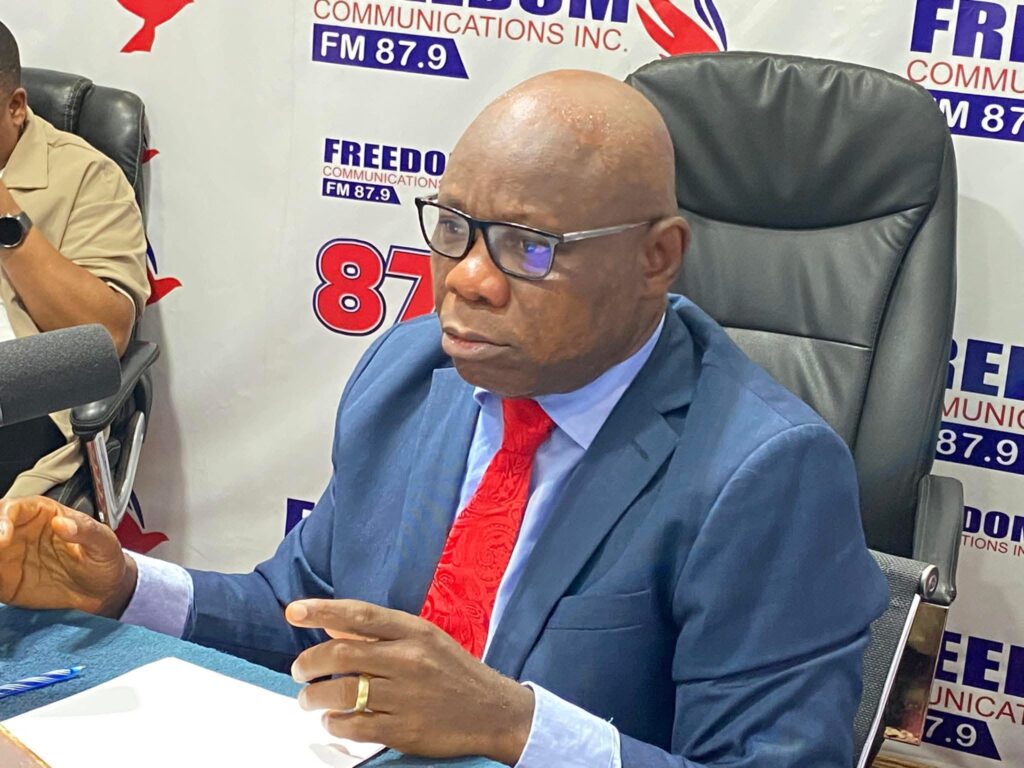
On February 12, 2026, the Supreme Court dismissed a petition for reargument filed by former Finance Minister Samuel D. Tweah and four other former senior officials, ruling that they are not protected by presidential immunity and must stand trial on multiple criminal charges.
However, the decision reaffirms the Court’s December 18, 2025 ruling that denied the defendants’ petition for a writ of prohibition, which had sought to stop proceedings at Criminal Assizes “C” in Montserrado County. Those affected by the ruling include Samuel D. Tweah, Cllr. Nyenati Tuan, Stanley S. Ford, D. Moses P. Cooper, and Jefferson Karmoh are charged with economic sabotage, theft of property, money laundering, criminal facilitation, and criminal conspiracy.
Meanwhile, the defendants argued that their roles as members of the National Security Council (NSC) placed them under the authority of the President, making them beneficiaries of the immunity granted to the President under Article 61 of the Constitution. The Supreme Court rejected this interpretation, ruling that constitutional immunity is strictly personal to the President and cannot be transferred to other officials, regardless of their advisory or statutory positions.
In its opinion, the Court emphasized that neither the Constitution nor the National Security Reform and Intelligence Act of 2011 provides any form of immunity for members of the NSC. “The immunity enjoyed by the President springs from the Constitution and is not transferable to third parties,” the Court stated.
The petitioners had also claimed that the Court relied on an incorrect section of the National Security Reform and Intelligence Act in its earlier decision. Although the Court acknowledged a miscitation, it ruled that the error was harmless and did not affect the legal conclusion, noting that no provision of the Act grants immunity to Council members.
In further to that, the Supreme Court further explained that re-argument is only permissible when a material fact or controlling legal principle has been overlooked, stressing that the procedure is not intended to give parties another chance to re-argue previously decided issues. Finding no basis to alter its earlier ruling, the Court denied the petition and ordered the Clerk of the Supreme Court to issue a mandate directing the trial court to resume jurisdiction and proceed with the case.
The judgment was signed by Chief Justice Yamie Quiqui Gbeisay, Sr., and Associate Justices Yussif D. Kaba and Boakai N. Kanneh. Associate Justices Jamesetta Howard Wolokolie and Ceaineh D. Clinton-Johnson recused themselves and took no part in the decision. The ruling removes the last Supreme Court-level procedural obstacle and formally opens the way for the criminal prosecution of the former officials to continue.