

-Rep. Enders Questions House’s Decision to Increase Electoral Districts
By Jerromie S. Walters
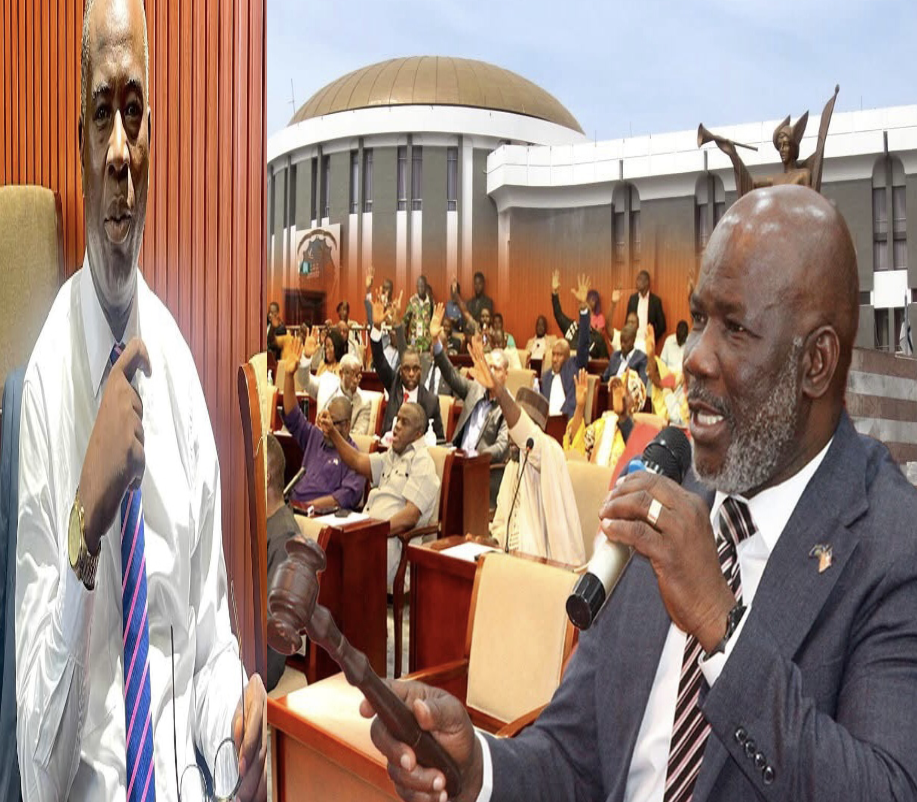
MONROVIA, Liberia – The House of Representatives has passed a resolution to significantly alter the nation’s political landscape ahead of the 2029 elections. Lawmakers voted on Tuesday, December 9, 2025, to increase the total number of seats in the body from 73 to 87. This decision, pending concurrence from the Liberian Senate, would introduce fourteen entirely new electoral districts across the country.
The move followed the submission of a detailed report from a special Joint Committee of the legislature. That committee, comprising members from Elections and Inauguration, Judiciary, and Good Governance, had been tasked with developing a framework for reapportionment. Its recommendations were designed to align representation with constitutional mandates and shifting population dynamics.
According to the framework endorsed by the plenary, the proposed distribution of the additional seats is specific and county-based. Montserrado County, the nation’s most populous, is slated to receive four of the new seats under this approved plan. Both Bong County and Lofa County are allocated two additional seats each in the proposal.
Furthermore, Nimba County would also gain two new representatives under the passed resolution. The counties of Grand Bassa, Grand Cape Mount, Grand Gedeh, and Margibi are each designated to receive one new seat. This allocation aims to address disparities in representation that have emerged since the last major adjustment.
The legislative action was taken during the 16th Day Sitting of the legislature’s third quarter. Following the reading of the Joint Committee’s report, the floor of the House was opened for deliberation. A vigorous and immediate debate ensued among the members of the House of Representatives.
During these deliberations, Representative Foday Fahnbulleh put forward a critical motion. He moved to endorse the committee’s report fully and recommended further action. His motion included a request for the Speaker to form a specialized implementation committee.
That proposed specialized committee would have a clear mandate to collaborate with key national agencies. It would work alongside the National Elections Commission and the Liberia Institute of Statistics and Geo-Information Services. The goal of this collaboration is to ensure the technical and demographic guidance of the reapportionment process.
Proponents of the expansion argue it is a necessary step for democratic equity. They contend that the primary intent is to ensure fair representation across all counties. The move is framed as a direct response to constitutional requirements concerning population and representation.
However, the decision has not been met with universal acclaim from within the legislature itself. Montserrado County District #6 Representative Samuel Enders has publicly voiced sharp criticism. He took to his official Facebook page to question the fundamental rationale behind the expansion.
Representative Enders explicitly questioned the significance and urgency of adding fourteen new seats. He posted a reaction that read, “14 additional seats wow! What is the significance and why the urgency?”. This query underscores a growing debate about the legislative priorities.
The lawmaker further challenged the direct benefit of this structural change to his constituents and the nation. His post concluded with a pointed inquiry asking, “How does that develop district #6 and Liberia at large?”. This reflects a concern that legislative expansion may not correlate with tangible developmental progress.
The administrative context of this change is rooted in Liberia’s existing subdivision structure. The nation is primarily divided into 15 counties, a stable first-level administrative division since the early 2000s. These counties are, in turn, subdivided into 136 districts at the secondary level.
Historical activity has been more frequent at the district level than at the county level. Notably, 70 new districts were created in past initiatives, indicating a precedent for sub-national adjustment. Only Grand Cape Mount and Margibi counties have not formed any new districts since 2004.
The expansion bill now moves to the Senate for its required concurrence. This next step will determine whether the proposal becomes law and triggers the complex redistricting process. The National Elections Commission would then need to begin mapping the new constituencies.