

-As Mrs. Tuah K. Woods Ross Gets Elected as Deputy Chief Clerk
By Jerromie S. Walters
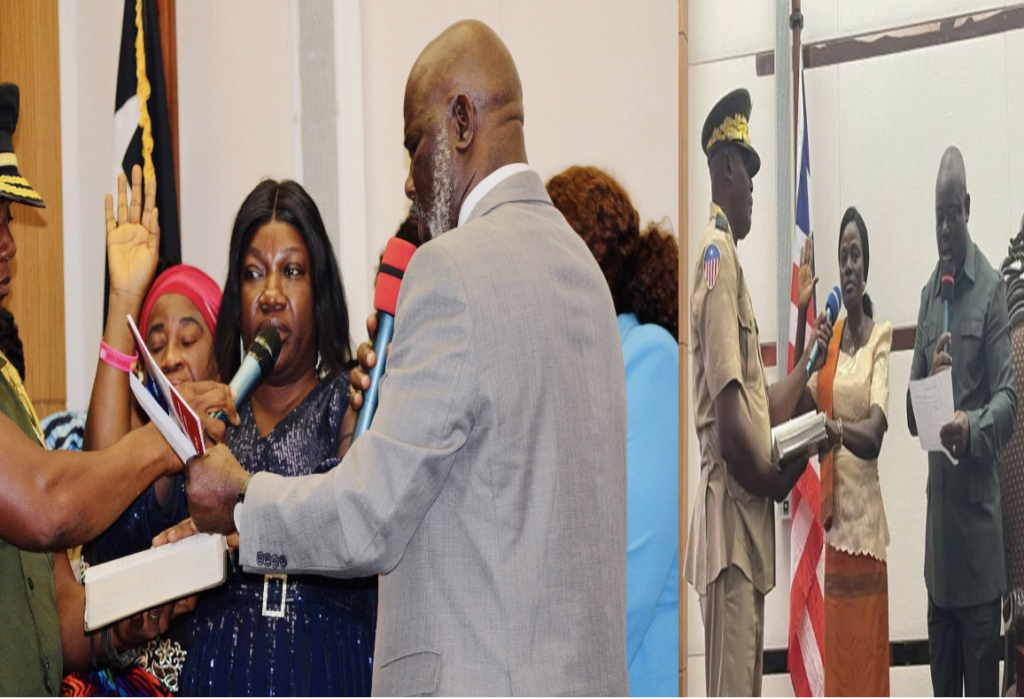
Monrovia: The clerical department of Liberia’s House of Representatives is now led entirely by women for the first time, following the election of Mrs. Tuah K. Woods Ross as Deputy Chief Clerk. She joins Chief Clerk Madam Mildred Sayon, creating an all-female leadership team at the heart of the legislature’s administration.
Mrs. Woods Ross was elected by unanimous white ballot on Thursday, February 5, 2026, succeeding the late C. Cormicks Chea. Her election was nominated by Representative Priscilla A. Cooper of Montserrado County District #5, seconded by Representative Rugie Barry of Montserrado County District #1, and cast by Representative Moima Briggs Mensah of Bong County District #6.
The Chair of the Women’s Legislative Caucus, Representative Ellen Attoh-Wreh, congratulated Mrs. Woods Ross and praised her colleagues for their support. “We promise to work closely with her office,” Rep. Attoh-Wreh stated, also acknowledging the instrumental role of Chief Clerk Mildred Sayon in the process.
Prior to her election, Mrs. Woods Ross served as a Junior Stenographer in the House. In her new role, she pledged to serve with diligence and honesty and thanked the lawmakers, the Women’s Legislative Caucus, and her supervisor for their confidence.
Chief Clerk Mildred Sayon, a veteran administrator, was overwhelmingly reelected to a third term in January 2024. Hailing from Harper City, Maryland County, she holds Bachelor’s and Master’s degrees from the University of Liberia. She began her career as a Junior Stenographer in 1997, rose to Deputy Chief Clerk, and has served as Chief Clerk since 2010 following the death of her predecessor.
Her unopposed elections in 2012, 2018, and 2024 make her the longest-serving Chief Clerk in post-war Liberia. This milestone for women in leadership stands in stark contrast to widespread underrepresentation across Liberian government institutions. Despite being the first African nation to elect a female president and recently having a female vice president, state institutions remain overwhelmingly male-dominated.
A 2025 Civil Service Agency report reveals that less than 30% of civil servants are women, with less than 15% in appointed positions. Women hold just 11% of seats in the 55th National Legislature—only 8 out of 73 House members and 3 out of 30 Senators.
Bong County District #6 Representative and Chair of the House of Representatives Committee on Gender, Hon. Moima Dabah Briggs-Mensah tells WomenVoices that the government’s workforce is structurally unfair to women. She contended that women are qualified and called on government entities to employ them in all new appointments.
To also address this exclusion, Madam Esther S.D. Yango, Executive Director – WONGOSOL rallies the Government adopt and enforce mandatory gender quotas in appointments, strengthen accountability across ministries, agencies, and commissions, and intentionally invest in building and promoting women into leadership positions. She argues that Gender equality in governance is not a favor to women but a prerequisite for inclusive development, economic resilience, and good governance.
Josiah F. Joekai, the Director General of the Civil Service Agency said the report gives the government a clue of the kind of interventions to undertake to bridge the gap between the males and females within its workforce. “It means there are serious gender implications. Meaning a lot has to be done. With this information, we know what kind of interventions to undertake to bridge the gap between the males and females within our workforce,” Joekai noted last week.
These figures rank Liberia 161st globally and below regional averages for women in parliament. Sub-Saharan Africa averages 27.2% female representation, while West Africa averages 19.2%.
Liberia currently has no legislated gender quotas, though past policies have aimed to improve women’s political participation.
In a significant step, the House passed an amendment to the New Elections Law in February 2022. It mandates that political parties include no less than 30% of either gender on candidate lists and in leadership, authorizing the National Elections Commission to reject non-compliant lists—a crucial enforcement mechanism previously absent.
The elections of the Speaker, Deputy Speaker, and secretariat staff, including the Chief and Deputy Chief Clerks, are governed by Article 49 of the Constitution, which ensures the proper functioning of the House.