


-As Court Examines Evidence in $6.2M Economic Sabotage Trial
By Vaye Lepolu
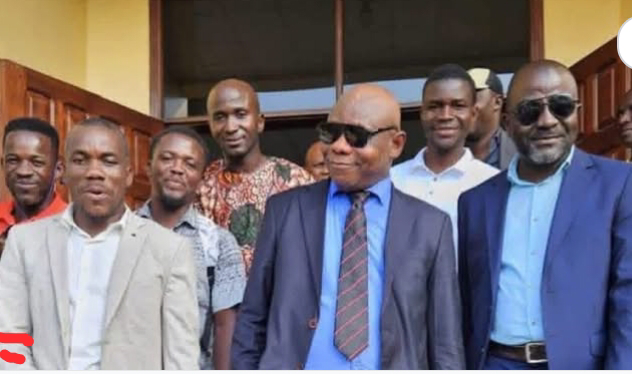
Former Finance Minister Samuel D. Tweah Jr. has rejected allegations of corruption leveled against him and four former senior government officials in an ongoing US$6.2 million economic sabotage case before Criminal Court ‘C’ in Monrovia. Appearing in court on Wednesday, April 22, 2026, Tweah refuted charges of criminal conspiracy, money laundering, and the misuse of public funds. He argued that the prosecution had not produced credible evidence directly linking him or his co-accused to any criminal activity.
The case, initiated by the Liberia Anti-Corruption Commission (LACC), involves the transfer of more than L$1 billion and US$500,000 into accounts connected to the Financial Intelligence Agency. Earlier testimony from LACC lead investigator Baba Mohammed Boika alleged that the transactions were carried out without proper authorization and could not be fully traced.
In his defense, Tweah maintained that the prosecution’s claims are based on speculation rather than verifiable proof.
He emphasized that no documentation was presented to demonstrate a lack of approval from the National Security Council (NSC), nor was there evidence of personal benefit or communication suggesting a conspiracy. Tweah also highlighted what he described as significant gaps in the prosecution’s case, including the absence of bank records, witness accounts, or video evidence to support the allegations.
He argued that, during his tenure, he exercised lawful authority over government expenditures, especially in urgent or security-related situations. He noted that such circumstances may not always require formal written approvals, asserting that financial decisions can be made under exceptional conditions. Addressing the conspiracy allegations, including those involving former Acting Justice Minister Nyanti Tuan, Tweah contended that officials carrying out their duties within the scope of their authority should not be accused of criminal collaboration without clear intent.
He further dismissed the money laundering charge, stating that the funds in question were transferred between government accounts and did not involve illicit proceeds. However, elements of his testimony appeared to raise questions. While he argued that written authorization was not always necessary, he also suggested that approvals from the NSC existed, though no such documents were submitted in court.
Tweah cited national security confidentiality as a reason for withholding certain details, a stance that underscores the tension between secrecy and public accountability.
He also criticized investigators for failing to trace the use of the funds, yet did not provide a detailed account of how the money was ultimately spent. Additionally, he acknowledged that in emergencies, financial transactions could occur outside standard public financial management procedures, with documentation completed afterward. Prosecutors, however, maintain that the transactions were irregular and lacked proper authorization. They argue that no formal directives from the NSC or Joint Security agencies have been presented to justify the transfers, pointing to gaps in documentation as a key concern.
The trial, which has drawn considerable public attention, was marked by several objections from the prosecution, some of which were upheld by the court. The judge also cautioned against repetitive questioning, describing it as excessive. The case has been adjourned and is expected to resume at a later date, as legal arguments continue over the scope of ministerial authority and the need for transparency in handling public funds tied to national security.