

-Cummings Tells Liberian Students in Rwanda

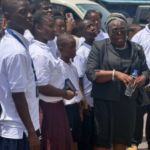
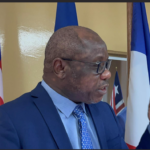
KIGALI, Rwanda — Alexander B. Cummings, political leader of the Alternative National Congress (ANC), met with Liberian students and community members in Kigali last week on the sidelines of the African CEO Forum, vowing to transform Liberia’s natural riches into tangible opportunities for the country’s struggling youth.
The gathering, which drew more than a dozen Liberian graduate students from universities across Rwanda’s capital, offered Cummings a chance to hear firsthand the frustrations of young Liberians abroad and to lay out the ANC’s roadmap for national renewal ahead of the 2029 presidential election.
“You represent the future of our country,” Cummings told the students. “We want the opportunity to serve so we can grow the economy, create jobs for you and your friends and relatives, and guarantee every Liberian the right to put a hand on a bowl of rice.”
Cummings struck a more aggressive tone on strategy, acknowledging that his party had previously allowed opponents to control the narrative. He unveiled a plan centered on grassroots engagement, a rapid-response communications infrastructure, and sustained youth mobilization.
“We let the opposition define who we are,” he said. “We are going to define ourselves this time. When they lie, we will react immediately.”
He stressed that the ANC’s communications apparatus—spanning radio, social media, and video platforms—would operate as a permanent institutional capability, not just a campaign-season tool.
Cummings placed young Liberians at the heart of his political vision, describing them as both the chief beneficiaries of reform and the engine for delivering it. He encouraged students from all parties to join what he called a broader national movement for good governance.
“You don’t have to be an ANC member to support us,” he said. “I will be running for president of Liberia, not president of ANC.”
He praised the ANC’s Youth Congress as the party’s most active wing and pledged deeper engagement with Liberians at home and in the diaspora.
Repeating a core campaign theme, Cummings argued that Liberia’s iron ore, gold, diamonds, timber, and 350-mile Atlantic coastline should generate broad-based prosperity, not enrich a narrow elite.
“Our country is rich. Yet our people are poor,” he said. “That is not a resource problem. That is a leadership problem.”
He pointed to agriculture, tourism, housing, and information technology as sectors capable of creating mass employment, and cited Rwanda’s own development trajectory as proof that African governance can deliver when leaders prioritize accountability and institutional discipline.
Cummings reaffirmed the ANC’s commitment to deep regional integration, pledging to prioritize partnerships within the Mano River Union and ECOWAS as a foundation for economic scale and security cooperation, before engaging broader partners in Europe, North America, and Asia.
In a symbolic moment, the chairman of the Liberian Community in Rwanda—representing more than 4,000 Liberians living in the country—thanked Cummings for fulfilling a financial pledge to support an ongoing community sports tournament in Kigali. The chairman called the gesture a reflection of the leadership character Liberians deserve in their head of state.
Cummings closed by thanking students for their candor and continued commitment to Liberia’s future.
“We sincerely care for our people and our country,” he said. “And we want to change it for the benefit of all Liberians.” For young Liberians, he added, that means seeing the ANC not only at election time, but on campuses, in communities, and online—answering lies quickly and involving youth in shaping both the message and the movement.