

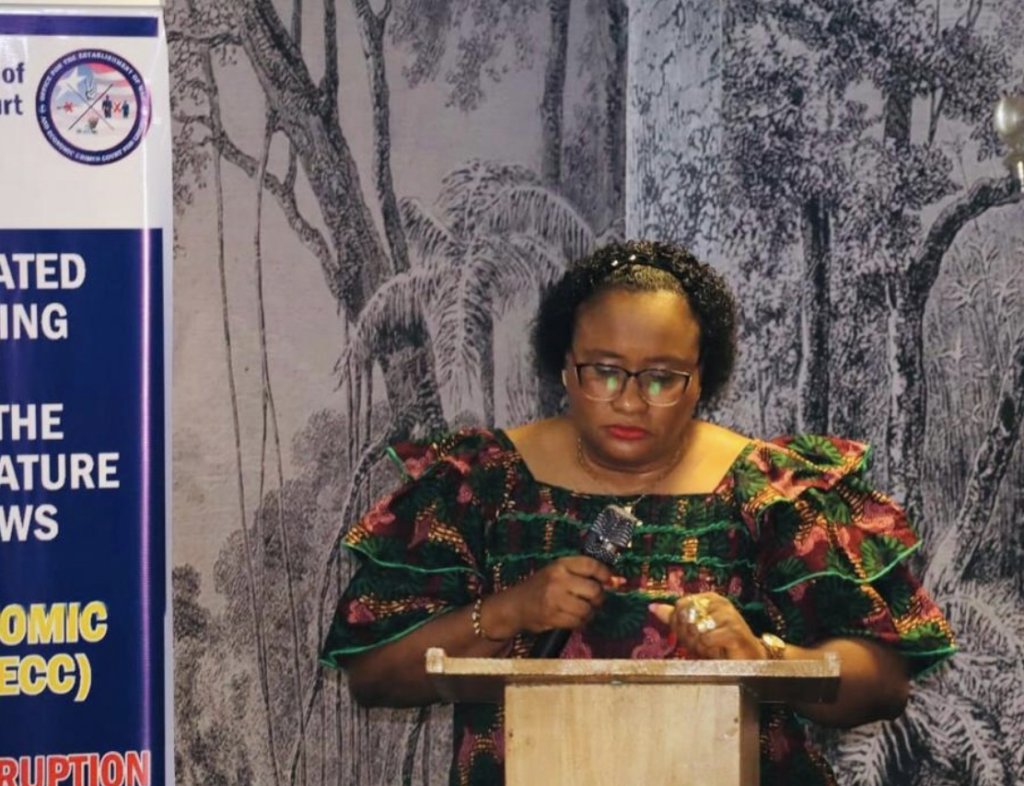
BUCHANAN CITY, Grand Bassa County – Cllr. Bowoulo Taylor Kelley, the Vice President of the Liberia Female Lawyers Association of Liberia (AFELL) calls on Liberia’s lawmakers to create an anti-corruption court that is independent, properly funded, and constitutionally sound, as Liberia moves toward the establishment of the War and Economic Crimes and Anti-corruption Courts.
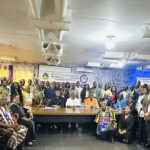
Corruption in Liberia remains an endemic challenge that permeates politics, law enforcement, and public services, frequently cited as a primary driver of poverty and inequality. Cllr. Kelley delivered the appeal on Saturday, June 13, 2026, to more than forty members of the House of Representatives, judicial officials, civil society partners, and international experts gathered for a two-day closed-door technical deliberation in Buchanan City. She warned that corruption harms real Liberians and not merely the law.
Saturday’s engagement focused on the long-stalled bills to establish a National Anti-Corruption Court (NACC) and a War and Economic Crimes Court (WECC). The Vice President of the Liberia Female Lawyers Association (AFELL) rejects a court built “in name only,” insisting that Liberia needs an institution the public can trust, one that is competent, fair, and capable of delivering results.
She describes corruption as a human wrong that affects women seeking justice, children needing education, families depending on health care, and citizens looking to the government with hope. Cllr. Kelley urges legislators to protect due process, the presumption of innocence, fair trial rights, and judicial independence in the proposed court. She also demands clarity on how the new court will relate to existing institutions, including the Ministry of Justice, the Liberia Anti-Corruption Commission, and the General Auditing Commission.
Her words: “We also urge clarity in the relationship among the National Anti-Corruption Court, the Ministry of Justice, the Liberia Anti-Corruption Commission, the General Auditing Commission, existing courts, and other oversight institutions. Independence must be balanced with accountability. Ambition must be matched with resources. And implementation must be supported by training, case management, witness protection, public reporting, and realistic funding.”
Cllr. Kelley stresses that independence must be balanced with accountability, ambition must match resources, and implementation requires training, case management, witness protection, public reporting, and realistic funding. She closes with a direct appeal to the legislature. The legal practitioner calls on lawmakers to strengthen the bill where it needs clarity, protect constitutional rights at risk, safeguard the independence of the court and prosecutor, ensure sustainable funding, and provide a clear path for implementation.
She reminds them that justice grows stronger when those in power choose accountability over convenience and service over silence. AFELL pledges continued technical support and legal analysis as lawmakers finalize the law. “Let this review produce a law that protects public resources, deters abuse of power, promotes justice, and restores public confidence. We stand ready to continue offering technical support, legal analysis, and advocacy so that the final law strengthens the rule of law and serves the people of Liberia,” she said.
The technical deliberation brought together transitional justice experts, legal scholars, and development partners to examine legal frameworks, constitutional hurdles, operational budgets, and jurisdictional boundaries. More than forty House members expressed unified support for the swift passage of both accountability bills.
Global reports indicate that corruption remains a major hurdle in Liberia. Transparency International’s Corruption Perceptions Index ranks Liberia 136th out of 182 countries, with a score of 28 out of 100. Considering this and other factors, the NACC is expected to create a specialized judicial mechanism to handle corruption-related offenses—a persistent drain on governance and foreign investment.