

By Jerromie S. Walters
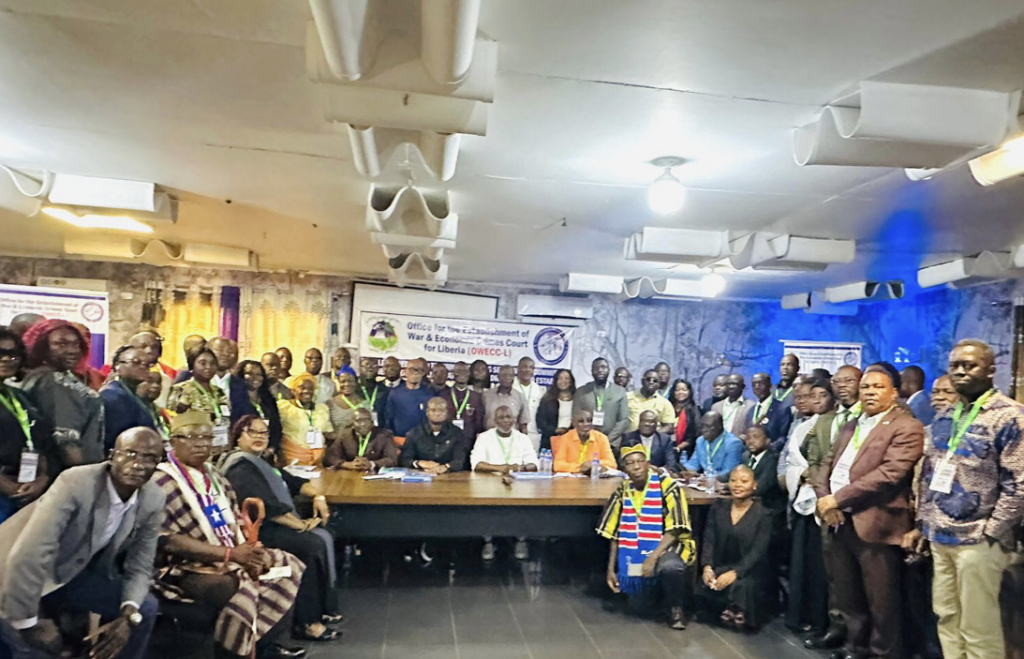
BUCHANAN, Grand Bassa County – More than forty members of Liberia’s House of Representatives emerged from two days of closed-door technical talks in Buchanan expressing unified support for the swift passage of two long-stalled accountability bills.
The High-Level Technical Deliberation, which concluded Saturday, brought together lawmakers, transitional justice experts, legal scholars, civil society representatives, and international partners. They focused not on political speeches but on the nitty-gritty of legal frameworks, constitutional hurdles, operational budgets, and jurisdictional boundaries for the proposed War and Economic Crimes Court (WECC) and the National Anti-Corruption Court (NACC).
The sessions dispelled lingering misconceptions, several legislators acknowledged. “We heard directly from legal experts and practitioners who have worked extensively on these issues,” said one participating lawmaker, who spoke on condition of anonymity due to the sensitivity of the subject. “This engagement gave us a clearer understanding of the intent, scope, and importance of these bills.”
Liberia has debated how to address the atrocities of its 1989–2003 civil wars—which claimed more than 250,000 lives—for nearly two decades. The Truth and Reconciliation Commission recommended establishing a war crimes court in its 2009 final report, but successive administrations postponed action, citing political stability and a lack of legislative consensus.
House Speaker Richard Nagbe Koon and Senate Pro Tempore Nyonblee Karnga-Lawrence attended the Buchanan gathering, signaling leadership-level commitment. Both chambers currently carry draft bills for the two courts. Lawmakers said the technical discussions clarified critical points: the courts would operate fully within Liberia’s legal system and would not target specific political factions or regions.
The WECC would prosecute grave crimes committed during the civil wars, while the NACC would create a specialized judicial mechanism to handle corruption-related offenses—a persistent drain on governance and foreign investment. “The discussions helped us address our concerns and correct our misunderstandings,” another legislator said. “We now possess the knowledge necessary to engage in informed debate when the bills reach the floors of both chambers.”
Civil society stakeholders, who have long pressed for accountability, welcomed the lawmakers’ positive response. They described the Buchanan meeting as a sharp departure from previous engagements, which often remained rhetorical. Pundits called the gathering a major step forward. The legislative branch demonstrated a willingness to tackle technical complexity rather than retreat to political convenience.