


Jessica Cox
The Liberian government is defending its decision to prohibit the export of unprocessed natural rubber, arguing that the policy is intended to protect jobs, expand domestic manufacturing and increase government revenue, even as critics prepare a legal challenge before the Supreme Court.
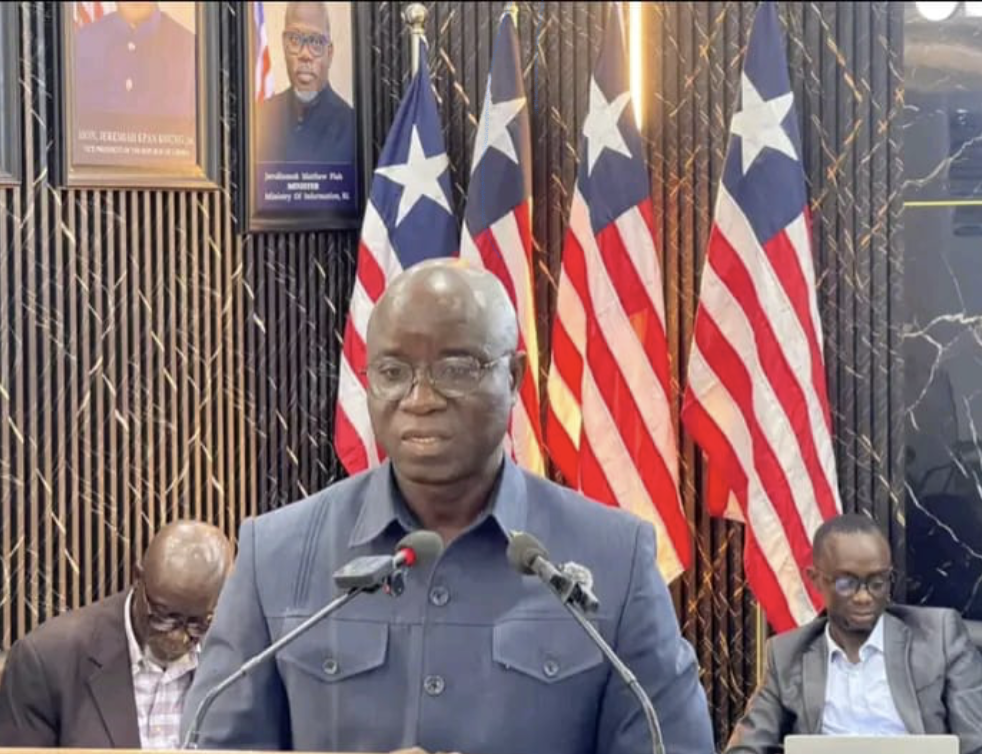
At a Ministry of Information press briefing, Agriculture Minister Dr. J. Alexander Nuetah rejected claims that President Joseph Nyuma Boakai Sr. exceeded his constitutional authority by issuing the Executive Order. He maintained that the measure is an economic intervention designed to strengthen Liberia’s rubber industry rather than punish farmers.
“The President’s action was not illegal,” Nuetah said, arguing that countries seeking industrial growth often restrict the export of raw materials in order to encourage domestic processing and value addition.
The government’s latest Executive Order, which took effect on July 1, 2026, imposes an indefinite ban on the export of unprocessed natural rubber, including latex, cup lumps, bark scrap and other raw forms. Only processed rubber products such as Technically Specified Rubber (TSR), latex concentrate and other internationally recognized processed products remain eligible for export.
According to the Executive Mansion, the measure forms part of the Boakai administration’s industrialization agenda aimed at increasing domestic manufacturing, creating employment and expanding tax revenues by ensuring that more rubber is processed inside Liberia rather than exported in its raw form.
Nuetah said the decision followed concerns raised by domestic rubber processing companies, which informed the government that many of their factories were operating below capacity because significant quantities of raw rubber were leaving the country without processing.
He argued that if the trend continued, local factories could eventually shut down, threatening hundreds of jobs while depriving Liberia of additional economic value generated through processing.
According to the minister, a committee comprising government ministries, concessionaires and industry stakeholders recommended the restriction after concluding that local processors required guaranteed access to raw materials.
The Executive Order directs the Ministries of Agriculture, Commerce and Industry, Finance and Development Planning, the Liberia Revenue Authority and the Rubber Development Fund to jointly enforce the ban. Customs officials and other law enforcement agencies have also been instructed to inspect and seize illegal shipments intended for export.
Violators face heavy administrative penalties, possible criminal prosecution and forfeiture of illegally exported products.
Farmers assured of market access
One of the principal concerns raised by opponents is that farmers could lose access to buyers if exports are restricted.
Nuetah dismissed those fears, insisting that local processing companies currently have enough demand to absorb farmers’ production.
“There will be no farmer without a market,” he said, adding that competition among processors remains strong and that farmers will continue receiving payment for their rubber.
He further argued that the government has already taken steps to protect farmers through a national rubber pricing mechanism established in 2024.
According to Nuetah, the multi-sector committee—which includes representatives from the Ministries of Agriculture, Commerce, Finance, the National Investment Commission and the Rubber Development Fund—sets monthly benchmark prices based on international market trends.
He said farmers who received approximately US$545 per metric ton a year earlier are now receiving US$814 per metric ton, reflecting improvements in international pricing and government oversight.
Although those figures were presented by the Agriculture Minister during the briefing, independent verification of the pricing data was not immediately available.
Recognizing concerns that some rural producers have historically depended on cross-border buyers, the Executive Order instructs the Ministries of Commerce and Agriculture to develop, within 30 days, new measures to improve domestic market access for farmers in remote communities.
The administration has also pledged incentives for domestic rubber processors, including tax relief, financing support and policies intended to encourage manufacturing of higher-value products such as tires, gloves, footwear and industrial rubber goods.
Constitutional questions remain
Despite the government’s defense, legal questions surrounding the
Executive Order remain unresolved.
Opponents argue that an indefinite prohibition on exports should be enacted through legislation rather than executive action and have indicated they intend to seek judicial review before the Supreme Court.
Liberia has previously relied on executive orders to regulate raw rubber exports. Former President George Weah issued Executive Order No. 124 in December 2023, reviving an earlier 2008 moratorium aimed at addressing theft, illegal exports and declining production.
The latest Executive Order significantly expands enforcement provisions, introducing larger financial penalties, mandatory inter-agency enforcement and annual policy reviews while linking the measure directly to the government’s industrialization strategy.
The broader economic test
Liberia’s rubber sector remains one of the country’s most important export industries and a major source of rural employment.
Economists generally agree that processing raw materials domestically can generate greater economic value, create skilled jobs and increase tax revenue. However, such policies also depend on whether domestic processing capacity, transportation networks and market access are sufficient to absorb production without reducing farmers’ incomes.
The success of the government’s policy is therefore likely to be judged not only by its legal outcome, but also by whether local factories expand production, farmers continue receiving competitive prices and the promised industrial investment materializes in the months ahead.