

By Jessica Cox
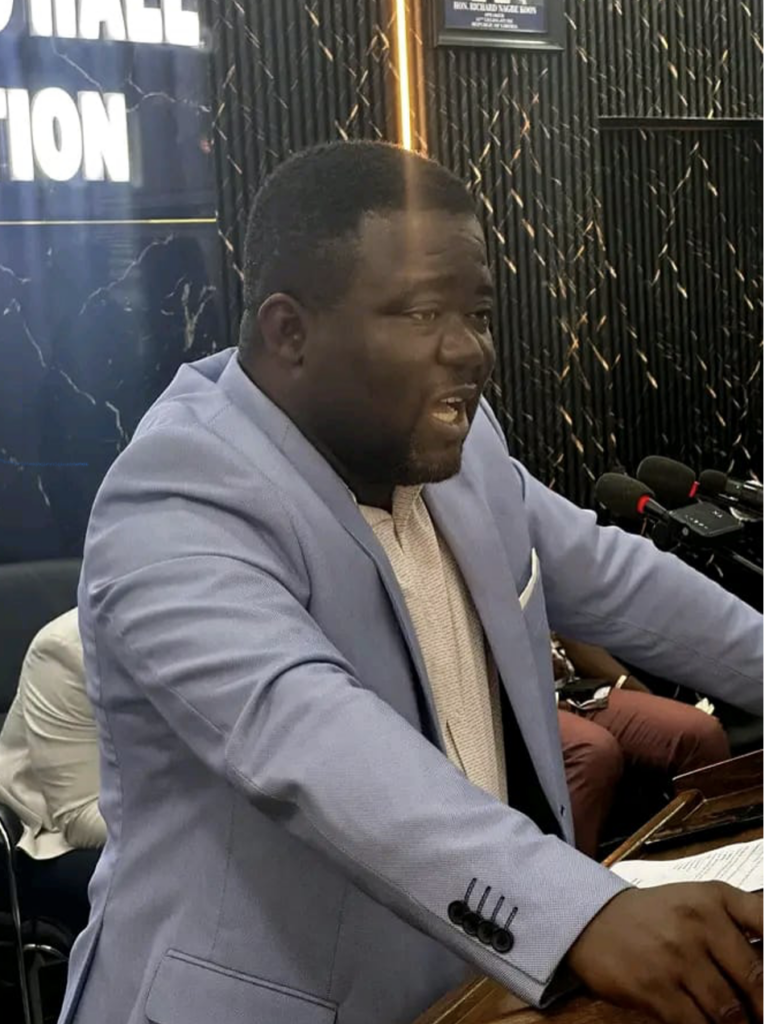
MONROVIA – The Executive Director of Liberia’s Witness Protection Agency Atty. Teklo Maxwell Grigsby has called on Liberians to report corruption and other crimes through legally recognized channels, assuring citizens that the law provides protection for whistleblowers and witnesses who cooperate with authorities.
Speaking during the Ministry of Information press conference in Monrovia, the Executive Director said Liberia is reviewing the 2022 Whistleblower Act to strengthen legal protections and address weaknesses identified in its implementation.
He said the review follows Liberia’s commitments under the United Nations Convention Against Corruption, which the country ratified in 2007. According to him, one of the proposed amendments will introduce penalties for employers who fail to comply with Section 16 of the law, which requires every employer to conspicuously display the Whistleblower Act in the workplace.
“The law says every employer should publish it, but there is currently no punishment for employers who fail to do so,” he said.
The Executive Director also said the proposed amendments seek to strengthen protections against retaliatory actions taken against whistleblowers. He described retaliation, including dismissing or penalizing an employee for making a protected disclosure, as a criminal offense under the law.
He said officials who engage in retaliatory actions could face sanctions, including blacklisting from serving in the public sector.
The Executive Director urged citizens not to confuse whistleblowing with posting allegations on social media.
According to him, individuals seeking protection under the law must report information through authorized institutions, including the Witness Protection Agency, the Liberia National Police, the Liberia Anti-Corruption Commission, or other legally recognized anti-corruption agencies.
“If you put incorrect information on Facebook Live or social media, you are not guaranteed protection under the Whistleblower Law,” he said.
He emphasized that the Agency protects the identities of whistleblowers and stated that disclosing the identity of a whistleblower without authorization constitutes an offense.
The Executive Director also clarified the mandate of the Witness Protection Agency, stating that it does not investigate crimes, arrest suspects, or prosecute cases.
“Our responsibility is to protect witnesses and whistleblowers,” he said. “The decision to arrest rests with the police, while prosecution is the responsibility of the Ministry of Justice.”
He explained that the Witness Protection Program operates at three stages: investigation and pre-trial, trial, and post-trial, depending on the level of threat faced by a witness or victim.
During the briefing, the Executive Director confirmed that the Agency, with the approval of the Ministry of Justice, contacted Paul King and offered him protection after he agreed to cooperate with investigators in an ongoing drug-related investigation.
According to him, King accepted the offer, returned to Liberia, and is currently under the protection of the Joint Security while providing testimony.
The Executive Director said information provided during the investigation helped authorities identify additional persons of interest. However, he stressed that decisions regarding arrests and criminal charges remain the responsibility of the Liberia National Police and the Ministry of Justice.
He also encouraged individuals with information relating to ongoing criminal investigations to cooperate with authorities before criminal charges are filed, noting that once charges are brought, legal procedures change.
The Executive Director disclosed that although the Witness Protection Act was enacted in 2022, the Agency only became operational after its leadership was recruited, vetted, nominated by the President, confirmed by the Liberian Senate, and commissioned under the current administration.
He said the Agency is currently developing standard operating procedures with the Ministry of Justice, the Liberia National Police, the Liberia Anti-Corruption Commission and other institutions before expanding its operations across the country.
The Executive Director added that the Agency is engaging civil society organizations and media institutions in the ongoing review of the Whistleblower Act as part of efforts to strengthen Liberia’s witness and whistleblower protection framework.