

-IWYE Pleads With Boakai Gov’t As Teenage Pregnancies Surge
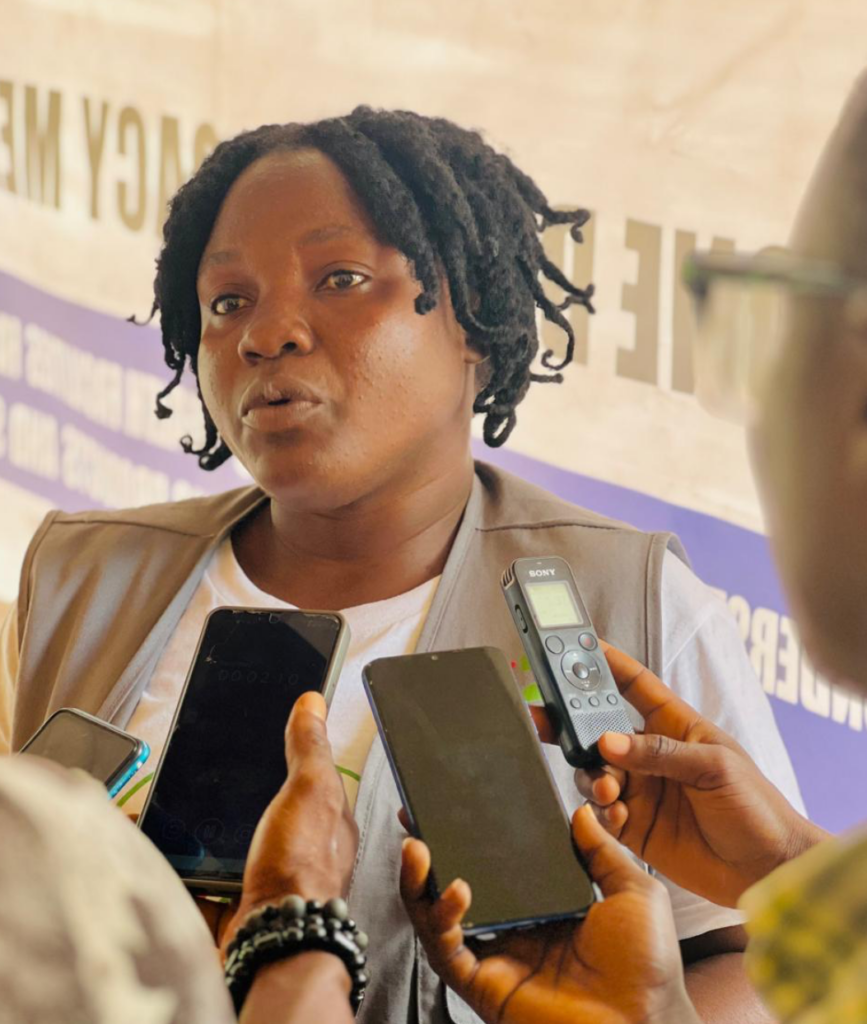
The Initiative for Women and Youth Empowerment (IWYE) has reiterated its urgent alarm over Liberia’s growing teenage pregnancy crisis due to a lack of increased support towards Family Planning (FP) across the country.
The group is therefore calling on the Government to honour its commitment to allocate 2 percent of the budget to family planning and substantially increase funding for reproductive health services in the 2027 national budget.
IWYE Executive Director Musu W. Davis said Liberia can no longer afford to treat family planning as a low-budget priority while increasing numbers of teenage girls are becoming pregnant, particularly in rural communities where access to contraceptives, reproductive health information, and essential health services remains severely limited.
In an exclusive interview with this paper, Davis described the current government allocation for family planning under the Ministry of Health as a “peanut allotment,” arguing that it falls dramatically short of the country’s growing reproductive health needs.
Although funding has reportedly increased from US$50,000 to US$75,000, Davis said the adjustment remains insignificant compared with the scale of the crisis confronting Liberia; as such, the need for an FP increment in the 2027 budget cannot be overemphasized.
She is therefore urging lawmakers and government officials to use the budget process to translate Liberia’s 2030 Family Planning Commitment into meaningful financial support, particularly the pledge to dedicate 2 percent of the national budget to family planning.
“Go to Bong County and see what is happening. Teenage pregnancies are overwhelming health workers. We are seeing girls as young as 13 and 14 coming to deliver babies. This is not normal, and it demands urgent national attention,” Davis warned.
The figures emerging from Bong County have intensified concerns, as data cited by IWYE shows that 75 percent of births recorded at the Foequelleh Maternal Waiting Home involve girls between the ages of 13 and 14.
The situation is further reflected in records from C.B. Dunbar and Phebe hospitals, which reportedly recorded 3,592 teenage pregnancies between 2022 and 2024.
For IWYE, the figures represent more than statistics, as they are evidence of a reproductive health crisis that threatens education, economic opportunity, and the long-term development of Liberia’s young population.
Davis also linked the worsening situation to declining international support for Liberia’s health sector, particularly following cuts in USAID funding.
She said Liberia is among countries severely affected by the reductions, with an estimated US$290 million in previously available support lost across critical sectors, including health and education.
According to her, the funding shortfall has contributed to shortages of essential medicines, difficulties in supporting health workers, and the closure of some health facilities, particularly in rural communities.
“This is a full-blown national emergency. The phrase ‘pregnant women’ is now being replaced by ‘pregnant girls.’ That alone should shock us into action,” Davis stressed.
She also attributed the increase in teenage pregnancies to limited access to contraceptives, inadequate reproductive health education, a high unmet need for family planning services, and widespread school dropouts.
Davis maintained that the unmet need for family planning is estimated at 33 percent among women, with adolescents facing even greater challenges in accessing reproductive health information and services.
She warned that unplanned pregnancies can force girls out of school, restrict their future economic opportunities, and deepen household and national poverty.
The IWYE Boss asserted that increasing investment in family planning is not merely a health-sector responsibility but a national development strategy.
“What moves a nation forward is when its girls are educated and empowered to make informed decisions. When young people have access to contraceptives and basic health services, we reduce poverty and build a stronger Liberia,” Davis said.
Against this backdrop, she is calling on the Boakai administration and lawmakers to move beyond policy commitments and provide the financial resources necessary to make Liberia’s 2 percent family-planning commitment a reality.
Davis added that increased domestic financing could help expand access to contraceptives, strengthen reproductive health education, improve services in rural areas, and prevent more girls from experiencing pregnancies that could derail their education and prospects.
She therefore urged the government to treat family planning as an urgent national investment rather than a peripheral budget qitem, warning that failure to increase funding could place additional pressure on an already fragile health system and allow the teenage pregnancy crisis to deepen, particularly in underserved rural communities.
–