

By Vaye Abel Lepolu
BUCHANAN, Grand Bassa County — August 11, 2026 , The Environmental Protection Agency (EPA) has begun a national assessment aimed at determining Liberia’s readiness to implement the High Seas Treaty, following the country’s ratification of the landmark international agreement in June 2025.
The initiative opened Tuesday in Buchanan City with a two-day National Validation Workshop on Liberia’s Initial Assessment Report and awareness-raising on the Agreement on the Conservation and Sustainable Use of Marine Biological Diversity of Areas Beyond National Jurisdiction, commonly known as the BBNJ Agreement.
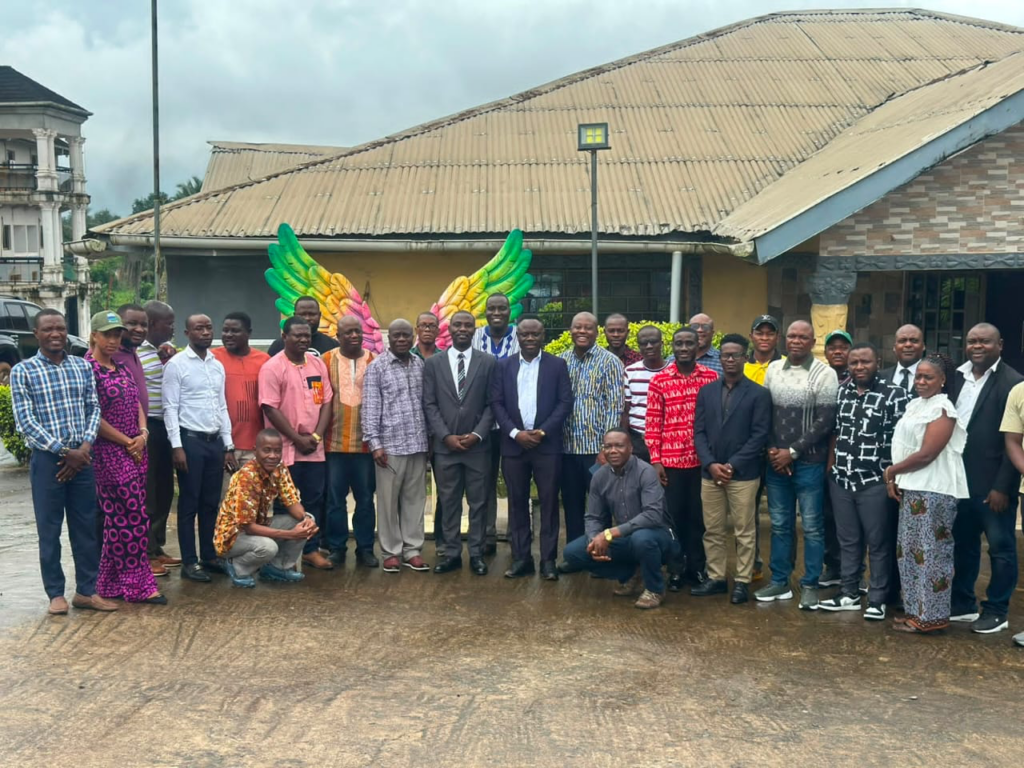
The workshop, held at the K-Plaza Hotel, has brought together about 35 representatives from government ministries and agencies, the National Legislature, development partners, academia, civil society, local communities and the media.
The exercise is being conducted under the GEF Enabling Activities Project, with financial support from the Global Environment Facility (GEF) and technical assistance from the United Nations Environment Programme (UNEP).
Speaking on behalf of EPA Executive Director Dr. Emmanuel K. Urey Yarkpawolo, Project Liaison Officer and GEF Alternate Focal Point Desmond T. Thompson said Liberia’s ratification of the treaty was only the beginning of a broader national responsibility.
“Ratification is only the beginning,” Thompson said, emphasizing the need to determine how the agreement can be effectively implemented while ensuring that Liberia’s national interests are protected.
Liberia participated in international negotiations that led to the adoption of the BBNJ Agreement on June 19, 2023, under the United Nations Convention on the Law of the Sea. The country signed the agreement on September 24, 2024, before undertaking legislative engagements that eventually contributed to its ratification in June 2025.
According to Thompson, the national assessment is intended to identify the institutional, legal, technical and financial requirements needed to implement the treaty.
He said Liberia will need stronger national coordination, clearly defined institutional responsibilities, appropriate legal and regulatory frameworks, improved scientific and technical expertise, better data management systems and sustainable financing.
The assessment also examines Liberia’s existing institutions, laws and regulations, progress toward implementation and areas requiring additional attention.
The four major areas covered by the agreement include marine genetic resources and digital sequence information, area-based management tools such as marine protected areas, environmental impact assessments, and capacity-building and the transfer of marine technology.
The assessment also takes into account gender equality and the traditional knowledge of Indigenous Peoples and local communities.
Thompson urged participants to critically review the Initial Assessment Report and provide recommendations that reflect Liberia’s realities and national priorities before the document is finalized and submitted to the Division for Ocean Affairs and the Law of the Sea.
He said the contributions of government institutions, civil society, academia, fishing communities, women, youth and local communities would be essential to developing an implementation pathway that is “inclusive, practical, and owned by Liberia.”
Assistant Minister for International Organizations at the Ministry of Foreign Affairs, Hon. Daniel Kokoi Jr., said Liberia must view the High Seas Treaty as more than an international obligation.
Kokoi said Liberia, as a coastal nation with significant marine and fishery resources, has a direct interest in ensuring that ocean resources are sustainably managed and protected for present and future generations.
He described the BBNJ Agreement as an opportunity for Liberia to strengthen institutional capacity, expand scientific cooperation, improve sustainable marine resource management and gain greater access to technology and knowledge.
Kokoi cautioned participants against treating the validation exercise as a mere formality.
“We are not here simply to endorse a document,” he said, calling for a critical examination of the assessment, identification of gaps and development of practical recommendations to guide Liberia’s future engagement with the treaty.
He stressed that implementation would require coordination among several sectors, including foreign affairs, fisheries, environment, maritime affairs, justice, agriculture, national security, scientific research and education.
The Assistant Minister identified national ownership, institutional coordination and capacity developmentas three key priorities for Liberia’s implementation strategy.
He said national ownership would ensure that Liberia’s approach reflects its circumstances and development priorities, while institutional coordination would strengthen collaboration among government agencies, academia, civil society and development partners.
Capacity development, he added, would require sustained investment in scientific research, technical expertise, legal capacity, technology
Beyond environmental protection, the High Seas Treaty could provide Liberia with opportunities to strengthen its participation in the emerging global blue economy.
Kokoi pointed to potential benefits including scientific research, technology transfer, capacity building, access to knowledge, international cooperation and greater participation in global decision-making on marine biodiversity.
He urged national institutions, researchers, young professionals and coastal communities to become adequately informed and prepared to participate in the implementation process.
The two-day workshop is expected to generate recommendations for strengthening Liberia’s Initial Assessment Report and establish a clear national roadmap for the country’s continued engagement with the High Seas Treaty.