

By Jerromie S. Walters
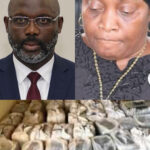
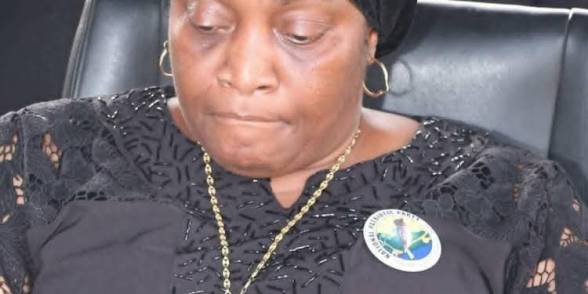
MONROVIA, LIBERIA — Former Vice President Jewel Howard-Taylor has been formally charged with unlicensed drug importation, illicit trafficking, criminal conspiracy, and money laundering, marking the highest-profile political figure implicated in Liberia’s escalating narcotics investigation.
Minister of Justice and Attorney General Cllr. N. Oswald Tweh announced the charges Wednesday at a news conference at the Ministry of Information, detailing a sweeping case that has already resulted in the seizure of over four metric tons of cocaine this year.
Madam Howard-Taylor faces seven counts under three separate legal frameworks, Tweh announced.
Under the Controlled Drug and Substance Act of 2023, she is charged with unlicensed importation of a controlled drug or substance in violation of Section 14.83, unlicensed sale, trading, administration, dispensation, delivery, distribution, dispatch in transit, and transportation of a controlled drug or substance in violation of Section 14.85, and illicit trafficking of a controlled drug or substance in violation of Section 14.93.
Under Chapter 10 of the Penal Law of Liberia, she faces charges of criminal solicitation in violation of Section 10.2, criminal facilitation in violation of Section 10.3, and criminal conspiracy in violation of Section 10.4.
Additionally, under the Anti-Money Laundering and Terrorist Financing Law, she is charged with money laundering in violation of Section 15.2.
The government also charged three foreign nationals in absentia, identified as alleged members of the same transnational narcotics network: Croatian nationals Nikolai Ivancic and Mihovil Vrovac, and Ukrainian national Tara Zaderieko, according to Tweh, who added that the Ministry of Justice will pursue all lawful domestic and international measures necessary to locate, apprehend and bring these defendants before the courts of the Republic of Liberia.
Howard-Taylor was barred from leaving Liberia early Wednesday morning and is currently undergoing questioning at Liberia National Police Headquarters, Information Minister Jerolinmek Matthew Piah confirmed, adding that joint security forces intercepted the former vice president at Roberts International Airport while she was preparing to travel to Accra, Ghana, to attend a women’s forum.
She entered LNP headquarters accompanied by her legal counsel, including former Supreme Court Associate Justice Kabineh M. Ja’neh and Israel Akinsaya, a ranking official of the Congress for Democratic Change.
The charges emerge from two massive cocaine seizures that have shaken the nation in recent months, with authorities intercepting approximately 238 kilograms of cocaine valued at US317 million along the airport highway in Duazon in July 2026—the largest drug bust in Liberian history, with law enforcement publicly burning approximately 4.2 metric tons of the recovered cocaine in a dramatic display of the government’s anti-drug commitment.
In response to the record-breaking seizures, President Joseph Boakai dismissed approximately 12 government and law enforcement officials, including the airport’s deputy director for operations, the police criminal intelligence chief, and National Security Agency deputy directors, citing administrative negligence or direct indictment, while also removing the former Liberia Drug Enforcement Agency heads and nominating retired Major General Daniel Dee Ziankahn, a former Defense Minister and Chief of Staff, as the new LDEA Director General to oversee anti-narcotics enforcement overhaul, with indicted individuals and lower-level security employees referred to the Ministry of Justice for criminal prosecution.
Under Liberia’s Controlled Drugs and Substances Act of 2023, which amends Chapter 14 of the Liberian Penal Code, unlicensed importation carries a first-degree felony penalty of up to 20 years in prison and is ineligible for bail if involving trafficking, while illicit trafficking involving Schedule I and II chemicals is a second-degree felony with punishment of no less than five years, and unlicensed sale and transportation involving Schedule II, III, and IV substances for trafficking purposes likewise constitutes a second-degree felony.
The Act mandates the forfeiture and sale of assets used in drug-related offenses, including vehicles, vessels, and properties, with proceeds distributed as follows: 25 percent to drug enforcement agencies, 25 percent to drug prevention and rehabilitation programs, and 50 percent to government general revenue.
Meanwhile, Former National Security Agency Deputy Director for Administration Gerald Smith has been called in for questioning in connection with the same investigation, Tweh confirmed.