

By: Jessica Cox
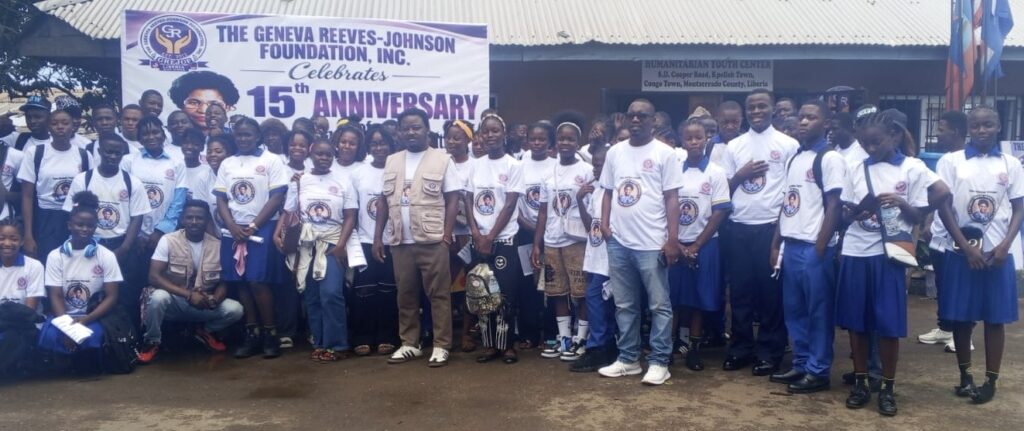
MONROVIA, LIBERIA The Geneva Reeves Johnson Foundation, Inc. marked the official celebration and 15th anniversary of World Alzheimer’s Day in Liberia with a call for greater public awareness, early diagnosis, and compassionate care for people living with dementia.
The observance was held under the global theme, “The Sooner You Know, the More You Can Do: A Dementia Diagnosis Matters,” bringing together health professionals, caregivers, community members, students, and other stakeholders to discuss dementia and Alzheimer’s disease.
The event focused on changing misconceptions surrounding dementia and encouraging families to recognize early warning signs rather than dismissing unusual behavior among older people as a normal part of aging.
Speaking as a guest speaker, Dr. Juliette Whyeayea Diggs, a specialist psychiatrist with the Ministry of Health assigned to the E.S. Grant Mental Health Hospital, described dementia as a neurocognitive disorder that can affect memory, thinking, communication, problem-solving, behavior, and a person’s ability to perform everyday activities.
She said early recognition is important because it allows families to seek professional help, understand the condition, and prepare for changes that may occur as the disease progresses.
According to Dr. Diggs, warning signs can include persistent memory problems that interfere with daily activities, difficulty solving problems, confusion about time or familiar places, repeatedly asking the same questions, difficulty carrying out familiar routines, and significant changes in personality or behavior.
She cautioned families against interpreting such symptoms as evidence that an elderly person is “crazy” or experiencing supernatural problems.
Dr. Diggs said an elderly person who repeatedly gets lost in familiar surroundings, forgets how to perform routine tasks, or experiences significant behavioral changes may be showing signs of dementia and should be assessed by health professionals.
She also emphasized the importance of early diagnosis for caregivers, saying knowledge of the condition can help relatives respond with greater patience and compassion.
“When you know the diagnosis earlier, as a caregiver or as a relative, you will have compassion on the person,” Dr. Diggs explained, noting that dementia can cause behaviors that affected individuals may not be able to control.
She further said early diagnosis can allow families to plan for health, legal, and other personal matters while the affected person still has the ability to participate in important decisions.
The awareness campaign also highlighted the need to address stigma surrounding dementia.
As the program concluded, Organizers (GREJOF) said some people continue to misunderstand the condition and may attach harmful labels to elderly people experiencing memory loss, confusion or behavioral changes.
The Foundation is therefore using its awareness activities to encourage communities to view dementia as a health condition requiring understanding, support and appropriate care.
As part of its activities, the Geneva Rees-Johnson Foundation, Inc. said it is providing dementia-related educational materials and training manuals to seven health centers to strengthen awareness and support at the community level.
The Seventh-day Adventist Cooper Hospital, Metro Family Health Center, J and J Memorial Health Center, and SOS Hospital. They received Alzheimer’s-dementia awareness materials, (manuals, customized banners, brochures, and bumper stickers).
The Foundation has also conducted outreach activities in churches and communities, where residents were given information about dementia and encouraged to become more knowledgeable about the condition.
The program further recognized the role of young people who serve as caregivers for aging parents, grandparents and other relatives.
According to organizers, community outreach has revealed that some young caregivers struggle to understand behavioral changes associated with dementia, making public education particularly important.
A panel discussion featuring Dr. Josephine Bartua, Dr. T. Josephus Peters and Dr. Charles D. Yekeh also examined dementia, Alzheimer’s disease and other conditions affecting the brain.
The discussion emphasized that dementia is a broad term covering different forms of cognitive decline, while Alzheimer’s disease is one of the conditions associated with dementia. The World Alzheimer’s Day observance comes as the Foundation continues its efforts to educate communities and challenge misconceptions surrounding dementia.