

By Vaye Abel Lepolu
MONROVIA, LIBERIA— Christian women have been urged to become more knowledgeable about their legal rights, property and inheritance laws while prioritizing their mental health and speaking out against domestic violence.
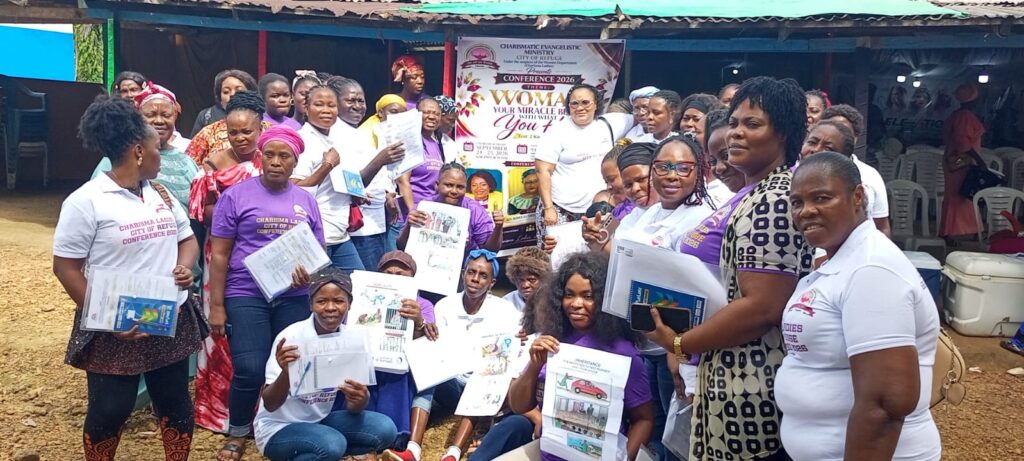
The call was made during a training program organized under the Charismatic Evangelistic Ministry–City of Refuge, where participants received presentations on inheritance and property rights, customary and statutory marriages, land ownership, economic abuse, mental health, stress management and domestic violence.
The training brought together discussions on issues that speakers said have a significant impact on individuals, families and communities, emphasizing the importance of knowledge, documentation, professional support and informed decision-making.
Speaking during the session on inheritance and property rights, Cllr. Kelley encouraged women to familiarize themselves with Liberia’s laws to better protect themselves from exploitation and abuse.
She said people are often taken advantage of because they are unaware of the laws designed to protect them.
According to her, understanding one’s rights is an important first step toward being able to claim and defend those rights.
She encouraged participants to ask questions, seek legal assistance when necessary and avoid relying solely on verbal agreements when dealing with property, money or other significant transactions.
Women were also advised to keep receipts, deeds, agreements and other documents relating to property and financial transactions. Participants were encouraged to make copies of important documents and store them securely.
The session further emphasized the need to conduct proper checks before purchasing land or other property. Participants were cautioned against entering property transactions without confirming ownership and obtaining the appropriate documentation.
The presentation also examined the differences between customary and statutory marriages and their potential implications for property and inheritance.
Participants were encouraged to understand the legal consequences of the type of marriage they enter into and ensure that their marriage and property arrangements comply with applicable laws.
Questions from participants focused on the inheritance rights of widows, children born before or outside marriage, jointly acquired property, family land and property purchased by one partner.
Cllr. Kelley explained that inheritance may occur through a valid will or, where a person dies without a will, through the legal process governing intestate estates.
She urged families dealing with the property of deceased relatives to seek appropriate legal guidance instead of attempting to resolve complex inheritance matters through informal arrangements.
The training also addressed economic abuse, particularly situations in which one partner controls another person’s money, property or economic resources.
Women were encouraged to maintain records of their financial contributions and ensure that major property transactions are properly documented.
The speaker cautioned that trust within a relationship should not replace proper documentation, particularly where substantial financial investments or property are involved.
A separate presentation focused on mental health, mental illness, stress and the stigma associated with psychological difficulties.
The mental-health presenter from the RCD Marshall Clinic explained that mental health encompasses emotional, psychological and social well-being and affects how people cope with everyday challenges, make decisions and interact with others.
She emphasized that mental-health concerns can affect anyone and should not be viewed as problems experienced only by people diagnosed with mental illness.
The presenter explained that stress is a normal response to challenging situations, but prolonged or overwhelming stress can negatively affect a person’s emotional and physical well-being.
She said persistent stress may contribute to difficulties such as poor sleep, loss of interest in activities, reduced self-confidence, difficulty concentrating and physical complaints.
People experiencing persistent or troubling symptoms were encouraged to seek professional assessment rather than attempting to manage serious problems alone.
The session also called on communities to challenge the stigma surrounding mental illness.
The presenter noted that unusual behavior or emotional difficulties are sometimes misunderstood or attributed entirely to spiritual or other causes. She encouraged families to listen to people experiencing difficulties and, where necessary, connect them with qualified health professionals, counselors or other appropriate support services.
Participants were also encouraged to maintain healthy routines, remain physically active, get adequate rest and speak with trusted friends, relatives or support groups when facing difficult situations.
She stressed that seeking professional help should not be viewed as a sign of weakness.
Another major focus of the training was domestic violence, with participants told that abuse should not be treated as a private family dispute but as a serious matter requiring appropriate intervention.
The facilitator explained that domestic violence goes beyond physical assault and may include psychological and emotional abuse, economic control, sexual violence, threats, coercion and restrictions on a person’s freedom.
“Domestic violence is not a family matter; it is a crime,”was among the central messages of the session.
According to the presentation, domestic violence can occur between spouses, intimate partners, former partners and other people in domestic or family relationships.
Physical abuse may include beating, slapping, kicking, choking or causing other bodily injuries. Psychological abuse can involve intimidation, threats, humiliation and controlling behavior.
Economic abuse may include controlling a partner’s income, preventing someone from working or denying access to money needed for food, education, healthcare and other basic needs.
Sexual violence and coercion were also identified as forms of domestic abuse.
The facilitator stressed that domestic violence can affect women, men and children, although women and children are frequently among those seeking protection and support.
Participants were advised that the immediate priority following an incident of violence should be the safety of the survivor.
Where necessary, survivors should move to a safe location and seek assistance from trusted individuals, law enforcement or appropriate protection services.
Medical attention should also be sought promptly, particularly in cases involving injuries or sexual violence.
Health workers can treat injuries, document medical findings and provide appropriate counseling and other support. The training emphasized the importance of timely medical care following sexual violence because some interventions are most effective when provided soon after an incident.
The session also placed strong emphasis on preserving evidence.
Survivors were advised, where it is safe and practical, not to destroy or contaminate clothing, physical objects or other materials that could assist an investigation.
Photographs of injuries, medical records, messages and other relevant information may also be useful.
Police and other authorized professionals have responsibilities to properly collect, identify, document, package and secure evidence for use during investigations or court proceedings.
The police were identified as an important first point of contact in many domestic-violence cases.
Their responsibilities may include receiving complaints, recording incidents, protecting survivors, conducting lawful investigations, interviewing relevant individuals, collecting evidence and referring survivors to appropriate services.
The training stressed that investigations should be conducted lawfully and objectively while respecting the rights and dignity of all parties.
Prosecutors also play an important role by reviewing investigative files and determining whether the available evidence supports legal proceedings under applicable law.
The facilitator distinguished the role of prosecutors from that of defense lawyers, explaining that prosecutors pursue criminal cases on behalf of the public while defense lawyers protect the legal rights of accused persons.
She emphasized that due process and the rights of everyone involved must be respected throughout the justice process.
The facilitator cautioned against judging survivors based on their clothing, behavior, relationship status or other personal circumstances.
Professionals responding to domestic violence were encouraged to use respectful language, listen carefully and avoid actions that could further traumatize survivors.
The training also examined the role of churches and other community organizations in responding to abuse.
Such institutions can provide emotional and social support and help survivors connect with police, health workers, counselors, lawyers and protection services.
However, participants were cautioned that religious and community organizations should not replace the formal justice system by conducting their own investigations or imposing punishment on alleged perpetrators.
Serious allegations of violence should be referred to the appropriate authorities.
The session identified several reasons survivors may delay reporting abuse, including fear of retaliation, economic dependence, stigma, lack of information about available services, concerns about children and distrust of authorities.
The facilitator also highlighted the importance of economic empowerment and education in helping people understand their rights and access support.
The training concluded with a call for communities to take domestic violence seriously and ensure that survivors know where to seek help.
The message was directed not only at victims but also at witnesses, families, professionals, churches and community leaders.
Participants were encouraged to report abuse, protect survivors from further harm and cooperate with appropriate authorities.
Several participants described the training as informative and said it had broadened their understanding of issues affecting women and families.
Some said the inheritance session helped them understand the importance of resolving property disputes through legal processes rather than conflict.
Others highlighted the mental-health session, saying it helped them recognize the importance of emotional well-being and seeking support when experiencing prolonged stress.
Women leaders and church representatives who attended the program pledged to share the information with their families, churches and communities.
Participants also expressed appreciation for the opportunity to discuss issues that are often difficult to address publicly, including domestic violence, property rights, mental health and reproductive health.
The program ultimately encouraged participants to use the knowledge gained to make informed decisions, protect their rights, seek appropriate assistance and promote healthier and more supportive communities.