

MARYLAND — President Joseph Nyuma Boakai, Sr. has called on Liberians living abroad to use their expertise, investments, skills, and professional networks to help drive Liberia’s national transformation.
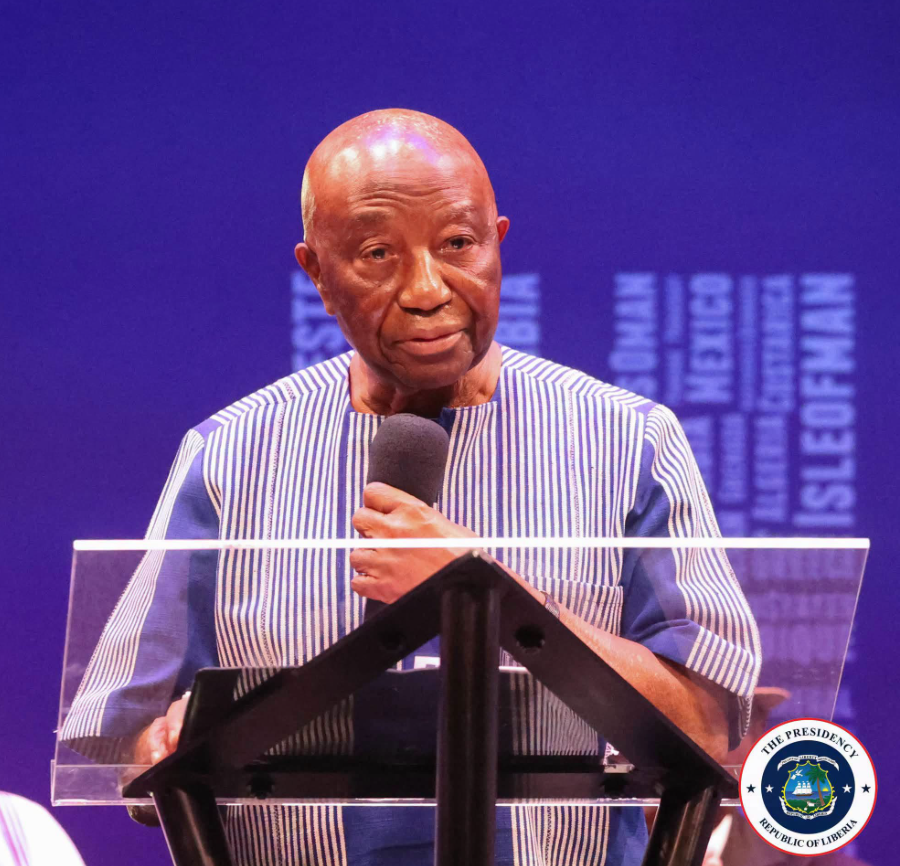
Addressing a Presidential Town Hall with members of the Liberian community in the Washington, D.C., Maryland, and Virginia area, President Boakai said the Diaspora is an important partner in Liberia’s development and urged Liberians abroad to move beyond dialogue toward practical contributions that produce measurable results.
“The Diaspora is not outside Liberia’s development story; it is part of it,” President Boakai said.
The Town Hall, held at the Harvest InterContinental Church in Olney, Maryland, followed the President’s participation in the 2026 Liberia Diaspora Conference, held under the theme, “From Dialogue to Delivery: Mobilizing the Global Liberian Diaspora for National Transformation.”
President Boakai said the theme aligns with the Administration’s desire to deepen engagement with Liberians abroad by connecting Diaspora expertise, enterprise, investment, and professional networks to national development priorities.
He noted that the 2025 Diaspora Conference established a platform for sustained dialogue on reconciliation, health, education, investment, and trade, while the 2026 Conference places greater emphasis on investment, innovation, skills, and measurable development outcomes.
The President encouraged Liberians in the Diaspora to respond to ongoing efforts by Liberia’s Embassies and Consulates to improve information on Liberians living abroad.
He said better Diaspora data would help the Government’s national development planning exercise by identifying the skills, professions, experience, and networks available across the global Liberian community and connecting them to concrete opportunities in Liberia.
“Accurate diaspora data can help match doctors, engineers, educators, entrepreneurs, researchers and other professionals with opportunities to serve Liberia,” the President said.
President Boakai said the Administration’s engagement with the Diaspora reflects the Government’s goal of comprehensively pursuing the ARREST Agenda for Inclusive Development (AAID), Liberia’s national development plan and pathway toward Vision 2030, involving every sphere of the Liberian population.
The Liberian Leader explained that the AAID brings together national priorities in agriculture and food security, roads and infrastructure, rule of law and governance, education and skills, sanitation and health, as well as tourism, technology, and innovation.
President Boakai devoted his presentation at the Town Hall largely to outlining progress made since his Administration assumed office in January 2024, while acknowledging that significant challenges remain.
He cited economic growth of 4.0 percent in 2024 and 5.1 percent in 2025, along with the decline in inflation to about four percent by December 2025. He also noted that domestic revenue collections surpassed US$1 billion in September 2026, compared with approximately US$612 million in 2023.
President Boakai said the priority now is to translate increased domestic resources into better public services, infrastructure, and economic opportunities for Liberians.
On infrastructure, the President highlighted the dedication of the 81-kilometer Gbarnga-Salayea Road in July 2026 and the groundbreaking for the Salayea-Konia and Zorzor-Yeala corridors, supported by US$73.8 million in financing from Arab development partners.
He also highlighted progress in the energy sector, including the July 2026 energization of the Buchanan Electricity Distribution Network, restoring grid electricity to parts of Buchanan after more than three decades.
In the area of digital transformation, President Boakai cited the Electronic Government Procurement system, which has onboarded 56 government procurement entities for Phase II implementation and training by May 2026, noting that the system is designed to strengthen transparency, competition, and value for public resources.
The President further highlighted Government’s focus on agriculture and food security through the National Agriculture Development Plan, “Liberians Feed Yourselves,” which seeks to strengthen farmers, expand production, improve market access, and reduce Liberia’s dependence on food imports.
He also pointed to investments in education and human capital, including the US$88.7 million EXCEL Project, the expansion of advanced academic programs at the University of Liberia, and improvements to public-school facilities.
On health, sanitation, and urban development, President Boakai highlighted Government’s support for the Liberia Water and Sewer Corporation, the integration of ELWA Hospital into the centralized civil-service pay system, and the launch of the Presidential Clean Cities Initiative to support urban sanitation, environmental stewardship, and short-term youth employment.
The President also emphasized his Administration’s focus on accountability and the rule of law, citing strengthened asset-declaration compliance, audits by the General Auditing Commission, and continued work toward establishing mechanisms for addressing war and economic crimes.
He said Government continues to treat illicit drugs as both a public-health and national-security challenge, with efforts focused on prevention, treatment, law enforcement, accountability, and due process.
President Boakai also cited Liberia’s growing role in international affairs, noting the country’s election in 2025 to a non-permanent seat on the United Nations Security Council for the 2026–2027 term, its first such service since 1961.
Turning again to the Diaspora, the President called for a sustained partnership between Liberians at home and abroad. He said Government, the private sector, civil society, development partners, and the Diaspora each have a role to play in advancing Liberia’s development.
President Boakai acknowledged that challenges remain in employment, infrastructure, health, education, public services, and the cost of living, stressing that the AAID provides the framework while implementation and measurable results must remain the test.
He urged Liberians everywhere to remain engaged in the national development process and contribute practical ideas, skills, resources, and partnerships toward building a more prosperous Liberia.
“Let us keep the conversation focused on what works, what still needs attention, and how Liberians everywhere can contribute to national development,” President Boakai said.
The President’s Town Hall presentation was followed by an interactive Q & A session, featuring a spirited exchange of questions and comments which involved the active participation of a lineup of sector ministers of government who were present.