By: Julius Konton
The Legal Aid Clinic Program of the Liberia Annual Conference of The United Methodist Church (LAC/UMC), with financial and institutional support from the General Board of Global Ministries, has secured the release of 63 pretrial detainees from Monrovia Central Prison following judicial proceedings conducted through the Magistrate Sitting Program during October 2026.
The development represents a significant intervention in Liberia’s ongoing efforts to address prolonged pretrial detention, prison overcrowding, and barriers to legal representation, particularly among indigent citizens and foreign residents who lack the financial resources to secure private legal services.
The 63 detainees were released through six magistrate courts operating under the judicial intervention initiative, with the Paynesville City Magistrate Court accounting for the highest number of releases.
The October exercise underscores the growing importance of institutional partnerships between the judiciary, faith-based organizations, and legal aid institutions in promoting access to justice, strengthening due process, and safeguarding the fundamental rights of individuals awaiting trial.
According to information released by the UMC Legal Aid Clinic, the 63 detainees were processed through six magistrate courts, with the following breakdown:
Paynesville City Magistrate Court: 19 detainees
Bushrod Island Magistrate Court: 16 detainees
Omega Magistrate Court: 12 detainees
Brewerville City Magistrate Court: 6 detainees
Gardnersville Magistrate Court: 5 detainees
Monrovia City Magistrate Court: 5 detainees
Paynesville City Magistrate Court recorded the highest number of releases, accounting for approximately 30.2 percent of the total, followed by Bushrod Island Magistrate Court with 25.4 percent and Omega Magistrate Court with 19 percent.
Collectively, the three courts accounted for 47 of the 63 releases, representing approximately 74.6 percent of the total number of detainees released during the reporting period.
The remaining three courts accounted for 16 releases, representing 25.4 percent.
The figures highlight the contribution of multiple judicial jurisdictions to efforts aimed at addressing the backlog of cases involving individuals held in pretrial detention.
The intervention comes against the backdrop of longstanding challenges within Liberia’s correctional system, where prolonged pretrial detention has remained a major contributor to prison congestion and concerns about the administration of justice.
Data published by the World Prison Brief, drawing on information from Liberia’s national prison administration, indicate that the country had 3,768 prisoners as of April 2026. Of that number, approximately 2,650, representing 70.3 percent, were pretrial detainees or remand prisoners awaiting the conclusion of their cases.
The same dataset places Liberia’s official national prison capacity at 1,350 inmates, based on figures reported in May 2025.
At that time, the country’s prison population of 3,398 represented an occupancy level of approximately 251.7 percent of official capacity.
This means that the national correctional population was more than twice the officially designated capacity, illustrating the scale of the infrastructure and case-management challenges confronting the country’s correctional institutions.
The figures are national statistics and should not be interpreted as the current occupancy level of Monrovia Central Prison alone.
Nevertheless, they provide important context for understanding the significance of interventions targeting pretrial detention.
The United Nations Development Programme (UNDP), in an April 2023 publication, also highlighted the magnitude of the problem, reporting that approximately 2,137 of more than 3,000 prisoners in Liberia at the time were awaiting trial.
According to the UNDP assessment, Monrovia Central Prison housed approximately 1,300 inmates despite having been designed to accommodate only 374 persons.
The report identified prolonged pretrial detention as a major factor contributing to overcrowding, while emphasizing the implications for human dignity, prison administration, and access to justice.
Liberia’s efforts to address prison overcrowding through expedited judicial proceedings are not new.
The Magistrate Sitting Program emerged in 2009 as part of broader justice-sector interventions designed to reduce the number of people held in prolonged pretrial detention at Monrovia Central Prison.
Historical documentation by the United Nations Development Programme indicates that the initiative was developed through collaboration between the Ministry of Justice and the Supreme Court of Liberia.
The program brought magistrates from different jurisdictions to conduct proceedings involving pretrial detainees, helping to address case backlogs and facilitate timely judicial consideration.
A subsequent Liberian government report submitted to the United Nations in 2015 documented that the Magistrate Sitting Program had contributed to processing thousands of cases.
Between 2012 and 2014, approximately 2,000 cases were heard under the initiative. Of those, nearly 500 were dismissed, approximately 700 were transferred, and 800 resulted in remand.
The same report indicated that the national pretrial detention rate declined from approximately 87 percent in 2009 to 75 percent in early 2014, although the reduction reflected broader justice-sector interventions and should not be attributed exclusively to the Magistrate Sitting Program.
These historical developments demonstrate that expedited judicial proceedings and legal assistance have long been recognized as important mechanisms for addressing Liberia’s correctional challenges.
The October 2026 releases therefore represent a continuation of a broader national effort to improve the administration of justice and reduce unnecessary detention.
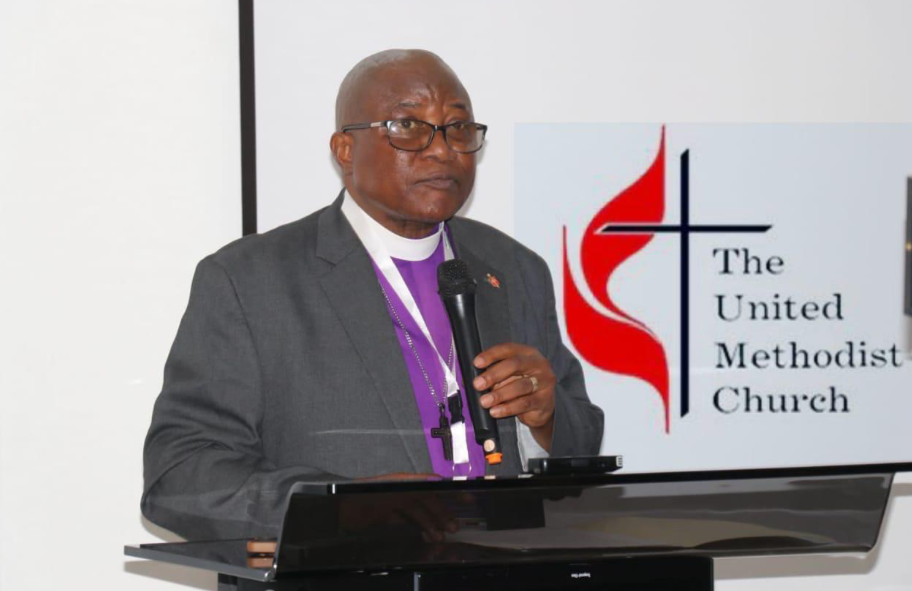
Commenting on the development, Rev. Cllr. J. Abel Knight, Associate Director for Legal Affairs of the Department of Human Rights of the Liberia Annual Conference of The United Methodist Church, emphasized the importance of protecting individuals held in pretrial detention and ensuring that every accused person receives a fair opportunity to have their case heard.
“The release of these 63 pretrial detainees demonstrates the importance of access to justice, legal representation, and timely judicial proceedings.
Every individual deserves a fair opportunity to have their case heard in accordance with the law.
“Through the Legal Aid Clinic Program, The United Methodist Church continues to support efforts that uphold human dignity, protect the rights of vulnerable persons, and address the challenge of overcrowding at Monrovia Central Prison,” Rev. Cllr. Knight stated.
His remarks highlight the church’s position that access to legal representation should not be determined solely by an individual’s financial circumstances.
For many indigent defendants, the inability to afford private legal counsel can create significant obstacles to navigating the criminal justice system, understanding legal procedures, and pursuing appropriate remedies.
Through its Legal Aid Clinic, the United Methodist Church seeks to bridge this gap by providing legal assistance to vulnerable individuals, including Liberian citizens and foreign residents who may otherwise struggle to secure adequate representation.
Pretrial detention refers to the confinement of an individual accused of committing an offence while awaiting the determination of the criminal proceedings against them.
Under fundamental principles of criminal justice, an accused person is presumed innocent until proven guilty by a competent court of law.
Consequently, detention before trial should not become a substitute for punishment, and judicial authorities are expected to ensure that cases are handled within a reasonable period and in accordance with established legal procedures.
Prolonged detention without timely judicial review can raise serious concerns involving personal liberty, access to legal representation, fair hearing, and the protection of fundamental human rights.
Liberia’s justice-sector challenges have historically included case backlogs, inadequate legal representation, delays in processing indictments, and administrative difficulties associated with the movement and management of court records.
These challenges have contributed to the continued reliance on pretrial detention and placed additional pressure on correctional facilities.
The work of legal aid institutions and the Magistrate Sitting Program is therefore important not only for addressing overcrowding but also for strengthening the broader administration of justice.
The Legal Aid Clinic’s intervention is being implemented with support from the General Board of Global Ministries, the global mission and development agency of The United Methodist Church.
The partnership reflects the role of faith-based institutions in supporting human rights, social justice, and community development through practical interventions that respond to the needs of vulnerable populations.
By supporting legal assistance for individuals who cannot independently afford legal services, the initiative contributes to efforts to make justice more accessible, inclusive, and responsive to the needs of disadvantaged communities.
The October releases further demonstrate how collaboration between religious institutions, legal practitioners, and judicial authorities can contribute to addressing longstanding institutional challenges.
While the release of 63 pretrial detainees represents an important achievement, stakeholders continue to face the broader challenge of ensuring that judicial interventions produce lasting improvements across Liberia’s criminal justice system.
Reducing prison overcrowding requires sustained attention to timely case processing, access to competent legal representation, effective court administration, appropriate use of bail and other lawful alternatives to detention, and improved coordination between magistrate courts, circuit courts, prosecutors, and correctional authorities.
It also requires continued investment in legal aid services and institutional capacity to ensure that vulnerable individuals are not subjected to unnecessary or prolonged incarceration simply because they lack financial resources.
The October 2026 intervention by the Liberia Annual Conference of The United Methodist Church provides another example of how legal assistance and judicial collaboration can help address these challenges.
As Liberia continues to pursue improvements in its justice and correctional systems, the release of the 63 detainees sends an important message about the relationship between access to justice, human dignity, and the rule of law.
Through its Legal Aid Clinic and human rights initiatives, the Liberia Annual Conference of The United Methodist Church says it remains committed to supporting justice, accountability, due process, and the protection of the rights of vulnerable persons.