–Through UN Women’s Spotlight 2.0 Initiative
By Shallon S. Gonlor
shallonsgonlor@gmail.com
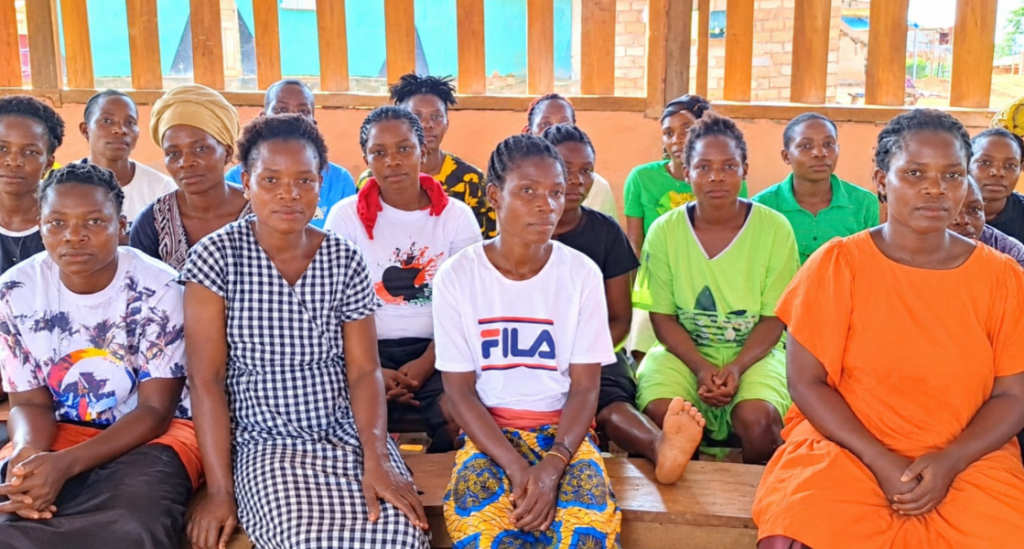
GBARNQUOI TOWN, Nimba County, Liberia — Adolescent girls and women in Gbarnquoi Town, a rural community in Nimba County, are beginning to experience a gradual transformation in their lives through improved literacy, digital education, and economic empowerment opportunities under the United Nations (UN) Women-Liberia supported Spotlight Initiative 2.0.
The initiative is providing new opportunities for women and girls who have long faced poverty, harmful traditional practices, limited access to education, gender inequality, and other social and economic barriers that have restricted their ability to participate fully in community development.
Among the beneficiaries are survivors of sexual and gender-based violence (SGBV), women and girls affected by female genital mutilation (FGM), women living with disabilities, female-headed households, adolescent mothers, and out-of-school girls who often experience multiple layers of social exclusion and economic hardship.
Supported by the European Union (EU) and jointly implemented by UN Women Liberia, the United Nations Development Programme (UNDP), and the United Nations Population Fund (UNFPA), in coordination with the Ministry of Gender, Children and Social Protection (MGCSP), Spotlight Initiative 2.0 seeks to address the root causes of violence against women and girls while strengthening their access to education, economic opportunities, and social inclusion.
In Gbarnquoi, the intervention is moving beyond conventional awareness campaigns by equipping participants with practical knowledge and skills intended to improve their daily lives, build confidence, and promote long-term economic independence.
The program began with community engagement and conversations aimed at understanding the specific challenges confronting women and girls before introducing practical literacy, digital skills, and improving agriculture training.
Josephine Paye, a trainer working with the implementing partner, Youth Crime Watch of Liberia (YCWL), said the ongoing training focuses on adult literacy and basic digital skills, particularly for participants who previously had little or no opportunity to acquire formal education.
According to her, several participants initially struggled with basic activities such as recognizing numbers, identifying their telephone numbers, reading, writing, and performing simple transactions using their mobile phones.
However, she noted that the training has begun producing encouraging results, as participants are increasingly demonstrating the ability to recognize numbers, identify and write their telephone numbers, check their mobile money accounts, and write their own names.
Ms. Paye explained that the literacy component is an important foundation for preparing beneficiaries for the next phase of the intervention, which will introduce them to practical income-generating activities.
“Most of them are learning how to read and write. Before, they never knew how to even recognize numbers. But now, through the Spotlight Initiative 2.0 program, the women are able to recognize numbers, know their phone numbers, check their mobile money accounts, and even write their own names,” she explained.
She further disclosed that after completing the literacy training, participants will be introduced to snail farming as a vocational and income-generating activity.
“So, after they finish with the literacy program, we will be introducing them to snail farming, which they are here for,” Paye added.
The planned introduction of snail farming is expected to provide participants with practical agricultural skills that could help them establish small-scale businesses, generate income, and contribute to their households’ financial stability.
Beyond the activities in Gbarnquoi, Spotlight Initiative 2.0 is designed to reach women and girls across Liberia’s eight Spotlight counties through inclusive, market-driven skills development and economic empowerment interventions.
The broader program includes training in agriculture, crafts, digital entrepreneurship, cross-border trade, business development, financial literacy, and Village Savings and Loan Associations (VSLAs).
These interventions are intended to help beneficiaries acquire relevant skills, improve their financial management capabilities, access livelihood opportunities, and develop sustainable sources of income.
The Village Savings and Loan Associations component, in particular, is designed to encourage savings, strengthen financial discipline, and improve access to small-scale financial resources, especially for women who may face difficulties accessing conventional banking and credit services.
By combining basic literacy with vocational training and financial empowerment, the initiative seeks to address some of the structural challenges that make women and girls economically vulnerable and increase their exposure to exploitation and gender-based violence.
Economic independence is widely recognized as an important element in strengthening women’s ability to make informed decisions, exercise their rights, support their families, and participate meaningfully in community affairs.
For beneficiaries in rural communities such as Gbarnquoi Town in Nimba County, acquiring the ability to read, write, recognize numbers, and operate mobile financial services represents an important step toward greater self-reliance and participation in the modern economy.
The initiative also underscores the importance of ensuring that women and girls who have experienced violence, discrimination, disability-related exclusion, or interrupted education are not left behind in national development efforts.
Through strengthened partnerships among government institutions, civil society organizations, private-sector actors, development partners, and local communities, Spotlight Initiative 2.0 aims to promote safer, more inclusive, and economically resilient communities.
Ultimately, the program seeks to ensure that women and girls across Liberia have greater access to opportunities, the freedom to make decisions about their lives, and the economic capacity to pursue a future defined by dignity, equality, and freedom from violence.