

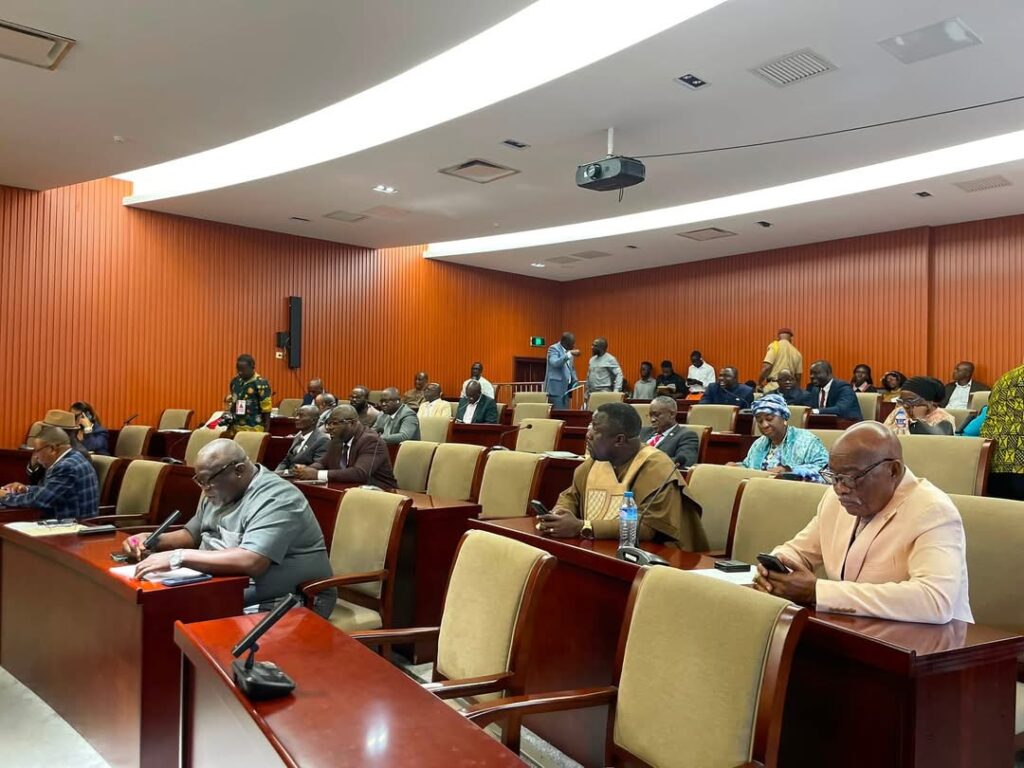
The Plenary of the Honorable House of Representatives has referred the proposed US$1.54 billion National Budget for Fiscal Year 2027 to its Joint Committee on Ways, Means and Finance and Public Accounts and Expenditure for comprehensive legislative scrutiny.
The referral is in keeping with Article 34 of the Liberian Constitution, which vests the Legislature with the authority to review and approve national appropriations and oversee public expenditure.
Following the referral, the Joint Committee is expected to conduct a detailed examination of the proposed fiscal instrument and submit at least three separate reports to Plenary for consideration before the House takes its final position.
The committee’s review will provide lawmakers the opportunity to independently assess the government’s revenue projections, expenditure priorities, sectoral allocations, capital investment plans, and other fiscal commitments to ensure transparency, accountability, and responsible management of public resources.
Upon completion of the House’s review and subsequent passage, the proposed budget will be forwarded to the Liberian Senate for concurrence, in keeping with the constitutional legislative process.
The proposed FY2027 National Budget was formally submitted to the 55th Legislature by President Joseph Nyuma Boakai on November 6, 2026, with a total projection of US$1,538,916,273.66.
The proposed fiscal instrument represents an 18 percent increase over the FY2026 National Budget and projects domestic revenue of approximately US$1.45 billion, accounting for 94 percent of total resources. External resources are estimated at US$92 million, representing the remaining six percent.
Under the proposed expenditure framework, approximately US$1.21 billion is allocated to recurrent and non-PSIP capital expenditure, while US$328.49 million is earmarked for the Public Sector Investment Plan (PSIP).
The budget, themed “A Growing Budget for Bigger Impact: Accelerating the Implementation of the ARREST Agenda for Inclusive Development,” prioritizes investments in key sectors considered critical to Liberia’s growth and development.
These include education, healthcare, road infrastructure, energy, youth empowerment, women’s economic advancement, agriculture, tourism, environmental sustainability, and institutional accountability.
Additionally, the proposed budget outlines salary improvement measures targeting nearly 13,000 government employees, alongside recruitment opportunities for approximately 4,350 additional personnel.
Meanwhile, the House of Representatives underscores the importance of a thorough and independent legislative review of the proposed national budget to ensure that public resources are aligned with national development priorities and deliver meaningful benefits to the Liberian people.
The House is expected to continue its examination through committee deliberations and subsequent Plenary consideration before completing its constitutional responsibility in the national budget approval process.