–Demands Greater Inclusion of Civil War Victims
By Jessica Cox
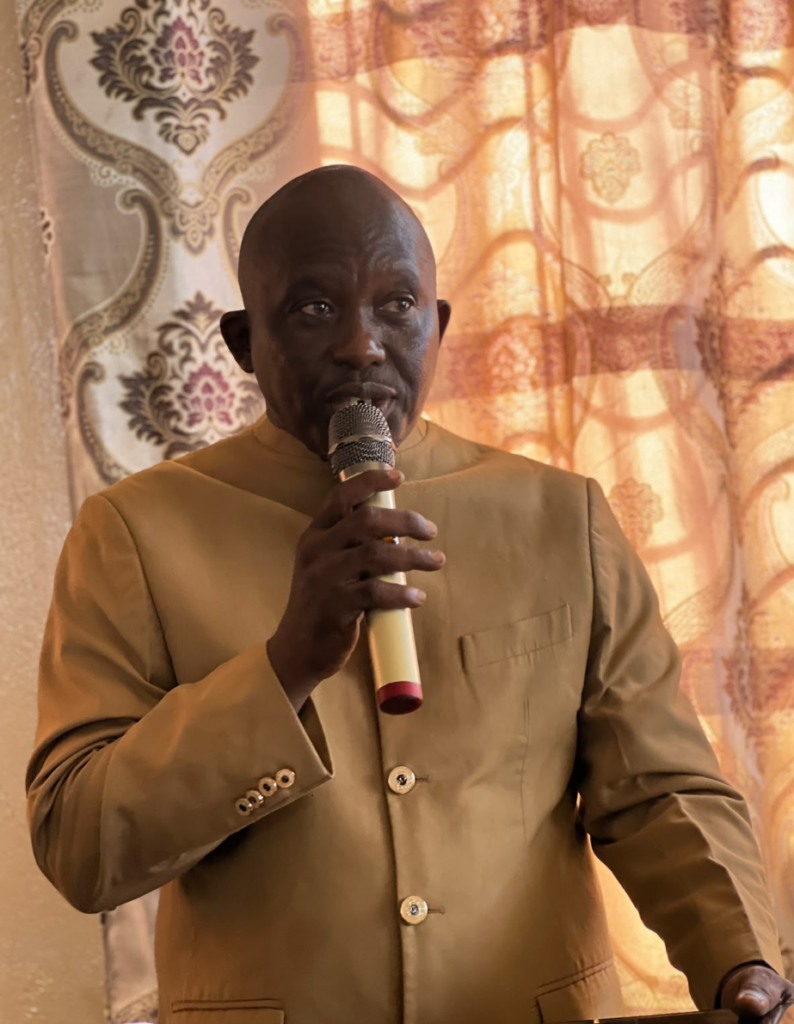
MONROVIA — The Executive Director of the Office for the Establishment of the War and Economic Crimes Court for Liberia (OWECC-L), Dr. Cllr. Jallah A. Barbu, has criticized the government’s proposed National Civil War Memorial, arguing that its development process risks overlooking the experiences and contributions of victims and survivors of Liberia’s civil conflicts.
Barbu expressed disappointment over the process during a two-day Transitional Justice Dialogue organized by the Inclusive Development Initiative in collaboration with OWECC-L in Monrovia on Tuesday, November 10.
He questioned why his office and representatives of civil war victims and survivors were not adequately involved in the planning and presentation of the memorial model unveiled at the Executive Mansion on November 6.
According to him, the proposed designs do not sufficiently demonstrate the suffering endured by thousands of Liberians during the country’s civil conflicts, particularly those who lost their lives, sustained permanent disabilities or continue to live with the consequences of wartime atrocities.
He raised concerns over what he described as inadequate representation of victims, gravesites and persons living with disabilities, insisting that a national memorial should reflect the experiences of those directly affected by the war rather than simply stand as a physical monument.
Barbu maintained that the exclusion of victims and survivors from meaningful participation undermines the very purpose of establishing a national memorial, which should provide a space for remembrance, recognition and national healing.
He recalled the widespread atrocities committed during the civil wars, including rape, killings, mutilations, beheadings and other serious human rights violations, noting that the consequences continue to affect individuals, families and communities across Liberia.
The OWECC-L Executive Director called on the Executive Mansion and the National Memorial Committee to reconsider their approach and ensure that the voices of victims, survivors and affected communities are incorporated into the design and implementation of the project.
He specifically called for consideration of persons living with disabilities, disadvantaged communities and the burial sites of those killed during the conflicts, emphasizing that the memorial should recognize not only the dead but also those who survived and continue to bear the physical, emotional and social consequences of the war.
The criticism comes four days after President Joseph Nyuma Boakai unveiled the prototype of the proposed Civil War Memorial Wall at the Executive Mansion.
The November 6 unveiling, held under the theme, “Honoring the Past, Celebrating Peace, and Inspiring the Next Generation,” was presented by the government as part of efforts to preserve Liberia’s history, honor those who lost their lives and promote national reconciliation.
According to the Executive Mansion, the proposed memorial is expected to be constructed on Bali Island in Monrovia, with work anticipated to commence in mid-2027.
President Boakai said the initiative was intended to acknowledge Liberia’s painful history and recognize the suffering of families and communities affected by the civil conflicts.
He also emphasized that the memorial alone would not heal the country, stressing that lasting reconciliation requires justice, dialogue, unity and peaceful coexistence.
The President further disclosed that the memorial initiative is connected to the work of the Liberia Peace, Reconciliation and Memorial Museum, whose Steering Committee was expected to convene from November 16 to 18, 2026.
However, Barbu’s concerns have brought renewed attention to the question of how victims and survivors will participate in determining what the country ultimately chooses to remember and how that history will be represented.
Liberia’s efforts to memorialize victims are rooted in recommendations of the country’s Truth and Reconciliation Commission (TRC), which investigated the causes and consequences of the civil conflicts.
In its final report, the TRC recommended the establishment of memorial sites in county capitals and at massacre locations to honor those killed during the conflicts.
It also called for reparations and support for victims, including medical care, psychosocial services and assistance for persons who sustained physical disabilities as a result of the war.
The commission emphasized that memorialization should go beyond erecting monuments to include recognition of survivors and measures addressing the continuing consequences of the conflict.
More than two decades after the end of Liberia’s civil wars, questions of accountability, reparations and recognition remain central to the country’s transitional justice process.
A joint report submitted by Human Rights Watch and other organizations in April 2025 noted that Liberia had yet to establish a comprehensive reparations program for victims of wartime atrocities. It also raised concerns about inadequate participation by victims, their families and civil society organizations in memorialization efforts.
The United Nations reported in August 2026 that more than 250,000 people were killed during Liberia’s 14 years of civil conflict, with the majority being civilians.
The UN also noted that the TRC, whose final report was released in December 2009, recommended the establishment of a special court to prosecute those bearing the greatest responsibility for serious human rights violations and other crimes committed during the conflicts.
Against this background, OWECC-L was established in May 2024 to develop the legal and institutional framework for the proposed War and Economic Crimes Court.
The office is mandated to advance the establishment of a hybrid court to address war crimes, crimes against humanity and serious human rights violations committed between January 1979 and August 2003.
President Boakai renewed the office’s mandate in May 2026 for an additional year, with a US$2 million annual appropriation to support its work and preparations for the proposed courts.
As the government moves toward constructing the national memorial, Barbu’s intervention places the question of victims’ participation at the center of the ongoing transitional justice discussion.
For Liberia, the challenge is not only to construct a national monument but also to ensure that the country’s remembrance process recognizes the people whose lives were permanently altered by the wars and addresses their longstanding calls for dignity, justice and accountability.