By Jessica Cox
The United Nations (UN) Women has challenged Liberia’s political parties to move beyond mobilizing women as voters and begin creating meaningful opportunities for them to contest and win elective positions, warning that women’s numerical strength in the country’s electorate has not translated into proportional political representation.
UN Women Liberia representative Yemi Falayajo said women constitute more than 50 percent of Liberia’s voting population but remain significantly underrepresented in political leadership, raising questions about the commitment of political parties to advancing women’s participation in governance.
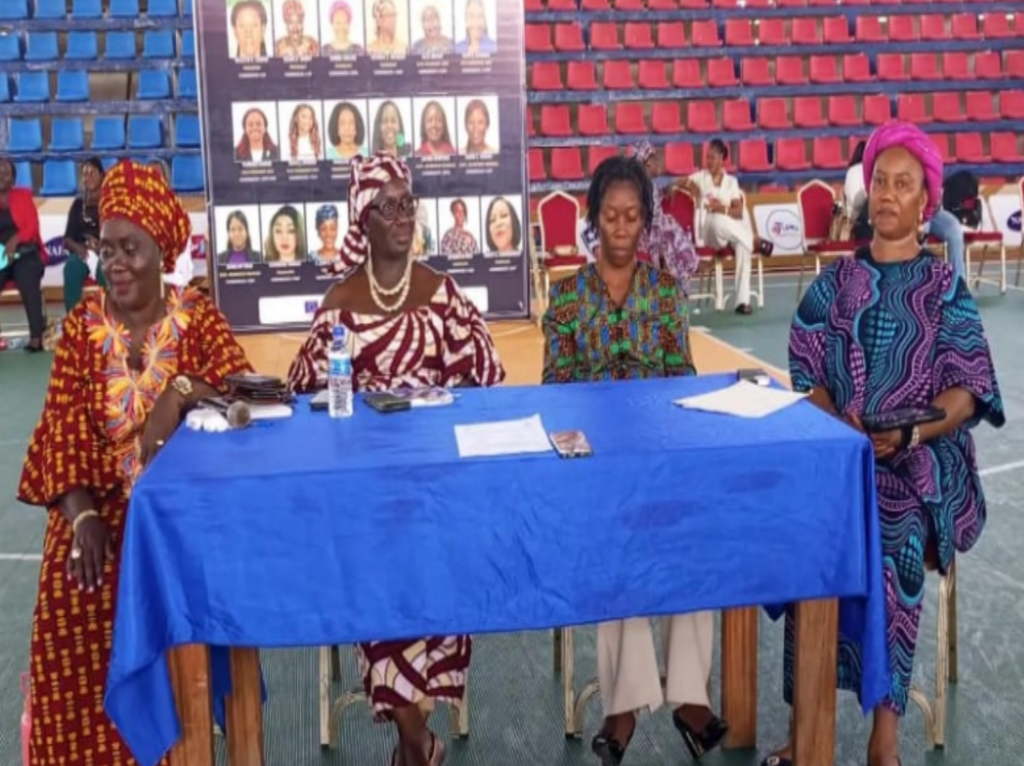
Speaking Friday, November 13, at the Coalition of Political Parties Women in Liberia (COPPWIL) Leadership Candidates Debate at the Samuel Kanyon Doe (SKD) Gymnasium in Paynesville, Falayajo urged the coalition to use its collective influence to press political parties for greater inclusion of women in electoral contests.
She disclosed that only two of Liberia’s 31 political parties met the 30 percent gender quota during the 2023 electoral process.
She said political parties hold significant responsibility for determining who gets nominated, who is placed in winnable electoral positions, and who receives the institutional support needed to compete in elections.
“What happens to the rest of the 28?” Falayajo asked, questioning why women who constitute more than half of the voting population continue to face limited opportunities to enter elected political offices.
She argued that Liberia cannot continue to depend on women’s electoral participation without creating corresponding opportunities for them to exercise political authority.
“We cannot continue to mobilize women to vote to enable the imbalance of the power dynamics,” she said, urging political parties to reconsider their approaches to women’s political participation.
Falayajo called on COPPWIL to use its position as a coalition of women from different political parties to advocate for increased representation, stronger implementation of gender quotas, and greater access to winnable electoral positions.
She also urged women political leaders to look beyond competing for limited political spaces, emphasizing the need to create additional opportunities for women rather than concentrating their efforts on displacing those already occupying elective positions.
According to her, preparations for the 2029 general elections must begin early to ensure that women currently holding elected positions retain their places while more aspiring female politicians receive the support needed to compete.
“Let’s create more spaces for women,” she urged, stressing that political empowerment must extend beyond encouraging women to participate in elections to ensuring that they are also presented as candidates.
The UN Women representative further identified financial, institutional, cultural, and personal barriers as some of the challenges confronting women aspiring to political leadership.
She disclosed that UN Women, under its ongoing electoral support initiative, is providing preparatory and aspirational training for women across political parties, including COPPWIL members, building on country-level mapping of women aspiring to contest elections.
Falayajo also highlighted the importance of collaboration among COPPWIL, the National Elections Commission (NEC), the Women’s Legislative Caucus of Liberia, political party leaders, and the Inter-Party Consultative Committee in advancing reforms that could expand women’s political participation.
She described COPPWIL as an important platform for bringing women across political affiliations together to pursue a common objective of increasing women’s representation in political leadership.
Presidential hopefuls outline visions for COPPWIL
Meanwhile, the COPPWIL leadership debate brought together women contesting for various positions within the coalition to present their leadership visions, explain their priorities, and demonstrate their readiness to serve.
The presidential contest featured Selena P. Mappy, Victoria T. Koiguah, Willette P. Cooper, and Kebbeh Collins, alongside other aspirants seeking positions including Vice President for Administration, Vice President for Operations, Secretary General, Treasurer, and other leadership roles.
The candidates were given the opportunity to articulate their plans for the coalition, respond to questions from participants, and address issues concerning leadership, accountability, internal governance, and the future direction of the organization.
Discussions during the debate highlighted the importance of strengthening COPPWIL’s internal governance, improving resource mobilization, building strategic partnerships, and establishing a more effective leadership structure.
The aspirants were also challenged to demonstrate how their proposed leadership approaches would promote cooperation among women from different political parties and strengthen the coalition’s ability to advocate for greater women’s participation in national politics.
The engagement was intended to encourage informed participation and allow members to assess the candidates ahead of the November 20, 2026 elections.
The leadership debate was organized by Sister Aid Liberia in collaboration with its partners, including UN Women, the United Nations Development Programme (UNDP), the National Elections Commission, and the Women’s Legislative Caucus of Liberia, among other stakeholders.
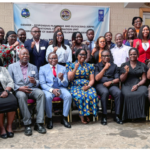
The gathering also brought together government officials, political representatives, civil society actors, development partners, and other stakeholders interested in strengthening women’s participation in political leadership.
Falayajo commended COPPWIL members for reviewing their strategic plan and constitution, validating membership, and organizing themselves around efforts to strengthen the coalition’s governance structure.
She recognized the Women’s Legislative Caucus for supporting the process, describing cooperation among women legislators from different political parties as an important example of how women can collectively create opportunities for increased representation.
As the coalition prepares to elect new leaders, the UN Women representative urged members to ensure that their leadership choices translate into stronger collective advocacy and practical action.
She maintained that increasing women’s representation requires more than encouraging individual women to contest elections, calling for coordinated efforts to expand political opportunities and challenge existing barriers within political party structures.