

Rehab Community, Paynesville: President Joseph Nyuma Boakai has reechoed his Administration’s commitment to empowering rural women as important partners in Liberia’s development. He said his vision for this segment of the nation’s population is centered on strengthening grassroots leadership, expanding capacity building opportunities, and supporting women’s economic contributions to national progress.
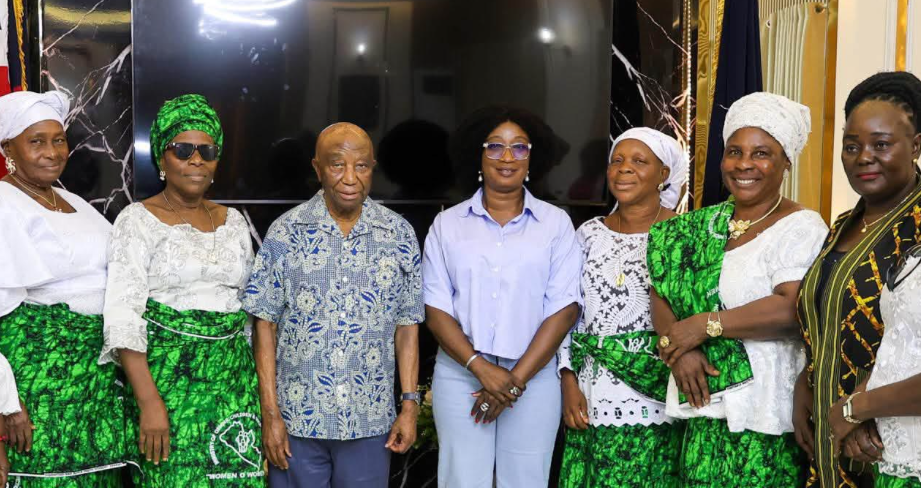
Speaking during an engagement with a delegation of rural women leaders representing the fifteen counties, President Boakai emphasized that investing in women is essential to strengthening families, building resilient communities, and advancing national development.
He averred that Rural Women are central pillars of Liberia’s development agenda, whose leadership he considers as highly significant for strengthening and improving livelihoods, and expanding opportunities for participation in national development.
The President recognized the significant contributions of rural women, particularly their responsibilities in raising children, supporting extended families, and sustaining communities.
The Liberian Leader stressed that empowering women with the necessary skills and resources will enhance their ability to manage these responsibilities while contributing more effectively to nation building.
President Boakai further emphasized the importance of collective action, noting that when women unite, organize, and work toward common objectives, they can achieve meaningful results for their communities and the nation.
As part of ongoing efforts to advance this vision, the Minister of Gender, Children and Social Protection, Honorable Gbeme Horace-Kollie, who escorted the delegation to the President, disclosed that her Ministry is planning a nationwide leadership training program targeting approximately 996 women across Liberia, with implementation expected to begin in by January 2027.
Minister Horace-Kollie also informed the President of discussions with the Indian Ambassador regarding opportunities for selected rural women leaders to receive specialized training in India, an initiative expected to broaden their leadership experience and strengthen their capacity.
Meanwhile, the National Rural Women Leadership, which comprises of representatives from the National Rural Women structure across the fifteen political subdivisions, called on President Boakai to strengthen their capacity through agricultural empowerment by providing access to improved seeds, farming tools, and other agricultural resources that are essential to expanding their productivity and economic independence.
The delegation, through their new Acting National President, Madam Annie W. Kruah of the Nimba County, thanked the President for his many development initiatives and expressed the members’ commitment to working with rural women across towns and villages, emphasizing agriculture as a key driver of women’s empowerment, food production, and community development.