–Pres. Boakai Hails Foreign Minister Nyanti as Global Heavyweight
By Jerromie S. Walters
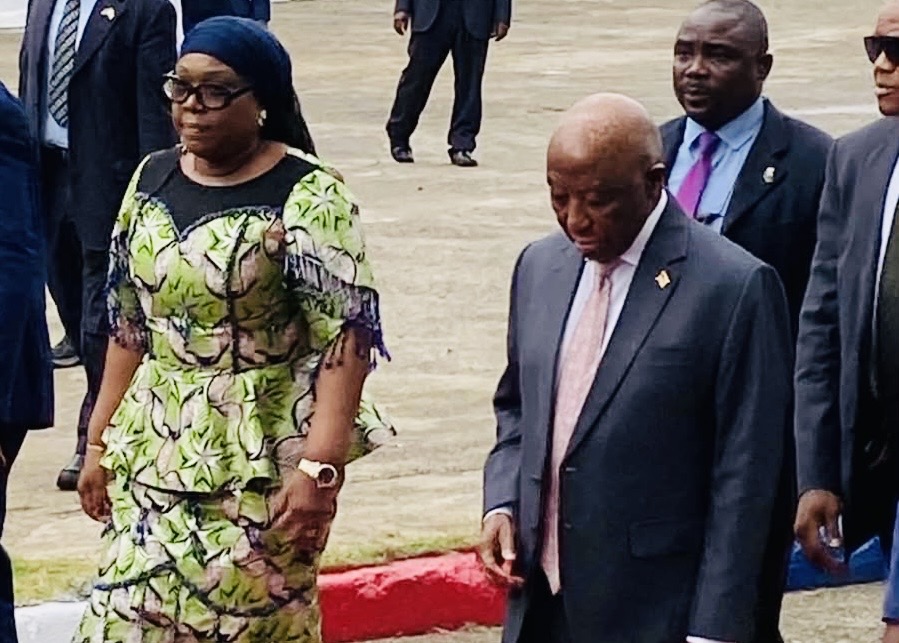
Monrovia – President Joseph Nyuma Boakai has lauded Foreign Minister Sara Beysolow Nyanti as a tireless diplomat who has earned global respect. He singled her out for praise Tuesday, November 17, 2026, at the launch of the revised Gender-Responsive Foreign Policy, when Liberia launched a revised gender-focused foreign policy.
“I want to say a special thank you to the Minister of Foreign Affairs. A minister who never rests and is never tired, a minister who has earned respect all over the globe,” Boakai said. The presidential tribute caps a tenure marked by major international wins and domestic controversy since Nyanti took office in February 2024 as foreign minister and dean of the Cabinet.
Minister Nyanti steered Liberia’s successful June 2025 bid for a non-permanent United Nations Security Council seat for 2026–2027. Under her leadership, Liberia won nomination to chair the UN Sanctions Committee on Sudan and to co-chair committees on the Democratic Republic of Congo and Yemen, ahead of assuming the rotating UNSC presidency in December 2026.
She has aggressively pushed an economic diplomacy agenda, locking in invitations for Liberia to exclusive forums including the Sir Bani Yas International Forum in the UAE and the U.S.-Africa Summit. She also signed bilateral visa-waiver and consultation agreements with nations such as Barbados.
In Washington, D.C., Nyanti lobbied U.S. lawmakers and State Department officials to extend Deferred Enforced Departure protections and create permanent residency pathways for roughly 4,000 Liberians living in the United States.
Domestic observers and partners credit the Foreign Ministry with upgrading passport security features and opening regional processing centers outside Monrovia to expand citizen access. Critics, meanwhile, have raised concerns over internal ministry management and public controversies.
Government Ties Diplomacy to Gender Equality:
Nyanti drew presidential praise Tuesday as she led the government’s launch of the revised Gender-Responsive Foreign Policy, which aims to place women’s rights, gender equality, and inclusive participation at the center of Liberia’s diplomatic engagements at home and abroad.
The policy, presented by the Ministry of Foreign Affairs, seeks to ensure that Liberia’s international relations, economic partnerships, peace initiatives, trade negotiations, and development cooperation reflect the interests of all citizens—particularly women and girls.
But the launch lands against troubling gender inequality indicators. Liberia ranks 161st out of 191 countries on the United Nations Development Programme’s Gender Inequality Index, according to official data.
Presenting an analysis of the policy, Dr. Tanya A. Garnett disclosed that women hold only 11 percent of seats in the national legislature, while maternal mortality stands at 742 deaths per 100,000 live births. She further revealed that Liberia allocated just 0.36 percent of its national budget to gender equality in 2024, raising concerns about the gap between the country’s international commitments and actual investment in women’s empowerment.
Dr. Garnett described the statistics as more than figures, stressing they demonstrate the urgent need for concrete measures to address gender inequality. She explained that the new policy is designed to bridge that gap by making gender equality a fundamental principle guiding Liberia’s engagement with the international community.
Liberia joined the Feminist Foreign Policy Plus Group in September 2023, she noted, while the Foreign Ministry conducted a gender equality assessment in 2025 to determine how far gender considerations had been integrated into its institutional operations and foreign policy framework. The Gender-Responsive Foreign Policy Roadmap was validated in October 2025, paving the way for the comprehensive policy.
Dr. Garnett said the policy rests on five gender pillars: women’s rights; women’s economic empowerment and inclusive trade; women, peace and security; climate justice and natural resource governance; and women’s political representation and leadership.
She explained that the pillars are designed to address gender equality domestically and internationally while ensuring women benefit from opportunities created through Liberia’s diplomatic engagements. The ministry also plans to reform its recruitment processes, career advancement opportunities, work-life balance policies, and institutional culture, she added.
The ministry’s Gender Unit is expected to be formalized as a Gender and Social Inclusion Unit in December 2026 to coordinate implementation alongside senior management and other relevant institutions. Dr. Garnett emphasized that Liberia cannot credibly advocate for gender equality internationally without addressing inequalities within its own institutions.
Presenting the revised foreign policy framework on behalf of the Foreign Policy Development Team, B. Elias Shoniyin described the document as an outward-looking, people-centered, and gender-responsive framework intended to connect Liberia’s national interests with its domestic values, regional obligations, and development aspirations.
Shoniyin stressed that Liberia’s diplomatic engagements must deliver practical benefits to ordinary citizens—including farmers seeking international markets, young graduates searching for opportunities, and entrepreneurs looking for reliable business partnerships.
He said the framework is built around five broader foreign policy pillars: peace, security and international cooperation; economic diplomacy, trade and investment; sustainable development, climate resilience and environmental stewardship; cultural diplomacy and national identity; and institutional strengthening, digital diplomacy and professional service delivery.
He noted that the framework arrives as countries confront geopolitical competition, economic uncertainty, climate change, digital transformation, irregular migration, and transnational crimes. Liberia must respond to these challenges through clear priorities, professional judgment, effective negotiations, and productive international partnerships, he said.
Shoniyin further emphasized that women and girls must have meaningful opportunities to participate in diplomatic negotiations, economic activities, peace and security decisions, and international representation.
Despite the policy’s ambitious objectives, Shoniyin acknowledged that implementation would determine its actual impact on Liberians’ lives. He called for stronger coordination across government institutions, constructive engagement with the Legislature and Judiciary, and partnerships with the private sector, civil society organizations, academia, the Liberian diaspora, and international development partners. He also stressed the need for adequate resources, clearly defined responsibilities, and accountability mechanisms to ensure measurable results.
Dr. Garnett added that the policy aligns with Liberia’s National Gender Policy 2026–2036 and the introduction of a national gender marker designed to track government budget allocations and financing for gender-related commitments. The revised foreign policy is expected to strengthen Liberia’s international standing while ensuring diplomatic decisions translate into meaningful opportunities and improved living conditions for citizens.