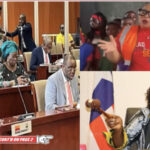



It was meant to be a day of inspiration. A chance for children from the nation’s most remote counties to witness democracy in action, to see their Capitol, and perhaps catch a glimpse of a future they might one day occupy. Instead, it devolved into yet another embarrassing spectacle of political petulance, with the Senate and Nobel Laureate Leymah Gbowee squaring off over a title.
Let us be perfectly clear: When a group of children from Gbarpolu, Sinoe, and River Gee counties travel for hours to Monrovia, their presence should be met with open doors, not closed chambers. The Gbowee Peace Foundation Africa’s “Peace Through Fair Play” initiative is a laudable effort to bridge the gap between the governed and those who govern. That the Senate would allegedly deny these young citizens the opportunity to deliver a prepared statement because of a dispute over whether their chaperone uses the word “Honorable” is, quite frankly, beneath the dignity of that institution.
Madam Gbowee, for her part, is no stranger to principled stands. Her Nobel Peace Prize was earned through courage and sacrifice. But courage can sometimes border on confrontation, and the decision to publicly challenge the Senate’s protocol on the very day of a children’s visit appears to have been strategically combustible. While her point about the 1986 Constitution’s silence on the title “Honorable” is legally interesting, and her offered $10,000 challenge to any lawmaker who can prove otherwise is theatrically bold, the timing raises a question: Was this about the children, or was it about the argument?
The Senate’s counter-narrative—that no formal chamber request was made, that only a lunch invitation was tendered, and that Madam Gbowee was simply “impatient”—is equally troubling. Even if procedurally correct, it rings hollow. The leadership of the Senate could have, with a modicum of goodwill, found a way to greet these children. To allow a visiting youth delegation to be used as collateral damage in a war of words is a failure of leadership.
The broader context here is revealing. This confrontation follows on the heels of an awkward legislative dialogue where Dr. Robtel Neajai Pailey was met with dismissive remarks. A pattern is emerging: the Liberian political establishment appears increasingly uncomfortable with critical voices from civil society. When a lawmaker refers to a distinguished academic as “one rude small lil girl,” we are not debating policy; we are policing tone. When children are barred from the Senate over a protocol dispute, we are not preserving respect; we are protecting fragile egos.
Representative Moima Briggs-Mensah rightly noted that the law confers the title on the office, not the person. And Senator Abraham Dillon, to his credit, offered a sensible middle path by noting that while the title exists, he has personally discouraged its use. This pragmatism is what should have prevailed on Thursday.
Here is the truth: The children did not care about titles. They cared about seeing their leaders. They cared about feeling included. Instead, they witnessed adults acting like children.
It is time for both sides to step back. Madam Gbowee must consider whether her methods inadvertently shut the doors she seeks to open. And the Senate must remember that its ultimate “honor” lies not in what it is called, but in what it does—especially for the youngest citizens of this Republic.
Let this be the end of the theatrics. Let the children come first. And let the Legislature prove its honor by opening its doors, not closing them.