

By Jessica Cox
MONROVIA — The Liberia Anti-Trafficking and Scam Victim Support Initiative (LATSVSI), a Liberian anti-trafficking organisation has warned over fraudulent recruitment networks that are luring young citizens with false promises of overseas jobs and scholarships, only to trap them in forced labour and exploitation across West Africa and beyond.
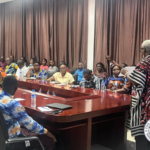
During a presentation at the Ministry of Information on Thursday, LATSVSI said the schemes have become increasingly sophisticated, with victims recruited from multiple counties and routed through transit points in Nigeria, Sierra Leone, Ghana, The Gambia, Guinea, and even Cambodia.
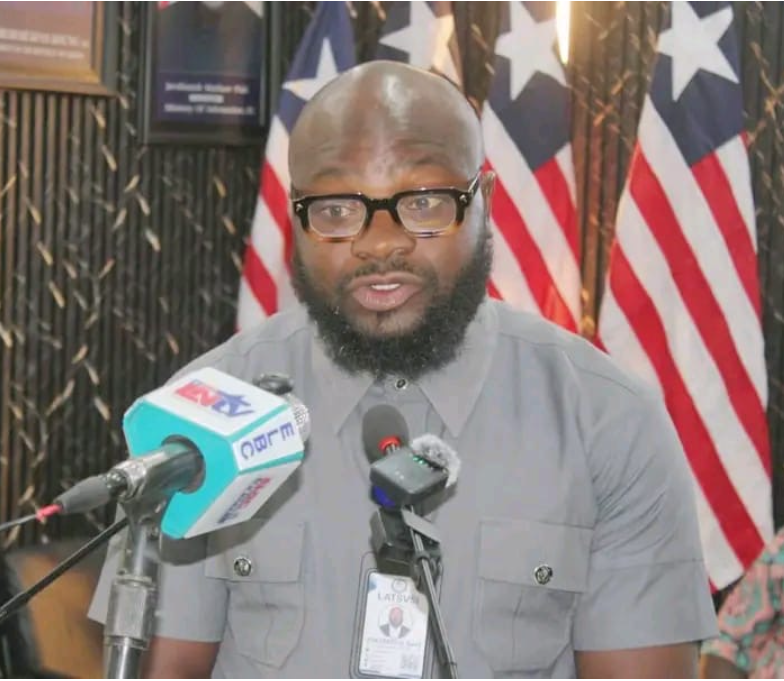
“We are seeing a clear pattern where young people are deceived into handing over their money, passports, and trust—only to find themselves stranded or enslaved,” LATSVSI Executive Director Zokerseh B. Saye told reporters at the Ministry of Information’s regular press briefing in Monrovia.
Saye’s warning comes on the heels of Liberia’s largest-ever trafficking prosecution, a case that exposed the inner workings of a transnational recruitment ring and resulted in historic prison sentences.
According to court records and reporting by New Narratives and FrontPage Africa, 57 victims—22 females and 35 males—were recruited from seven counties under false promises of travel to Canada and Australia. They were brought to Monrovia, where they were harboured and exploited before the scheme unravelled.
Eleven defendants were convicted. Eight received 50-year sentences, while three others were handed 20-year terms. The court also ordered US11,500.
In a ruling that legal observers have called groundbreaking, the court rejected the defence argument that trafficking requires international border crossing, affirming that exploitation through deception and harbouring within Liberia constitutes trafficking under the law.
Liberia’s trafficking problem has drawn international scrutiny. The U.S. Department of State’s 2025 Trafficking in Persons Report classified the country as Tier 2 Watch List, citing inadequate victim services and resource constraints that hamper investigations and prosecutions.
The report identified Liberian nationals as being exploited in Côte d’Ivoire, Guinea, Mauritania, Nigeria, Senegal, and Sierra Leone, and noted that children make up a significant proportion of domestic trafficking victims.
Despite operating without government funding, LATSVSI said it has facilitated cross-border rescues and repatriation for Liberians and other nationals caught in trafficking networks. Saye claimed the organisation has documented more than 52 stranded Liberians in Nigeria alone, including in Ikorodu and other locations, and has appealed to the Liberian government for intervention.
Those figures could not be independently verified from official records at the time of reporting. The organisation’s work includes case management, public education, and coordination with law enforcement—but Saye said financial constraints are severe. “We don’t have funding. What we are doing is passion,” he said. “Sometimes we accommodate rescued victims in our own homes and work with families to get them back.”
He appealed to the government, ECOWAS, international organisations, and development partners for greater logistical and financial support. Saye disclosed that his own relatives had fallen victim to trafficking and scams—a personal tragedy that has driven his commitment to the cause. “Once it touches your family, you understand the urgency in a different way,” he said. “I don’t want other Liberian families to go through what mine did.”
LATSVSI is now pushing for a decentralised anti-trafficking response, arguing that awareness campaigns concentrated in Monrovia leave rural communities vulnerable.
The organisation wants to expand community-level education, enlist influential figures and local media to spread warnings, and strengthen coordination among government agencies, law enforcement, civil society, and international partners.