By: Julius Konton
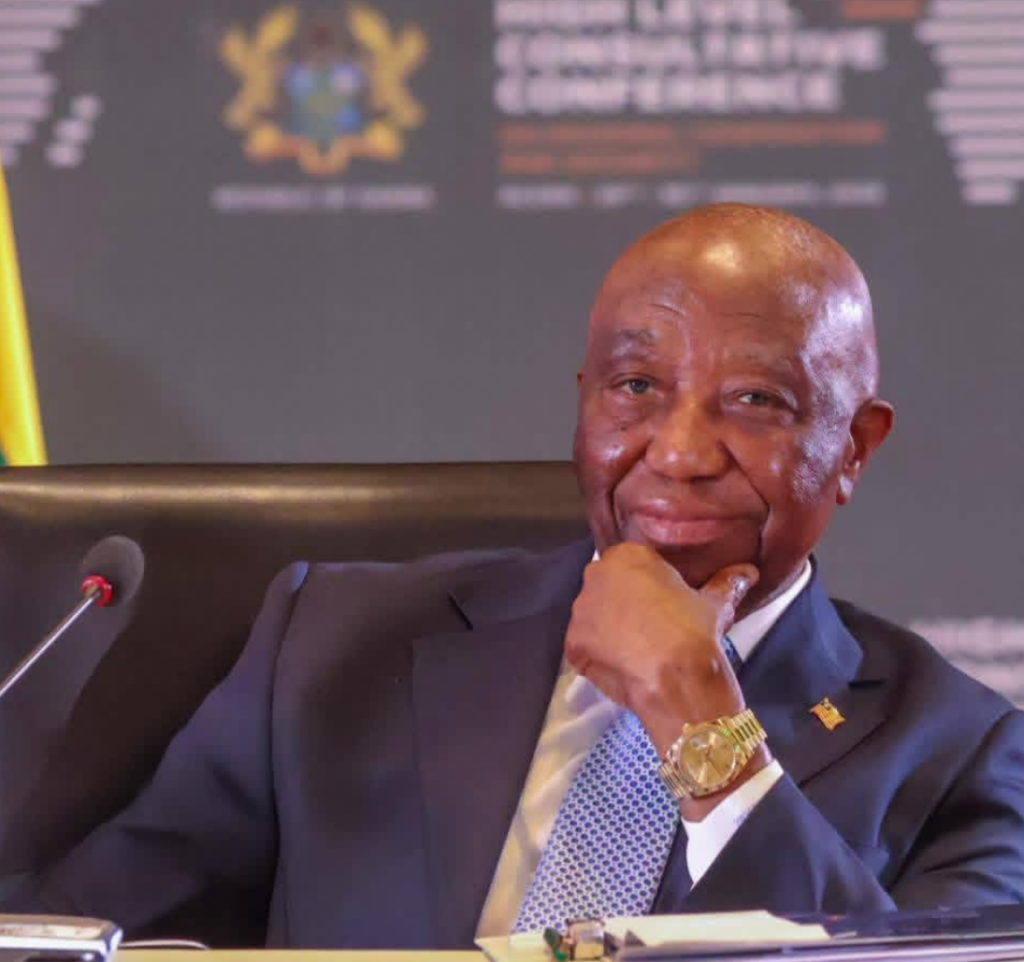
President Joseph Nyuma Boakai has convened his 26th Cabinet meeting at the Executive Mansion, challenging members of his administration to intensify efforts toward national development, strengthen public-sector accountability and ensure that government policies translate into tangible benefits for ordinary Liberians.
The meeting, attended by senior government officials and Cabinet ministers, provided an opportunity to assess the administration’s performance, review ongoing development initiatives, examine institutional challenges and establish priorities for the government’s next phase of implementation.
A notable feature of the meeting was the introduction of Cllr. Oswald Natu Tweh, who is serving as Acting Minister of National Defense, following his reassignment from the Ministry of Justice.
His appointment was announced by the Executive Mansion on September 11, 2026.
Addressing his Cabinet colleagues, President Boakai emphasized that national development is a continuous process requiring collective commitment, institutional reforms and sustained implementation.
“Development is progressive. You do, and people add,” the President declared, underscoring the importance of building upon existing achievements rather than expecting immediate transformation.
He acknowledged that rebuilding a country with longstanding institutional and structural weaknesses was not an easy undertaking but insisted that his administration had a responsibility to confront those challenges and deliver results.
“It is not easy to come back to rebuild things that are broken down, but we must act, and we must do it,” he stressed.
The Liberian leader observed that some of the country’s development setbacks were rooted in inherited laws, institutional arrangements and administrative structures that require adjustments.
However, he cautioned against spending valuable time complaining about inherited problems, arguing that addressing those difficulties was precisely why his government was elected.
President Boakai explained that some of the government’s development interventions might not be immediately visible to the public because inclusive development involves addressing a broad range of social and institutional needs.
He also commended government institutions responsible for domestic revenue mobilization, noting that increased revenue generation had provided the administration with resources to support national programmes while demonstrating Liberia’s potential to strengthen its fiscal capacity.
However, the President acknowledged the need to balance public expectations with the country’s revenue realities, arguing that citizens cannot expect extensive public services without a corresponding effort to strengthen national revenue generation.
“There is no need complaining because that is the reason we came,” President Boakai told the gathering.
A major focus of the meeting was the implementation of the government’s ARREST Agenda for Inclusive Development (AAID), Liberia’s five-year National Development Plan covering 2025–2029.
Launched on January 15, 2025, in Buchanan, Grand Bassa County, the ARREST Agenda represents Liberia’s fourth post-conflict medium-term national development plan.
It succeeds earlier development frameworks, including the Poverty Reduction Strategy, Agenda for Transformation and Pro-Poor Agenda for Prosperity and Development.
The plan is designed to advance Liberia’s economic transformation through six strategic pillars: economic transformation, infrastructure development, rule of law, governance and anti-corruption, environmental sustainability, and human capital development.
According to the United Nations, nearly 45 percent of Liberia’s population lives in multidimensional poverty, while more than 41.5 percent of the population is under the age of 18, highlighting the urgency of investments in employment, education, healthcare and economic opportunities.
President Boakai explained that some of the government’s development interventions might not be immediately visible to the public because inclusive development involves addressing a broad range of social and institutional needs.
He also commended government institutions responsible for domestic revenue mobilization, noting that increased revenue generation had provided the administration with resources to support national programmes while demonstrating Liberia’s potential to strengthen its fiscal capacity.
However, the President acknowledged the need to balance public expectations with the country’s revenue realities, arguing that citizens cannot expect extensive public services without a corresponding effort to strengthen national revenue generation.
President Boakai placed particular emphasis on public-sector performance, insisting that government officials must be evaluated not only by their activities but also by documented results and their ability to account for public resources.
He reminded Cabinet members that their primary responsibility was to serve the Liberian people and that every ministry, agency and government institution must maintain proper records of its activities and decisions.
“We all must know that we work for the public, and it is our job to make sure that we keep records and that we account to the people,” he stated.
The President further described the national budget as an instrument of public welfare, commending Finance and Development Planning Minister Augustine Kpehe Ngafuan and his team for their work in preparing the government’s fiscal proposals.
He said his administration was making deliberate efforts to ensure that public spending reflects the needs of ordinary citizens and that the national budget becomes more inclusive.
While acknowledging that some Liberians might demand greater details about resource allocation, he maintained that government spending must extend beyond traditional institutional priorities to include vulnerable groups, young people and commercial motorcyclists.
The President said the administration wanted to create opportunities that would empower these groups to become economically productive and responsible contributors to society.
He also disclosed that the government was working to reactivate dormant national institutions, including the Liberia Scout Association, as part of broader efforts to restore community participation and youth development structures.
According to him, even modest financial allocations could help revive institutions that provide young people with opportunities to participate meaningfully in national development.
Turning to the country’s economic outlook, President Boakai acknowledged that Liberia continues to face economic challenges influenced partly by developments in the international environment.
He nevertheless expressed satisfaction with what he described as improved management of the country’s petroleum supply and rice market, noting that Liberians had not experienced widespread queues at fuel stations and that rice remained available and relatively affordable.
The President attributed these developments to prudent economic management but cautioned that Liberia must not become overly dependent on external sources for essential commodities, particularly food.
He called for stronger investment in domestic agricultural production, emphasizing that food security must become a central component of the government’s economic resilience strategy.
“We cannot think that we will depend on external production, but we will do our best to match that,” he said.
He argued that Liberia must move beyond traditional farming practices and develop a more productive agricultural sector capable of increasing domestic food supply, creating employment and reducing the country’s dependence on imported food.
The President said he had been engaging the Minister of Agriculture on the need to reposition the sector, stressing that the government must work with available resources rather than wait for every condition to become perfect.
The emphasis on agriculture reflects the broader objectives of the ARREST Agenda, which identifies food security, agricultural productivity and economic diversification as essential drivers of Liberia’s development.
The national development plan targets an average annual economic growth rate of 5.9 percent between 2025 and 2029, alongside improvements in food and nutrition security.
The President’s remarks come as the government continues its annual budget preparation and implementation processes.
Liberia’s FY2026 National Budget was approved at approximately US$1.211 billion, with domestic revenue projected to account for approximately 94 percent of the original budget proposal and external resources making up the remaining six percent.
Meanwhile, the Ministry of Finance and Development Planning published the Draft National Budget for FY2027 on November 9, 2026, indicating that the administration is advancing its next annual fiscal planning cycle.
The broader ARREST development framework is estimated to require US$8.4 billion over five years, with approximately 30 percent expected from government resources and the remainder from development partners, non-governmental organizations and private-sector investment.
These figures underscore the scale of financing required to address Liberia’s infrastructure deficit, expand agricultural production, improve public services and create sustainable employment opportunities.
President Boakai maintained that government spending must be people-centered, with greater attention to programmes that directly improve livelihoods and expand economic participation.
The Liberian leader also highlighted the importance of exploring additional sources of economic growth through greater private-sector participation, investment opportunities and the expansion of technical and digital programmes.
He said the government was considering ways to open up the economy, particularly through agriculture, technical development and digital transformation.
He urged relevant government institutions to monitor ongoing digital initiatives and provide reports detailing their progress, challenges and measurable outcomes.
The President further cautioned government officials about challenges arising from engagements with foreign partners, including Chinese interests, emphasizing the need for greater vigilance in protecting Liberia’s national interests.
He stressed that international partnerships must be guided by transparency, mutual respect and the country’s long-term economic and strategic priorities.
On national security, President Boakai commended the country’s security institutions for their efforts to protect the population and maintain stability.
He said security agencies had been undertaking extensive work across different sectors to safeguard the nation, while encouraging continued professionalism, vigilance and cooperation among relevant institutions.
The President also acknowledged the importance of international partners in supporting Liberia’s development and security programmes but insisted that national decision-making must ultimately remain guided by Liberia’s own interests.
While appreciating external advice and assistance, he argued that international partners could not fully understand the country’s political complexities, economic pressures and the everyday challenges confronting ordinary citizens.
He therefore urged Cabinet members to develop the confidence and institutional capacity to defend policies that serve the national interest.
“We have to understand that we have to take the responsibility ultimately,” he emphasized, adding that Liberians must be prepared to defend their own positions and make decisions that best serve their country.
Concluding his remarks, President Boakai expressed satisfaction with the regularity of Cabinet meetings, describing them as an essential platform for government coordination, policy direction and collective decision-making.
He encouraged ministers and senior government officials to maintain consistent attendance, contribute their professional knowledge and participate actively in discussions affecting the country’s development.
The President acknowledged that some Cabinet decisions would require legislative consideration and public justification, emphasizing that government officials must be prepared to explain and defend policies before the Liberian people.
He insisted that every contribution during Cabinet deliberations must be guided by the collective interest of the nation rather than individual or institutional considerations.
The 26th Cabinet meeting comes at a critical period in the Boakai administration’s implementation of its 2025–2029 ARREST Agenda, with growing expectations for measurable improvements in economic opportunities, infrastructure, food security, public-sector performance and social development.
As Liberia advances through its current development cycle, the effectiveness of the administration will increasingly be measured not only by policy announcements and budgetary commitments but also by the tangible results delivered to citizens.
For President Boakai, the message to his Cabinet was clear: rebuilding Liberia requires collective responsibility, accountability, prudent management of national resources and decisions firmly rooted in the interests of the Liberian people.