

By: Jessica Cox
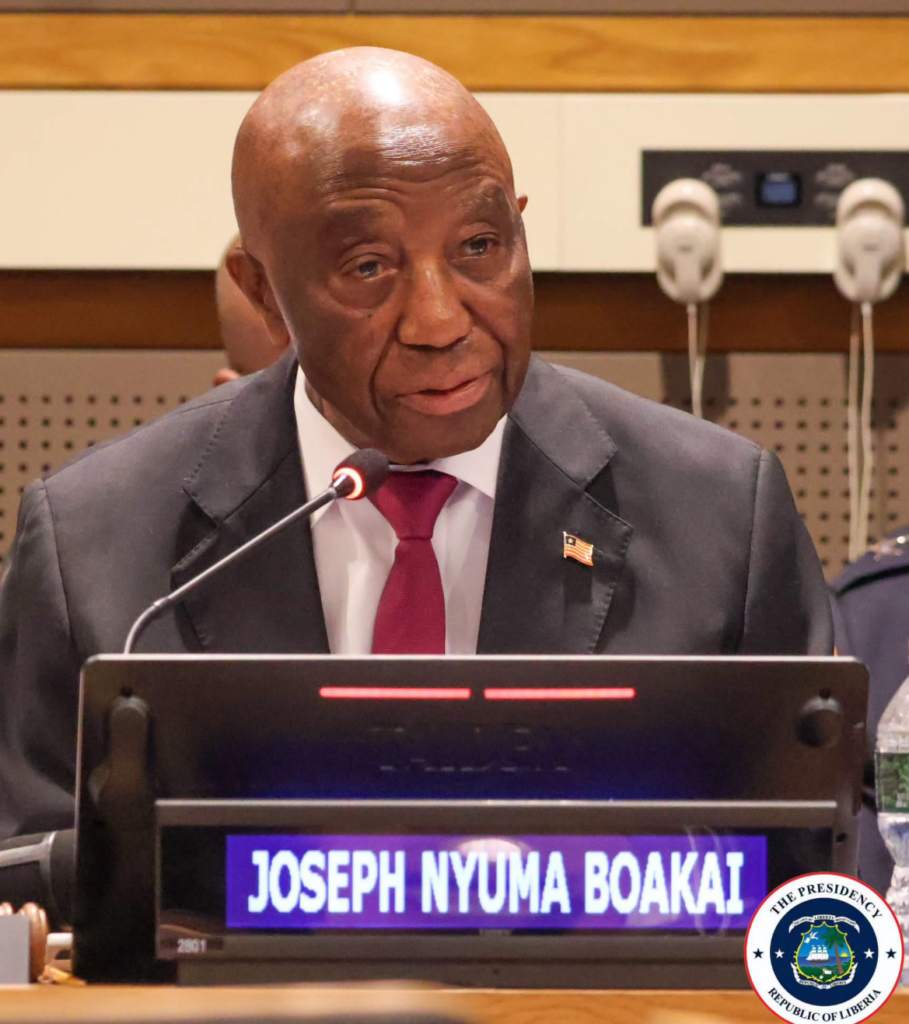
MONROVIA, LIBERIA President Joseph Nyuma Boakai Sr. has proclaimed October as Liberia’s Month of Good Governance and Integrity, directing government institutions and other stakeholders to intensify efforts to promote transparency, accountability, ethical leadership, and citizen participation.
The proclamation, read by the Acting Chairperson of the Governance Commission (GC), Professor Alaric K. Tokpa, calls for a nationwide campaign throughout October to strengthen public trust and improve the performance and openness of government institutions.
The initiative comes as Liberia continues efforts to strengthen its governance and anti-corruption framework, with the Governance Commission serving as the lead institution for governance reforms and policy development.
According to the proclamation, ministries, agencies and commissions of government are expected to work with the Governance Commission to organize activities focused on good governance, while citizens, civil society organizations, traditional leaders, educational institutions, the private sector and the media are being encouraged to participate.
Speaking at the Ministry of Information’s regular press briefing at the Charles Gbenyon Hall in Monrovia, Professor Tokpa said the observance is intended to make good governance a measurable national priority rather than simply a policy aspiration.
The October campaign will focus on transparency, accountability, integrity, citizen participation and adherence to the rule of law.
As part of the initiative, the proclamation calls for town hall meetings, public dialogues, civic education campaigns and digital feedback mechanisms through which citizens can provide views on the performance of public institutions.
The government also plans to strengthen the use of citizen feedback in assessing public institutions.
A major component of the observance will be the publication of a National Integrity Index (NII), with the Governance Commission expected to work with integrity institutions, including the Liberia Anti-Corruption Commission (LACC) and the General Auditing Commission (GAC).
The index is expected to assess public institutions against governance and integrity indicators, including ethical leadership, institutional efficiency, transparency, and financial openness.
The National Integrity Index is not entirely new. The Governance Commission and LACC formally launched the index in April 2026 as an annual tool for assessing public institutions on transparency and accountability.
The April launch described the index as an evidence-based mechanism intended to identify institutional strengths and gaps and support improvements in governance.
Under the October proclamation, the government also plans to expand citizen scorecards, allowing public perceptions and feedback gathered through town halls, public dialogues and digital platforms to contribute to institutional evaluations.
The Governance Commission is further expected to establish independent review panels involving representatives from civil society, educational institutions, the private sector and the media to review and validate governance-related measurements before recommendations are submitted to the Executive.
Executive Director of the Governance Commission, Hon. Jallah C. Kesselly, earlier outlined a series of activities planned for the month under the theme, “Promoting Accountability and Transparency in Governance.”
The activities are expected to begin on October 6 at the Governance Commission’s headquarters on 3rd Street, with President Boakai expected to serve as guest of honor.
Other planned activities include a Good Governance March on October 16, a two-day National Good Governance Dialogue from October 22–23 at the Ministerial Complex, and a National Integrity Index Awards Dinner on October 30.
Kesselly said the month-long observance is intended to increase public participation and encourage government institutions to improve their governance practices.
The Governance Commission traces its current statutory mandate to legislation enacted in October 2007, when it was established to lead governance reforms and advise the government on policies and institutional frameworks for good governance and integrity. Its broader reform work followed Liberia’s post-war governance transition.
The Commission currently chairs Pillar Four of the government’s ARREST Agenda for Inclusive Development, which focuses on governance and anti-corruption. The pillar brings together government institutions and development partners working on governance-related reforms.
The October observance comes amid wider efforts by Liberia’s integrity institutions to increase public engagement and strengthen accountability mechanisms.
In September, the Liberia Anti-Corruption Commission conducted training involving county council members, County Service Center personnel and civil society organizations from Grand Bassa, River Cess and Montserrado. The training addressed areas including asset declaration and verification, corruption prevention, ethics and integrity in public service, corruption reporting and whistleblower protection.
The United Nations Development Programme has also supported national discussions involving government institutions, civil society and development partners on strengthening Liberia’s anti-corruption and accountability systems, with emphasis on social accountability, public participation and improved service delivery.
President Boakai is calling on stakeholders across the country to use October to promote civic responsibility and strengthen public understanding of citizens’ roles in governance.
The proclamation also provides for national recognition of individuals, institutions and communities demonstrating commitment to good governance and integrity.
With the National Integrity Index, citizen scorecards, public dialogues and independent review mechanisms included in the October program, the initiative places greater emphasis on measuring institutional performance and incorporating citizens’ experiences into Liberia’s governance reform process.