

-Amid Liberia-Guinea border Dispute
By Jerromie S. Walters
Monrovia – President Joseph Nyuma Boakai has submitted a proposed US$45 million supplementary budget to the House of Representatives that includes US$1.5 million for joint security support along the Liberia-Guinea border and US$600,000 for the recruitment and equipment of army personnel.
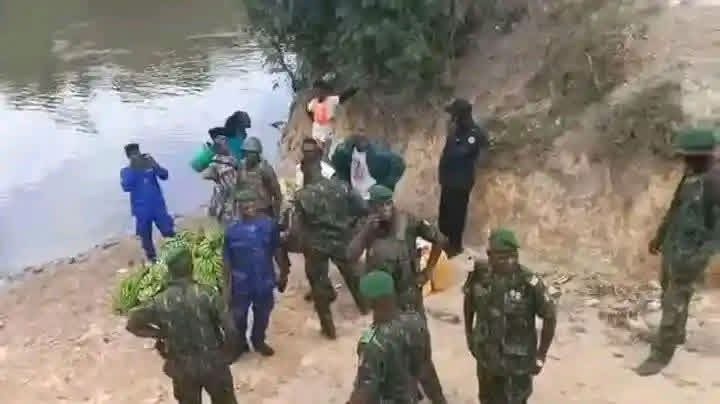
The supplementary budget, presented on Monday by Deputy Minister for Fiscal Affairs Anthony Myers, prioritizes security sector interventions amid rising concerns over cross-border threats. For days, residents of border communities along the Makona River in northern Liberia have been in a state of heightened fear and uncertainty, as a territorial dispute with Guinea entered its second week on Tuesday, March 17, 2026.
The dispute was ignited when Guinean soldiers crossed the Makona River—long regarded as the natural boundary—and seized equipment from a Liberian sand-mining operation. The troops raised a Guinean flag on Liberian soil, asserting territorial claims. Although residents confronted the intruders and re-hoisted the Liberian flag, the situation turned violent days later when Guinean forces returned and opened fire, wounding a Liberian man.
Despite a high-level emergency summit held the previous week in Conakry involving the presidents of Liberia, Guinea, and Sierra Leone, Guinean troops remained present in the contested area. Following the trilateral meeting convened under the Mano River Union (MRU) framework, President Boakai struck an optimistic tone: “We all realized that we are the same people… we have been working together for years and we have nothing to gain from war.”
The summit produced a joint communiqué outlining a 12-point roadmap for peace, including commitments to restore the status quo ante and enhance security cooperation through joint patrols. However, the continued presence of Guinean soldiers on disputed ground left many Liberians questioning the effectiveness of the diplomatic breakthrough.
It was also reported that at the Sefudu Border in Quardu Gbondi District, Guinean security personnel ordered their Liberian counterparts to move the Liberian flag approximately half a kilometer from the swampy borderline in 2025—the first known instance of attempted encroachment, suggesting a broader pattern of gradual territorial expansion.
The Makona River, also known as the Moa, is an international waterway shared by Liberia, Guinea, and Sierra Leone. Guinean authorities cite the 1907 Franco-Liberian Convention and a 1911 refinement, which they interpret as placing the border along the Liberian bank rather than the middle. They also invoke a regional principle suggesting that a border river belongs to the country where it originates—in this case, Guinea. Conversely, Liberian local leaders and residents maintain that the river has historically served as a recognized shared boundary, with Liberian territory extending to at least the middle of the river.
In his communication to Speaker Richard Nagbe Koon, President Boakai emphasized that the proposed budget adjustment is in line with Section 23.1 of Liberia’s Public Financial Management Act, citing the need to incorporate additional revenues identified during the fiscal period. According to the draft proposal, the total additional revenue is estimated at US$45 million, of which US$40 million (88.9%) comes from undisbursed World Bank budget support for FY2025. The remaining US$5 million (11.1%) is derived from domestic revenue overperformance from FY2025.
If approved, the supplementary budget will increase the total resource envelope for FY2026 from US$1.2497 billion to US$1.2947 billion. On the expenditure side, recurrent spending is projected at US$28.9 million (64.3%), while the Public Sector Investment Plan receives US$16.1 million (35.7%). The draft supplementary budget prioritizes social spending, with 42.9% of the total envelope directed toward human capital development.
Beyond the border security and army recruitment funds, the National Security Agency is allocated US$2.5 million for national security response intervention, bringing the total security and rule of law allocation to US$5.1 million (11.3% of the supplementary budget).
Other Sectoral Allocations
Public Administration receives the largest share at US$11.4 million. This includes US$2 million to secure a 50-year lease for a plot of land used as the Liberian Ambassador’s residence in Accra, US$1.9 million for Special Presidential Projects, US$1 million toward domestic debt claimant settlements, US$540,187 for an internship program for young professionals, and US$475,000 for specialized check-printing machines.
Health follows with US$10.9 million (24.3%). Key interventions include US$3.68 million for land acquisition to construct a National Children’s Hospital, US$1.74 million for processing outstanding PANs, US$1.7 million to enroll volunteer health workers on the government payroll, and US$1.5 million to close the payroll gap.
Education is allocated US$7.3 million (16.2%). This includes US$3.27 million to close the payroll gap, US$1.7 million to enroll volunteer teachers on the government payroll, US$1.3 million for the School Feeding Program, and US$515,957 to settle arrears with the West African Examination Council.
Infrastructure and Basic Services receives US$7.2 million (15.9%), including US$4.015 million for technical preparation and deployment of “yellow machines” under the Special Presidential Project Coordinating Committee, and US$3 million for the procurement of buses for the University of Liberia, the Council of Chiefs, and rural women organizations.
Other allocations include US$1.05 million (2.3%) for Social Development Services; US$1 million (2.2%) for Local Government Services; US$500,000 for the Agriculture Sector; US$500,000 for Industry and Commerce; and US$75,784 (0.2%) for the Energy and Environment sector.
President Boakai urged lawmakers to act expeditiously in the interest of national progress. Following the reading of the communication, plenary voted to forward the proposal to the Committees on Ways, Means, and Finance, and Public Accounts for detailed review. The motion was introduced by Montserrado County Electoral District 2 Representative Sekou Kanneh. The committees have been mandated to report back within the timeframe of the ongoing special session.