

By: Julius Konton
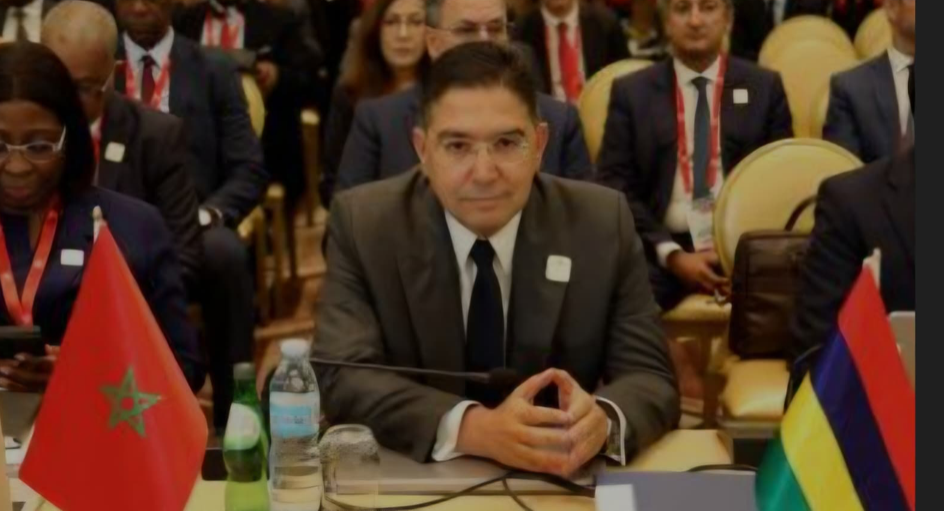
LUANDA, Angola — Moroccan Foreign Minister Nasser Bourita challenged African leaders on Saturday to abandon their reactive approach to conflict and invest instead in preventing violence before it starts.
Bourita delivered the challenge at the 26th Extraordinary Session of the African Union Executive Council in Luanda. He told ministers that military interventions and crisis management alone cannot secure the continent’s future. He urged governments to attack the root causes of conflict—poverty, inequality, weak institutions and political exclusion—before they escalate into bloodshed.
“Prevention” must mean more than dispatching mediators when tensions rise, Bourita argued. It requires sustained investment in the peace-security-development nexus, he said, linking economic opportunity, good governance and social inclusion directly to stability.
The extraordinary session, which opened Saturday, aims to strengthen the African Peace and Security Architecture (APSA). Ministers are examining ways to sharpen early warning systems, empower the AU Peace and Security Council and secure reliable financing for peace operations. The Executive Council meeting runs through August 29, followed by the AU Assembly’s 21st Extraordinary Session on August 30.
Bourita reaffirmed Morocco’s full support for the Luanda process. He insisted that implementing the Luanda Action Plan demands closer coordination between the African Union and the United Nations. He also warned that any financing mechanisms must respect the AU’s established budgetary rules.
The Moroccan minister spoke against a backdrop of escalating violence across the continent. Militant Islamist groups, civil wars, military coups, communal clashes and resource conflicts plague Africa from the Sahel to Somalia.
Data underscores the urgency. The Africa Center for Strategic Studies recorded 23,968 deaths from militant Islamist violence in 2025—a 24 percent jump over the previous year. The group also logged 8,375 violent events, the highest annual tally in its records. For the 12 months ending mid-2026, militant Islamist attacks claimed 23,872 lives. The Sahel accounted for 42 percent of those fatalities, while Somalia and the Lake Chad Basin each contributed roughly 28 percent.
ACLED data paints an even broader picture of political violence, tracking thousands of battles, explosions and attacks on civilians that have displaced millions and destabilized communities across the continent.
Bourita argued that African governments must pivot from reactive crisis management to proactive institution-building. He called for investing in courts that resolve disputes fairly, schools that educate youth, economies that create jobs and governments that serve citizens—not just armies that fight insurgents.
The United Nations shares that analysis. UN reports stress the interconnectedness of peace, security, development, humanitarian action and human rights. The organization has identified unemployment, weak public services, inequality and limited access to justice as social dynamite that can ignite instability—particularly in countries with large, jobless youth populations.
Climate shocks, displacement, organized crime and armed groups compound these pressures, especially in fragile states.
Financing remains a major obstacle. The AU established its Peace Fund in 1993 to bankroll continental security efforts. In 2016, leaders committed $400 million to the fund through a 0.2 percent import levy. By February 2026, the fund held roughly $400 million, but had disbursed only about $39 million over the preceding two and a half years. The AU has since targeted a $1 billion capitalization to meet growing demands.
Bourita’s message cuts to the heart of that financing challenge: prevention costs money upfront, but reacting to wars costs far more in lives and resources.
The Luanda talks reflect a maturing African security architecture. Since 2002, the AU has built institutions—the Peace and Security Council, the Panel of the Wise, the Continental Early Warning System, the African Standby Force and the Peace Fund—to respond to unconstitutional power grabs, armed conflicts and regional threats.
This summit seeks to make those tools faster and more effective. AU officials say the Luanda process aims to strengthen African ownership of the peace agenda, improve regional coordination and operationalize APSA alongside the African Governance Architecture.
The meeting will conclude with the adoption of the Luanda Action Plan and its implementation matrix.
For Bourita, however, declarations matter only if they drive action. He left his colleagues with a direct challenge: Africa must invest as heavily in preventing wars as it does in fighting them.
Bourita’s message from Luanda could not be clearer—peace will remain elusive until African leaders treat development, governance and security as one integrated mission, not three separate portfolios.