– Endorses Three Youth Development Programs
Staff Writer
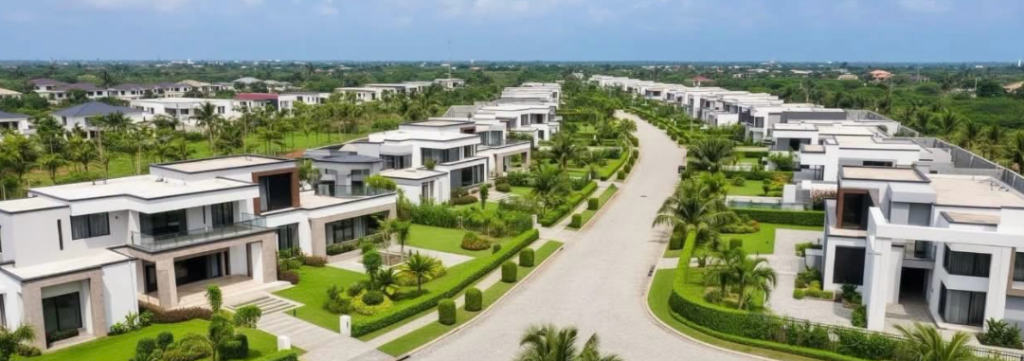
The Government has endorsed a proposed $300 million housing initiative targeting the construction of up to 5,000 homes for government employees and private citizens, alongside three youth development proposals submitted by the Ministry of Youth and Sports.
The decisions were taken during the government’s 26th Cabinet meeting, chaired by President Joseph Nyuma Boakai Sr., under the theme, “Building on Economic Growth: Investment in Livelihoods and Empowering the Next Generation.”
Thousing proposal, known as the Government Employee Housing Initiative, was presented by Civil Service Agency Director-General Dr. Josiah F. Joekai on behalf of the Special Presidential Housing Initiative Committee.
According to the government, the proposed development is valued at up to $300 million and is expected to provide affordable housing through long-term mortgage arrangements for public sector employees. Private citizens who are not government employees would also have the opportunity to purchase homes within the proposed residential communities under special arrangements.
Larex Company Limited, a Nigerian housing and real estate firm identified as the proposed developer, submitted the investment proposal.
Joekai explained that the $300 million figure represents the maximum investment ceiling rather than a fixed construction cost. He said the arrangement provides financial flexibility if the actual cost of the development is lower than the proposed ceiling.
The government estimates that the initiative could generate approximately 6,200 jobs across the construction and housing sectors. It also projects that about 90 percent of unskilled positions would be reserved for Liberians, with additional employment opportunities for local engineers, artisans and technicians.
According to the Civil Service Agency, the Ministry of Public Works developed the technical drawings and structural specifications before the proposal was presented to Cabinet.
The planned 5,000 housing units will include four categories of designs: two-bedroom and three-bedroom homes, with two alternative models for each category.
Implementation is expected to involve several government institutions, including the Civil Service Agency, Ministry of Finance and Development Planning, Ministry of State for Presidential Affairs, National Investment Commission, Ministry of Public Works, Liberia Land Authority and National Housing Authority.
The government also identified coordination with Liberia’s investment representatives in Canada as part of the initiative’s institutional framework.
In a separate decision, Cabinet endorsed three proposals submitted by the Ministry of Youth and Sports: the 10-Year Youth Vision Document, the Youth Impact Compact and the annual State of the Youth Report.
The proposals are linked to Liberia’s Youth, Peace and Security Agenda, launched in September by President Boakai and the Minister of Foreign Affairs.
A central component of the 10-Year Youth Vision is the proposed establishment of Youth Pathway Hubs across all 15 counties.
The centers are designated as the Presidential Legacy Project for the Youth of Liberia and are expected to provide spaces for vocational training, technology development, creative arts and sporting activities.
According to the Ministry of Youth and Sports, the proposed facilities will include administrative offices, conference halls for statutory youth organizations, technical and vocational education and training centers, technology innovation facilities, creative arts studios, theaters, football fields and basketball courts.
Youth and Sports Minister Atty. Cornelia Wonkerleh Kruah told Cabinet that the three proposals are intended to establish sustainable development opportunities for young people, who constitute the majority of Liberia’s population.
She said the Youth Pathway Hubs would provide access to skills training, technology, creative industries and sports facilities within local communities.
Kruah also explained that the Youth Impact Compact is intended to promote coordination among government ministries and encourage joint planning and resource allocation for youth-related programs.
The annual State of the Youth Report, she said, would strengthen the government’s capacity to collect and manage data and research on issues affecting young people.