


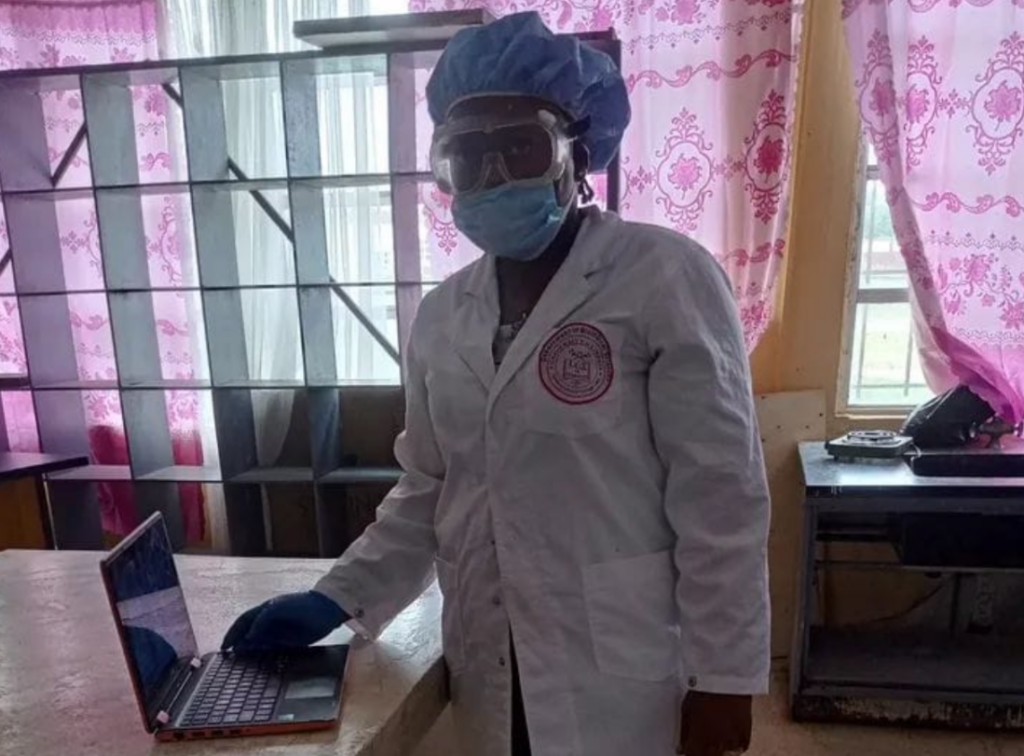
Johnsonville, Liberia – An experienced health clinician and emerging Public Health specialist of the University of Liberia, has blamed the National AIDS Commission (NAC) approximately 56,000 people living with HIV in Liberia, 2026 Joint United Nations Programme on HIV/AIDS (UNAIDS) Spectrum estimate to the lack of government coordinated multi-sectorial engagement, ethical medical patients confidentiality adherence and public stigmatization, while terming the situation a national public health emergency.
Speaking in an exclusive telephone interview with the New Dawn Newspaper, Mrs. Patience Lincoln, a graduating senior at the University of Liberia, Public Health Department expressed frustration over the increased in Liberia HIV cases, while describing the virus as a public health emergency that should draw the attention of stakeholders, policymakers and reached government agenda for rapid prevention .
According to her, there is a need for the government and all stakeholders to put all hands on deck to ensure the eradication of this public health emergency, as was done with Liberia’s fight against Ebola, and COVID-19, warning that failure to do so will cause the virus to drastically transition to men, since it is now women-dominated.
She further indicated that the government of Liberia, through the Ministry of Health, National Public Health Institute, and the National Aid Commission, has not been working together effectively through a sectoral engagement to holistically address the situation. She believes that if they were properly coordinating, the virus could not have rapidly spread.
Additionally, she also blamed healthcare providers, especially nurses who provide patient care and serve as the first point of contact as agents responsible for the rapid spread of the virus, due to their refusal to uphold ethical standards and enhance the theory of patient confidentiality. The Liberian nurse said that most nurses, after seeing or providing care for persons living with HIV, normally discuss them with family members and family friends.
According to her, these patients confidentiality has led to increased public stigmatization, which has caused many persons living with the various to desist from going to the health centers for treatment and rather concentrate on spreading the virus, while other pray and await for death after perceived societal abandonment and family neglect.
Providing policy recommendations, she urged robust public health awareness and stakeholder engagement across the country, to enhance the knowledge and understanding of locals on the virus, its symptoms, consequences, and prevention and treatment mechanisms.
Additionally, Mrs. Lincoln recommended a governmental or multi-sectoral approach among the National Public Health Institute, the Ministry of Health, and the National Aids Commission, and increased budgetary support to the institution to address, what she described as a public health emergency.
‘’ Also, I am calling for the strict enforcement and implementation of the patient confidentiality guidelines by nurses and healthcare providers to prevent the fear of stigmatization. Remember, if healthcare providers do not tell their family members about the health status of a person living with the virus, the community and the public will not stigmatize them. What you tell people about patient’s profile, is what they used against them to stigmatize of bull them’’ he urged.
Finally, she urged improvement in training and treatment adherence, stating that the availability of the medication is important, but the person living with the virus should be committed to the treatment, while those engaged with prescription and treatment should be trained and friendly, adding that the relationship between the care provider and receiver, determines the lifespan of the person.