

-With Members of the House of Representatives
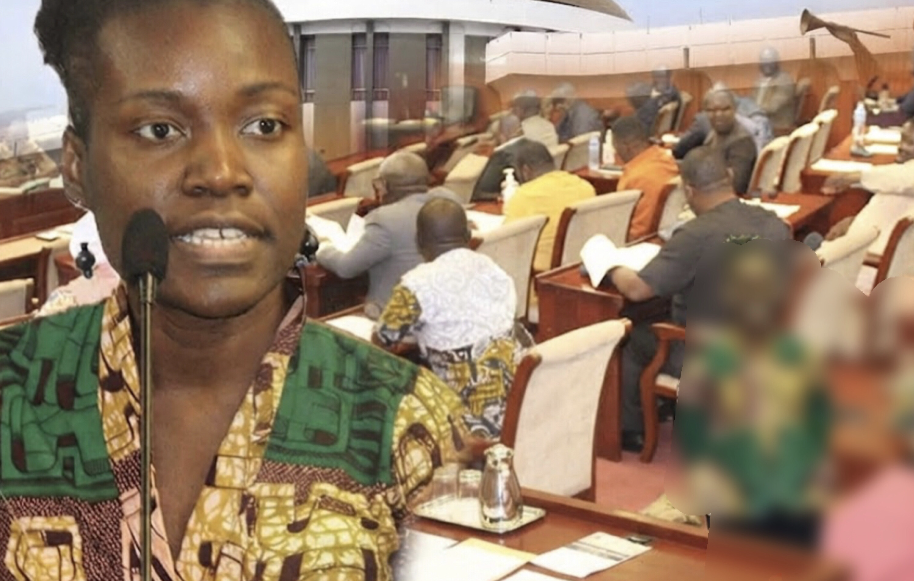
Monrovia: Members of the Honorable House of Representatives of the 55th Legislature on Tuesday participated in a legislative dialogue led by Dr. Robtel Neajai Pailey, Assistant Professor in International Social and Public Policy at the London School of Economics and Political Science (LSE), who presented findings from her research titled, “Africa’s ‘Negro’ Republics: How Race, Citizenship and Migration Impact Development in Liberia and Sierra Leone.”
The dialogue provided lawmakers with an opportunity to examine the historical evolution of citizenship laws in Liberia and Sierra Leone, particularly the constitutional provisions commonly referred to as the “Negro clauses,” and their implications for governance, migration, citizenship, land ownership, and national development.
During her PowerPoint presentation, Dr. Pailey traced the origins of Liberia’s citizenship provisions to the 1847 Constitution, which restricted citizenship to persons of Negro descent. She noted that the provision was subsequently reinforced in the 1973 Aliens and Nationality Law, maintained in the 1986 Constitution, and retained under the 2022 Dual Citizenship Law.
She also outlined the historical development of similar provisions in Sierra Leone, including subsequent legal reforms and constitutional debates.
The research examined several key questions, including why the provisions were originally adopted, why they have endured over time, whether they should be viewed as protectionist, discriminatory, or both, and how they continue to influence socio-economic development in Liberia and Sierra Leone.
Dr. Pailey explained that her study employed a multi-sited mixed-methods approach, drawing on archival research, qualitative interviews, legislative dialogues, surveys, and extensive fieldwork conducted in Liberia, Sierra Leone, Lebanon, India, the United States, and Barbados.
She informed lawmakers that more than 250 semi-structured interviews had been conducted with citizens, policymakers, academics, and members of immigrant communities to better understand public perceptions surrounding citizenship, race, and economic participation.
According to the findings presented, historical inequalities rooted in slavery, colonialism, capitalism, and neoliberal economic structures significantly influenced both the adoption and continued maintenance of the citizenship provisions.
The presentation further highlighted that concerns surrounding possible amendments to the “Negro clauses” differ between Liberia and Sierra Leone. While many Sierra Leoneans primarily expressed concerns about extending political rights to non-Africans, many Liberians focused on issues relating to land ownership and control of the country’s economic resources.
Dr. Pailey noted that many participants viewed the citizenship provisions not simply through the lens of race but also as mechanisms intended to protect national ownership of land and the means of production. She emphasized that any future constitutional or legislative reforms would require broad public consultation and careful consideration of these longstanding concerns.
To encourage further deliberation, she posed several questions to members of the Legislature, including whether the “Negro clause” should remain a legislative priority, whether it should be considered protectionist or discriminatory, how it affects Liberia’s contemporary development, and whether non-Black residents, including members of the Lebanese, Indian, and Chinese communities, should be eligible for Liberian citizenship.
Following the presentation, Speaker Hon. Richard Nagbe Koon commended Dr. Pailey for her scholarly contribution and her continued commitment to national discourse on issues affecting Liberia’s development.
The Speaker requested the Chairperson of the House Committee on Gender, Hon. Moima Briggs-Mensah, to formally thank Dr. Pailey on behalf of the House of Representatives for consistently making herself available to contribute her expertise toward national development.
Hon. Briggs-Mensah applauded Dr. Pailey for her dedication to research and public service, describing the dialogue as both timely and informative. She encouraged continued collaboration between academia and the Legislature in addressing complex national policy issues through evidence-based research.
Members of the House of Representatives also expressed appreciation for the presentation, noting that the dialogue provided valuable historical context and research findings that will contribute to informed legislative discussions on citizenship, constitutional reform, governance, and national development.
The legislative dialogue forms part of the House of Representatives’ ongoing efforts to engage scholars, researchers, and policy experts in promoting informed decision-making and strengthening evidence-based legislation in the Republic of Liberia.