Home » EchoChange in Liberia: How Communities Are Owning the Public Health Law Conversation
When Help a Mother and Newborn Initiative (HMNI) launched the EchoChange Project – Strengthening Communities’ Understanding of the Public Health Bill in May 2025, one thing was clear: conversations about health, rights, and laws in Liberia could no longer happen without the people most affected.
Over the past months, women, youth, and religious and traditional leaders from five communities have moved from:
“This is the first time I’m hearing about this law”
to:
“We are ready to talk to our neighbors and lawmakers about it.”
EchoChange was created to make that shift possible.
Project Purpose: Turning Confusion into Collective Voice
For years, discussions around Liberia’s revised Public Health Bill—especially the parts related to sexual and reproductive health and rights (SRHR), including abortion—have been dominated by fear, misinformation, and stigma.
In many communities:
People had little or no accurate information about the Public Health Bill.
Most had only heard rumors framed around “abortion” and “sin.”
Few saw the Bill as something that could protect their health and dignity.
At the same time, unsafe abortion remains a major cause of maternal deaths in Liberia. Many women and girls are suffering in silence, while communities are left out of critical policy conversations taking place in Monrovia.
EchoChange set out to change that.
The project’s purpose was simple but powerful:
To help communities understand the Public Health Bill, build their confidence to talk about health and rights, and support them to become informed advocates for its passage.
Before the project, most people in the target communities had never seen or heard the details of the Bill. Health laws felt like something written “far away,” with no clear link to everyday life. EchoChange began by asking:
“What would it look like if communities themselves understood the law—and used it to demand better health and protection?”
Community Impact: What Changed on the Ground
During this period, HMNI worked in five communities across Montserrado and Margibi Counties:
Montserrado County: King Gray and New Kru Town
Margibi County: Floko’s Town, Yarnwullie, and Weala
From “I never heard of it” to “I can explain it”
Through the project:
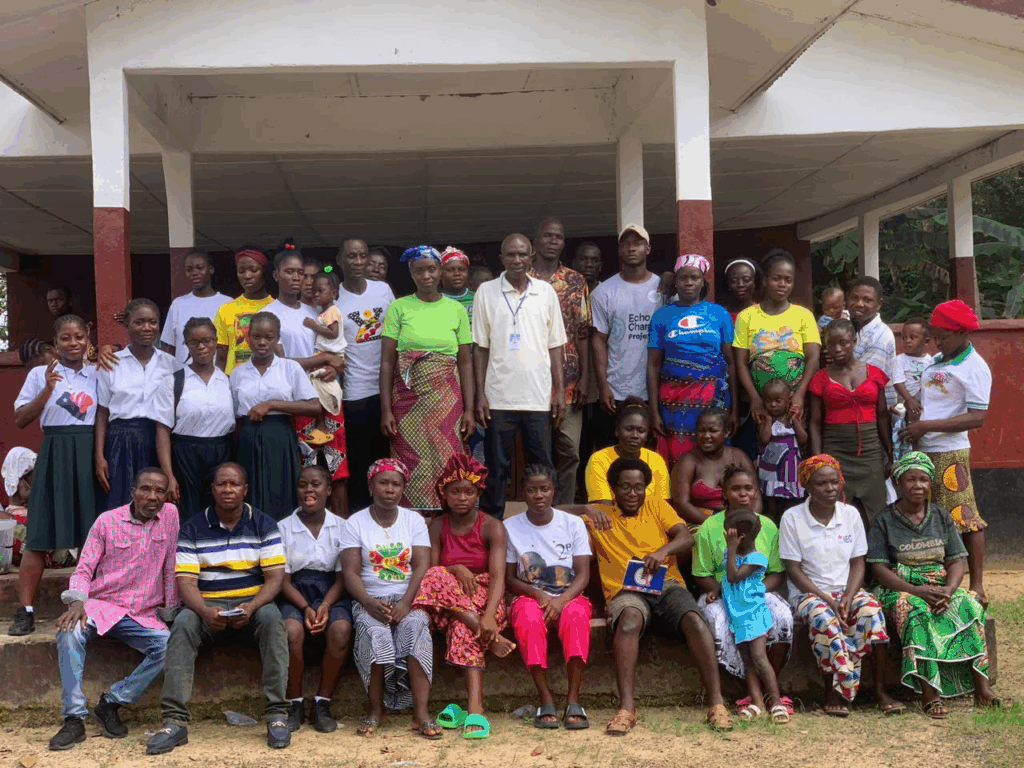
Over 60 community representatives joined a public inception meeting in May 2025 to learn about the project and help shape its design.
In August 2025, HMNI hosted three two-day strategic workshops with:
Women leaders
Youth representatives
Religious and traditional leaders
Participants explored:
What the Public Health Bill is
How it connects to SRHR, maternal health, and public well-being
The realities of unsafe abortion and preventable maternal deaths
How laws can protect, rather than only punish
By the end of these sessions, participants were:
Explaining key parts of the Public Health Bill in their own words
Identifying myths and misinformation circulating in their communities
Drafting community action plans to speak with youth, women’s groups, congregations, and local authorities
One woman leader said:
“I didn’t know the law could protect our health this way. Now I can go back and explain it to other women so they’re not afraid.”
Youth participants developed practical plans to speak in schools, on football fields, and through peer groups—spaces where rumors and stigma often spread fastest.
From Project-Led to Community-Led Advocacy
Over time, the project shifted from HMNI leading the process to communities taking ownership:
Leaders in New Kru Town recommended beginning work in Block D to maximize local impact.
Communities proposed larger follow-up meetings to bring more people into the conversation.
Participants requested ongoing training and simpler, health-focused language to help them discuss the Bill confidently with neighbors.
By late 2025, community-led dialogues had started in all five locations, supported by EchoChange-trained advocates and youth from HMNI’s SRHR Coach Masterclass. These dialogues helped to:
Normalize conversations about SRHR and public health
Build trust between communities and local leaders
Prepare the ground for policy dialogues with lawmakers
Alongside this, the project launched social media storytelling to highlight community voices and is now preparing radio talk shows to reach even more people in local languages.
Personal Stories: Faces Behind the Change
Behind the numbers are real people whose perspectives have shifted.
A woman leader from Yarnwullie shared that this was her first time hearing about the Bill in a respectful and open way. She left committed to “talking to the young girls and mothers so they know their rights and can make better choices.”
A youth participant from King Gray explained how he and his peers had heard only rumors:
“We have been listening to things that are not true. Now we know the facts, and we can explain them to our friends.”
Religious and traditional leaders—often seen only as gatekeepers—showed genuine openness to learning and agreed to use health- and dignity-focused messages when speaking to their congregations.
These stories capture the heart of EchoChange: not telling communities what to think, but giving them tools to think, question, and act for themselves.
Our Team’s Work: What Made the Difference
Several activities proved especially impactful:
The Project Launch / Inception Meeting created space for civil society, policymakers, and community representatives to shape the approach together. Their feedback pushed HMNI to:
Increase the number of community representatives trained
Use more health- and rights-focused framing instead of starting with “abortion”
Shift towards a community-led advocacy model
The two-day strategic conversations with women, youth, and religious/traditional leaders used:
Interactive exercises like the “Value Game” and “Law or No Law”
Group reflections on real community cases
Simple, grounded language and examples These methods helped participants connect legal concepts to everyday life.
The team also worked intentionally to create safe spaces where people could ask questions they had never voiced publicly before.
Challenges – and How We Responded
The project was not without difficulties:
Transport protests and high transport costs made it hard for some participants to attend trainings.
Some venues were noisy, distant, or not fully accessible because of budget limitations.
Scheduling and communication gaps meant a few community groups were underrepresented in certain sessions.
To respond, the team:
Adjusted schedules and remained flexible with timing.
Strengthened communication with community leaders to avoid confusion about dates and locations.
Focused on maximizing the impact of those who could attend by equipping them as multipliers who would share information and lead conversations back home.
These experiences underscored a key lesson: good content is not enough—logistics, communication, and flexibility are just as important for meaningful participation.
Partnership and Support: We Didn’t Do This Alone
EchoChange was made possible through funding from an anonymous donor, with additional financial and technical support from Global Fund for Children (GFC).
Several partners strengthened the project:
Women Wellbeing Initiative and the Liberia Business Association (LIBA) – supported logistics, meeting venues, and coordination.
Muslim Aid Liberia, Community Healthcare Initiative (CHI), and experienced SRHR champions – co-facilitated sessions and brought grounded SRHR expertise.
The Liberia Working Group on Reproductive Health & Rights – provided technical guidance on legal literacy and ongoing advocacy.
HMNI also shared updates and lessons at national coalition meetings, ensuring that community voices from EchoChange helped shape wider advocacy around the Public Health Bill.
Lessons Learned: What EchoChange Taught Us
Working through EchoChange has given HMNI and its partners several important lessons:
Community-led is more powerful than organization-led. When communities invite policymakers and lead dialogues themselves, the conversations feel more authentic and are more likely to last.
Language matters. Leading with “abortion” alone can close doors. Framing the Bill around health, safety, dignity, and family well-being opens space for real dialogue.
Preparation and communication are as important as content. Small miscommunications around dates, venues, or transport can exclude the very voices that most need to be heard.
Partnership amplifies impact. Working with women’s groups, youth networks, religious leaders, and national coalitions created a stronger, more unified voice in support of public health and SRHR.
Flexibility is critical. The team had to adjust plans in response to protests, budget constraints, and shifting realities—but the core vision remained the same.
Future Plans: Where EchoChange Goes From Here
EchoChange is not ending—it is evolving.
At the end of the project timeframe, HMNI and partners had already:
Supported community-led dialogues in all five target communities, with trained local advocates and youth from the SRHR Coach Masterclass guiding conversations on health, rights, and the Public Health Bill.
Climaxed policy dialogues where community representatives shared their reflections and recommendations directly with lawmakers and local authorities.
Implemented a two weeks social media campaign and a community-led radio talk show to spread accurate, accessible information about the Public Health Bill and the impact of Echochange interventions to a wider audience.
The next steps will focus on:
Sustaining community advocates Continuing to support the women, youth, and religious/traditional leaders trained through EchoChange so they remain active voices for SRHR and public health in their communities.
Deepening policy engagement Building on the first round of policy dialogues to track commitments, share community feedback with decision-makers, and keep the Public Health Bill on the public agenda.
Integrating EchoChange into HMNI’s core programs Using tools, stories, and learning from EchoChange to strengthen the SRHR Coach Masterclass, EmpowerHer Journey, and Peer-to-Peer Clubs, ensuring that legal literacy remains a regular part of HMNI’s youth and mothers’ programming.
Expanding reach through partnerships Collaborating with national coalitions and local partners to bring community voices into wider conversations on health and rights.
Mobilizing resources for scale and continuity Working with allies and donors to secure flexible funding that allows EchoChange to reach new communities and sustain the grassroots advocates who are now leading this work.
Call to Action: Where You Come In
EchoChange shows that when communities understand the laws that shape their lives, they can speak for themselves—and demand better.
As you read this, we invite you to:
Listen differently to conversations about SRHR, abortion, and public health in Liberia. Behind the debates are real lives, families, and futures.
Stand with community advocates—women, youth, and religious leaders—who are doing the hard work of changing minds and saving lives through dialogue.
Support this work by:
Partnering with HMNI on future interventions
Providing resources for youth- and community-led advocacy
Amplifying these stories in your networks, media platforms, and institutions
The Public Health Bill is more than words on paper. Through EchoChange, communities are beginning to say:
“We understand it. We own it. And we are ready to push it’s passage to protect our health, our daughters, and our future.”
That is the kind of echo we want to keep amplifying—until every community in Liberia can say the same.
How to Reach the Team
To learn more about the EchoChange Project, partner with HMNI, or support this work:
You can also request a copy of our learning brief or invite the team to speak with your organization, school, or community group about EchoChange and community-led public health advocacy.