

-As World Bank Announces Plans for St Paul-2 Hydropower
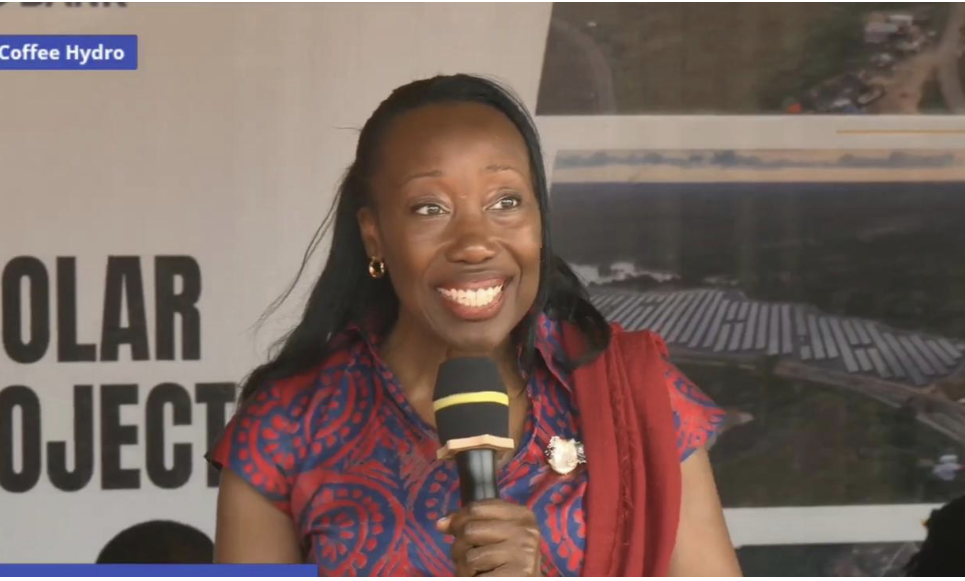
Mount Coffee, Liberia — World Bank Liberia Country Manager, Georgia Wallen, announced on Friday, June 5, 2026, that the group is supporting the Liberian government in preparing the St. Paul 2 hydropower project, a facility that could more than double the country’s installed electricity capacity within six years.
Wallen made the announcement during her remarks at the commissioning of Liberia’s first grid-connected solar photovoltaic plant at the Mount Coffee Hydropower Plant. “The project has the potential to be a gamechanger for Liberia,” she said of the St. Paul 2 initiative.
Wallen emphasized that Liberia’s progress is not an isolated success but part of a broader story of energy access for millions across West Africa. Financing for the new solar plant comes from the Regional Emergency Solar Power Intervention Project (RESPITE), which is supported in part by the World Bank’s IDA regional program. Under RESPITE, Liberia, Sierra Leone, Chad, and Togo have forged a partnership to build lasting, high-quality energy infrastructure. “Next week, Sierra Leone will also commission their solar plant under the same project,” Wallen revealed.
Wallen then outlined what is new and what is coming for Liberia’s energy sector. First, building on today’s commissioning, the World Bank will support expanding the capacity of the solar plant from 20 megawatts to 30 megawatts with battery storage over the next year. The expected commissioning of the SCATEC Release, supported by the International Finance Corporation (IFC), and further development of solar independent power producers through competitive bidding will also boost energy security and help Liberia meet dry season demand.
Second, Wallen said the World Bank looks forward to the commissioning of Unit 1 of the Mount Coffee Hydropower Plant, which will add 22 megawatts. By 2029, she added, the Bank hopes to commission an additional 42 megawatts of capacity at Mount Coffee, which will go a long way toward meeting Liberia’s growing demand for power.
Wallen also highlighted the dramatic cost savings made possible by the new solar plant. She noted that RESPITE was launched in 2023, when high oil prices provoked by conflict were putting pressure on Liberia’s budget. “Today, we face a similar world,” she said, “but Liberia has an answer.” Instead of paying 28 cents for every unit of energy from oil generation, this plant helps Liberia harness solar power to generate electricity at just 3 cents per unit of energy.
Wallen described the solar plant commissioning as “another win” for President Boakai’s ARREST Agenda for Inclusive Development and Liberia’s National Energy Compact. The Compact, which was launched last year at the Mission 300 Africa Energy Summit in Tanzania, aims to connect 100,000 households annually and raise energy access to 75 percent by 2030. “Achieving those goals will be transformational,” Wallen said, “unlocking opportunities for all Liberians, from businesses to essential services, to households and individuals.”
Wallen reaffirmed that the World Bank remains committed to working in partnership to help lower the cost of electricity, improve reliability, and bring power to more Liberian families and businesses. She extended sincere thanks to Liberia Electricity Corporation Managing Director Mohammed M. Sherif, the LEC team, the RESPITE team, and the World Bank team for their tireless work, deep commitment, and tremendous resilience. “Liberia’s future is bright, and it’s getting brighter,” she concluded.